New health center Čeřovka

1st Prize
  • Author M47 office
  • Team Lukáš Ďurian, Erik Hornáček, Nikolas Klimčák, Samuel Sálus
  • Bratislava, Slovakia
Annotation

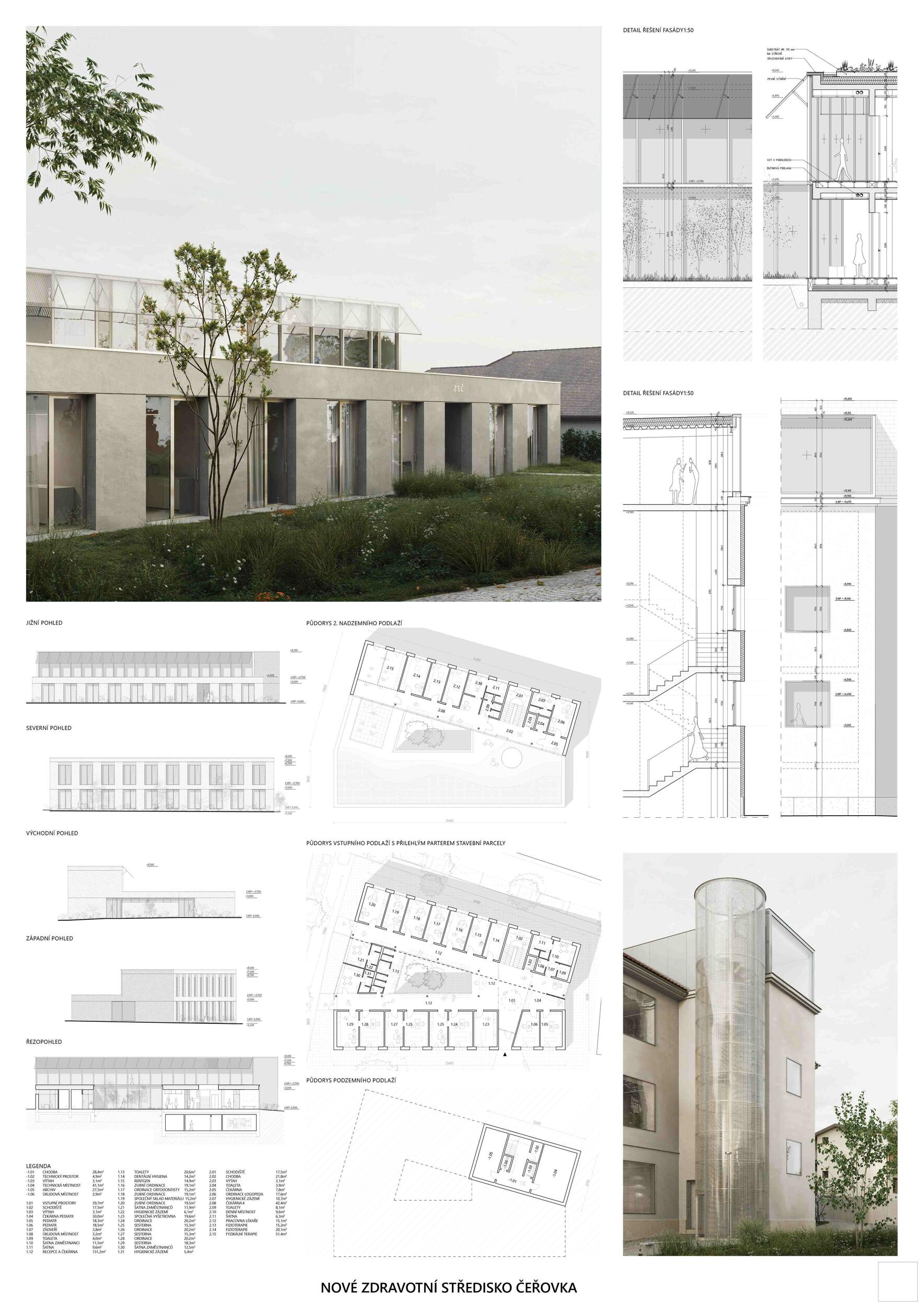
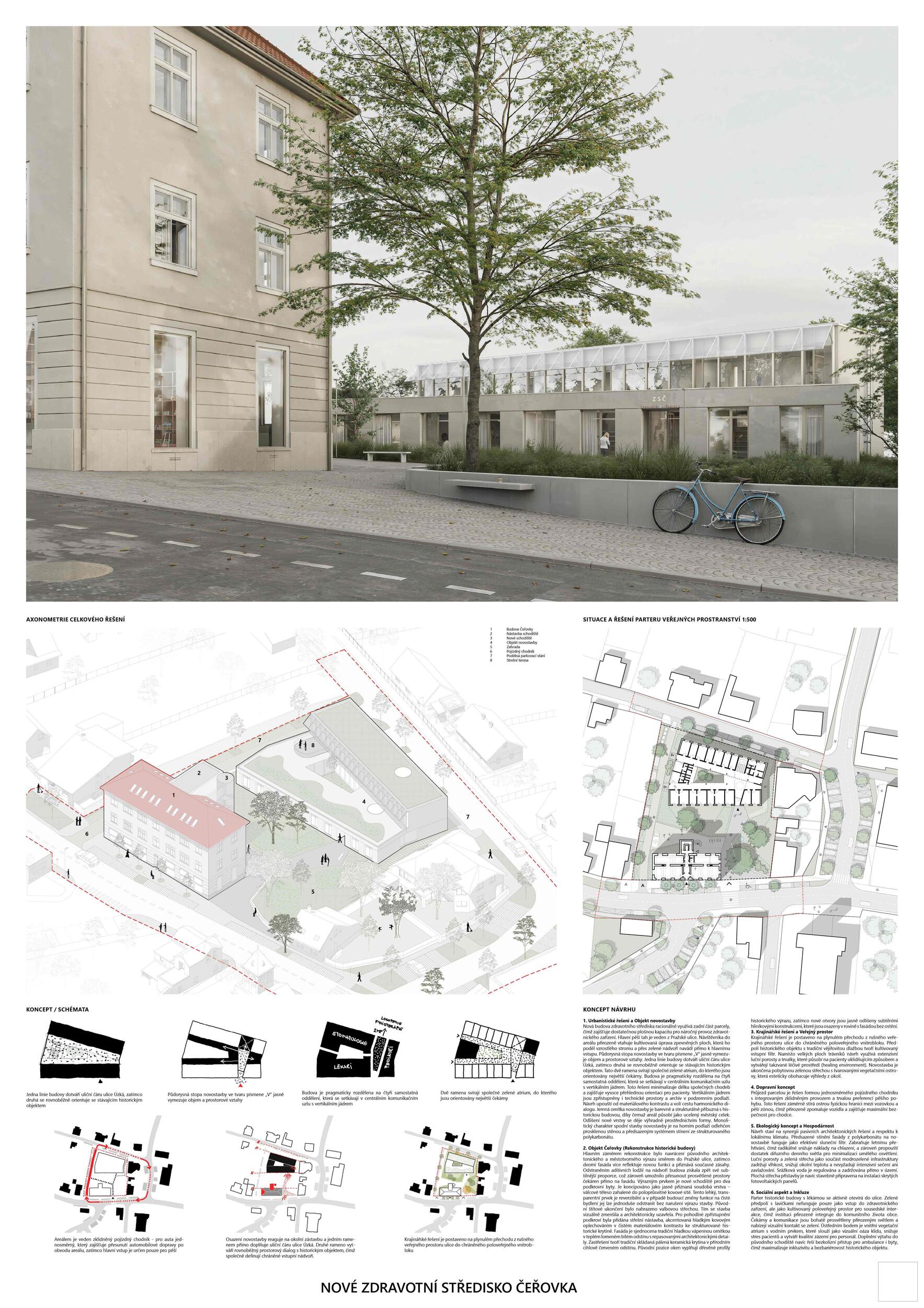
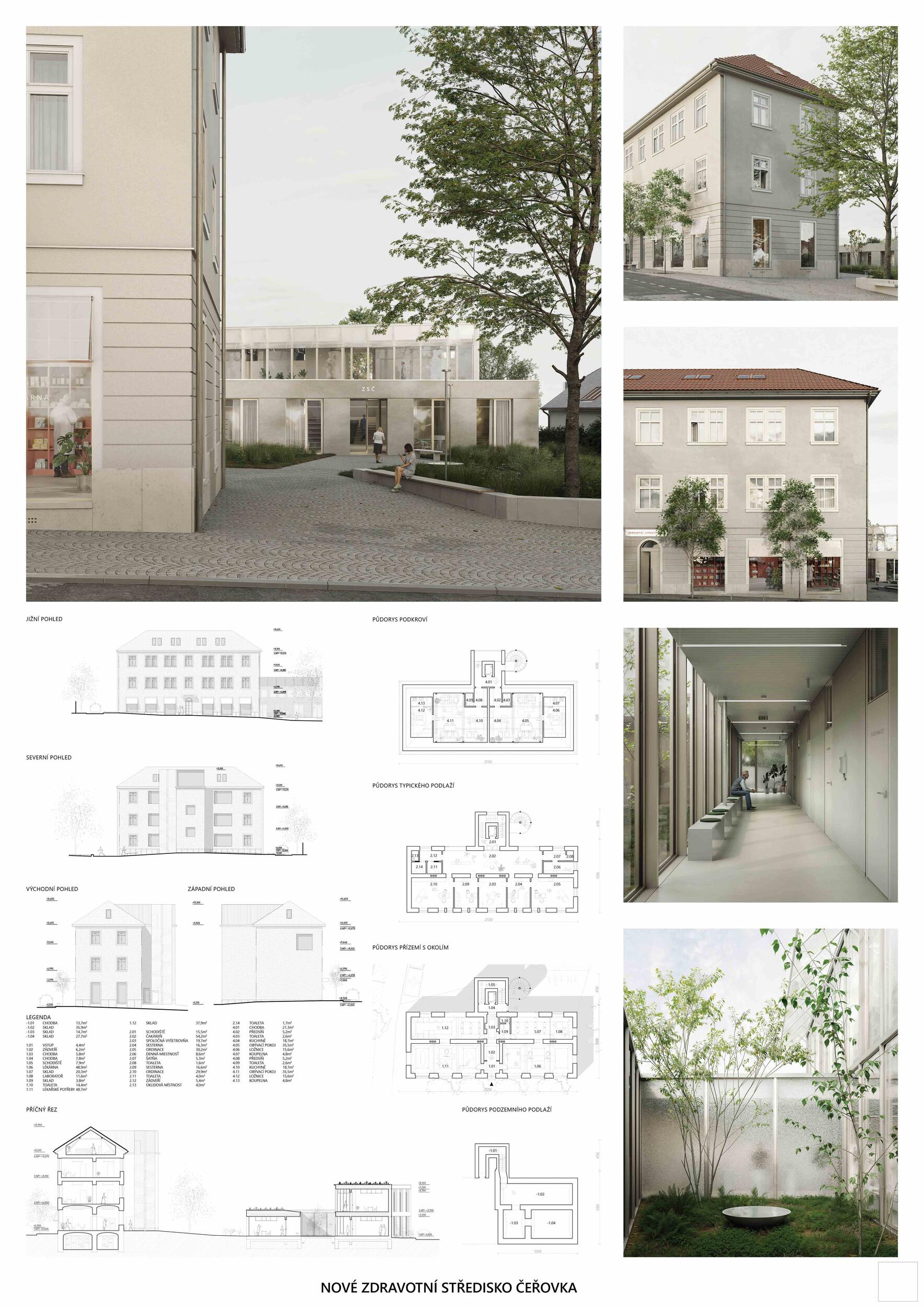
The new healthcare center building makes rational use of the rear part of the site, ensuring sufficient capacity for the demanding operation of a medical facility. The main pedestrian route is led from Pražská Street. Visitors are naturally drawn into the yard by the refined design of the paved areas, which guides them past a mature tree and across a green courtyard directly to the main entrance. The V-shaped footprint of the new building clearly defines its volume and spatial relationships. One wing completes the street line along Úzká Street, while the other runs parallel to the existing historic building. Together, these two wings enclose a shared green atrium, toward which the largest waiting areas are oriented. The building is pragmatically divided into four separate departments that meet at a central communication hub with a vertical core. This arrangement minimizes the length of shared corridors and ensures clear and intuitive orientation for patients. The vertical core also provides access to technical facilities and archives located in the basement level. The design avoids material contrast and instead opts for a harmonious dialogue. The fine plaster of the new building is both coloristically and structurally related to the historic structure, allowing the complex to read as a cohesive urban ensemble. The distinction of the new layer is expressed solely through form. The monolithic character of the lower volume is lightened at the upper level by a glazed façade and a projecting shading system made of structured polycarbonate.

Jury Evaluation

Urban Planning and traffic solutions: The proposed new health center building is a single compact structure that occupies a natural and confident position at the rear of the site. Its V-shaped form responds to the street line of Úzká Street and, at the same time, to the historic Čeřovka building. Together with the existing building, this arrangement creates a clearly structured complex with a landscaped courtyard, into which visitors are naturally drawn by the welcoming forecourt. Thanks to the confident tectonics of the facade and the open forecourt, there is no doubt that this is a public institution. Perhaps the only thing missing is a more distinctive sign. The jury perceives the façade facing Úzká Street as a boundary, partly due to the number of medical offices facing the residential area. The jury considers the landscaping solution, particularly toward Úzká Street, to be insufficiently justified. The jury views the proposed traffic solution positively, as it clearly separates cars from pedestrians and distributes cars on the site to a dispersed and unobtrusive layout. The jury is aware of the deliberate failure to meet the recommended number of parking spaces in the project area and their relocation at the expense of space in the surrounding streets, and recommends, as part of the project’s refinement, increasing the number of parking spaces on the site itself and alleviating parking pressure primarily on Potoční Street. Architectural Design: The proposed architectural concept for both buildings is confident and natural. The jury positively evaluates the effort to visually connect the two structures and the sensitive renovation of the historic Čeřovka building without unnecessary structural interventions. It also positively evaluates the minimalist and clear layout design with a logical distribution of individual functions and the connection between the interior and exterior. As a supplement, the jury recommends examining apartment options within a typical floor of the Čeřovka building. The work on green roofs certainly adds value, as they enhance the appeal of the space, particularly thanks to the proposed accessibility. Technical Solution, Sustainability, Economics: The new building is designed as a standard monolithic reinforced concrete loadbearing structure. Flat green roofs require a strong emphasis on high-quality construction during implementation. The design places all technical facilities of the new building in the basement, at the logically lowest point of the plot. Emphasis is placed on the efficiency of both vertical and horizontal circulation. The jury also positively evaluates the attention to detail, such as in the form of hollow-core slabs, which allow for future adaptation of the building’s use.
Previous Next
2nd Prize
  • Author Petra Malovaná
  • Team Marek Vilášek, Jiří Vala
  • Ostrava
Annotation

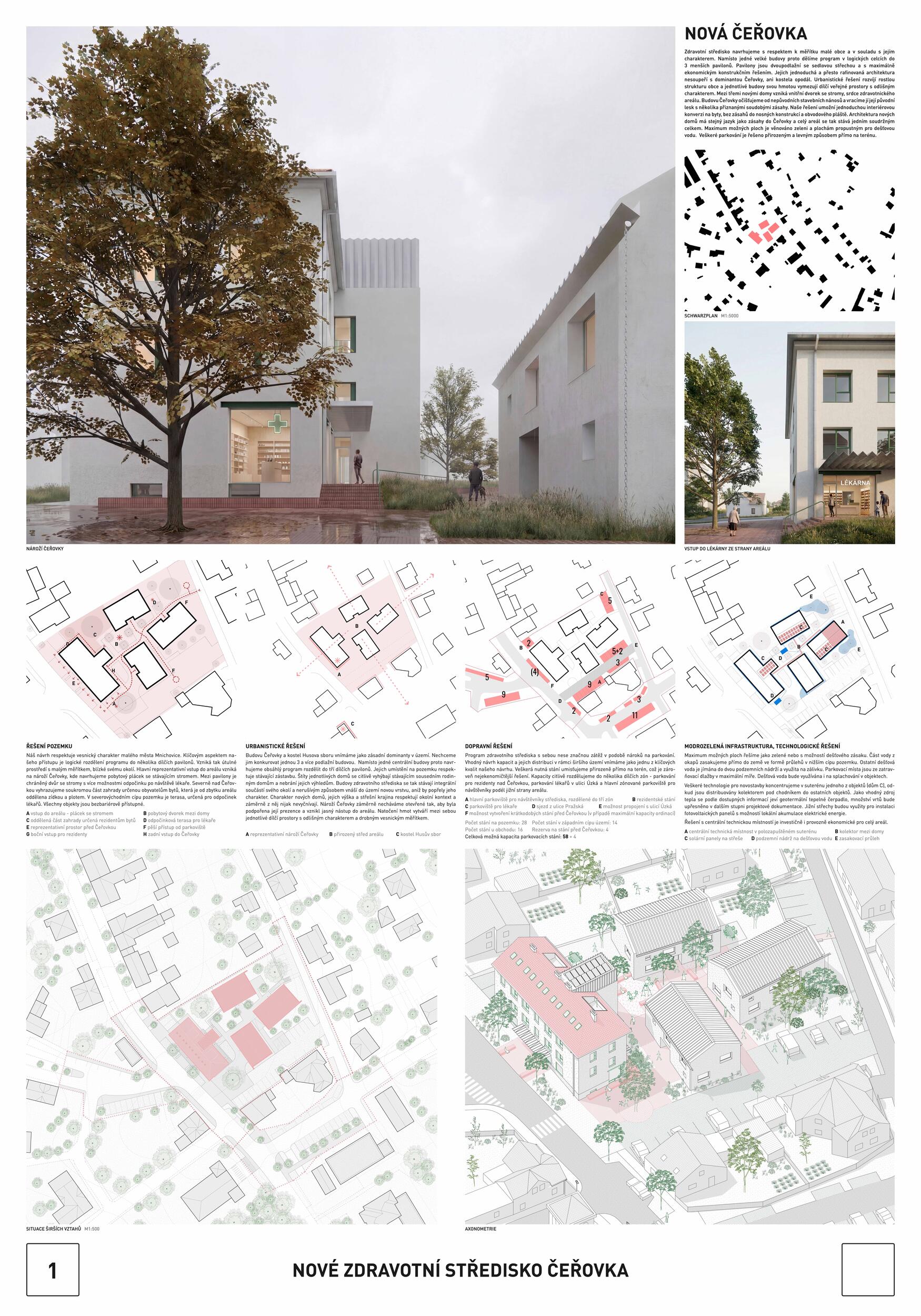
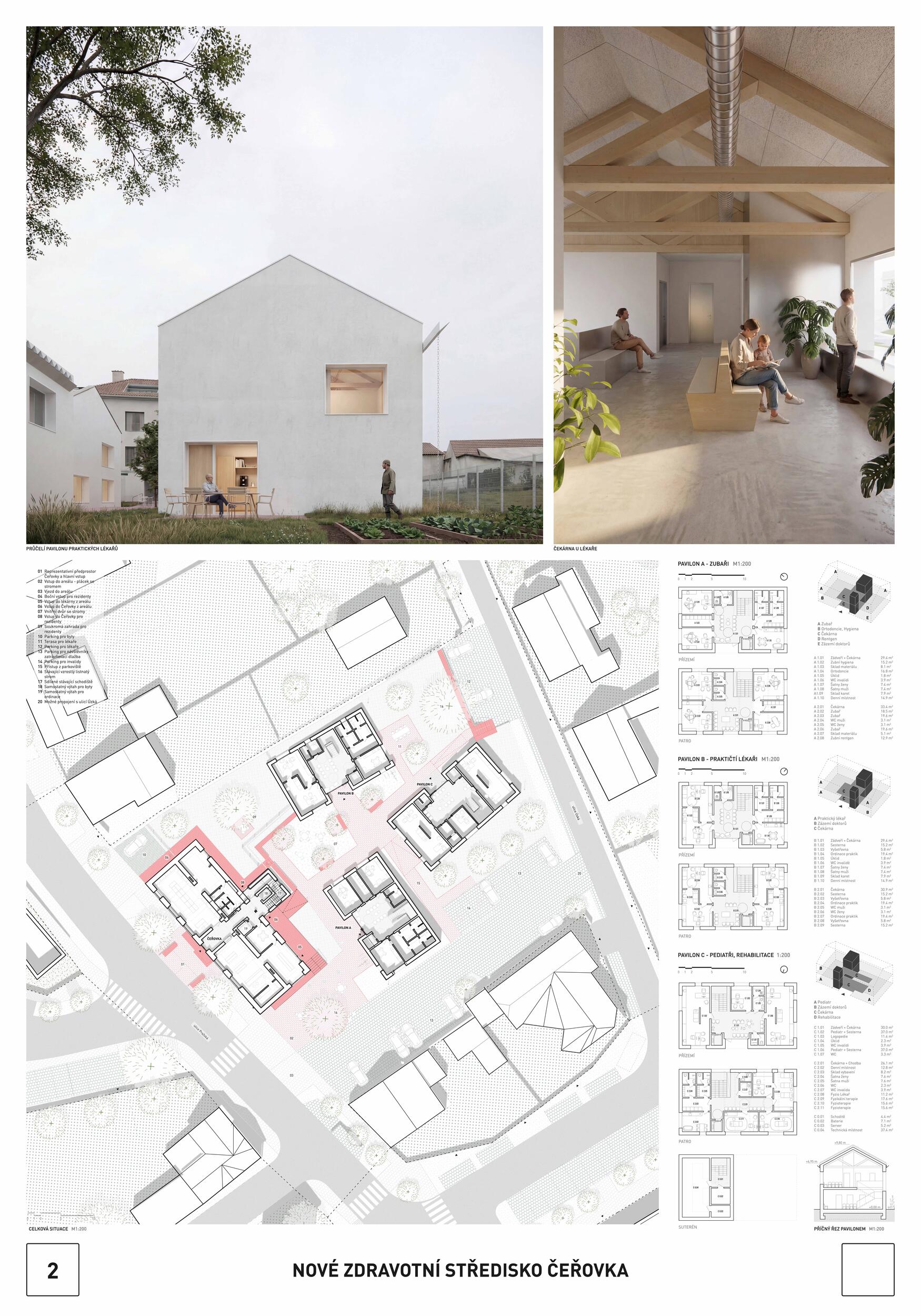
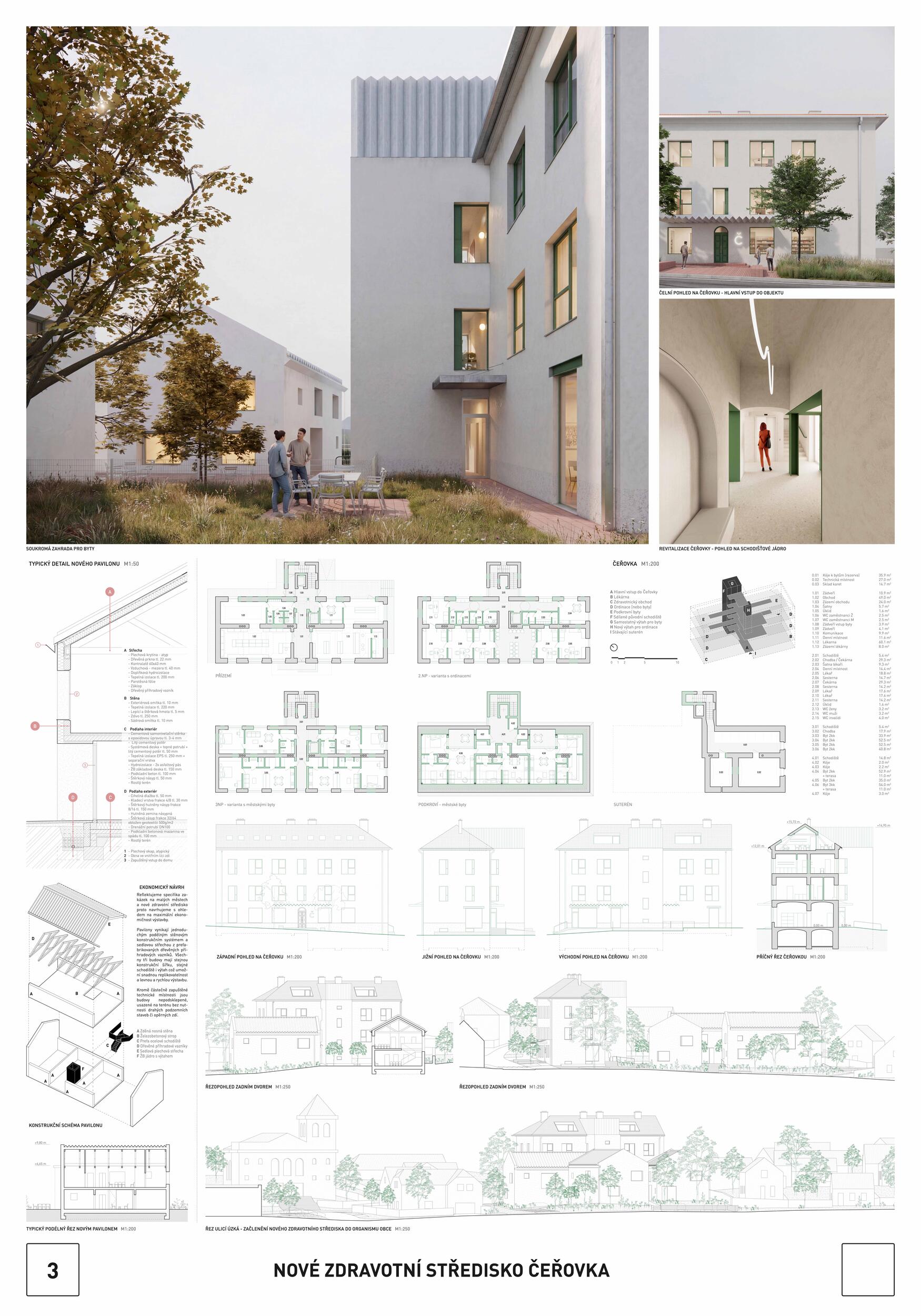
We design the health center with respect for the scale of a small village and in harmony with its character. Instead of a single large building, we divide the program into logical units across three smaller pavilions. The pavilions are two-storey with pitched roofs and a maximally economical structural solution. Their simple yet refined architecture does not compete with the landmark of Čeřovka, nor with the nearby church. The urban design develops the organic structure of the village, and the individual buildings, through their massing, define partial public spaces with distinct character. Between the three new buildings, an inner courtyard with trees is created—the heart of the healthcare complex. We strip the Čeřovka building of non-original construction layers and restore its original appearance with several clearly expressed contemporary interventions. Our solution allows for an easy interior conversion into apartments, without interventions to the load-bearing structures or the building envelope. The architecture of the new houses uses the same language as the interventions to Čeřovka, and the entire complex thus becomes one cohesive whole. The maximum possible area is dedicated to greenery and permeable surfaces for rainwater. All parking is resolved in a natural and cost-effective way directly on the ground.

Jury Evaluation

Urban Planning and traffic solutions: The design respects the character and scale of the town of Mnichovice and, as the only one of the submitted proposals, divides the new building into several smaller structures. The three proposed pavilions of the new building are not intended to rival the existing Čeřovka building or the church across the street in terms of volume. The pavilions are sensitively situated on the site with respect for the terrain and surrounding buildings. They naturally delineate the distinct character of the public spaces. This creates a naturally pleasant, human-scale center of the complex (an inner courtyard) in the middle; a clearly defined entrance plaza along Pražská Street; and a recreational garden for the residential units in the northern section. A lounge terrace for doctors has also been provided. Parking requirements are addressed by locating parking spaces both on the southern part of the site, with a smaller number on Úzká Street (for doctors), and in the immediate vicinity to the west and south. Architectural Design: The pavilion buildings intentionally share the same architectural style. They differ only in their location, orientation on the site, and functional purpose (Pavilion A for dentistry, Pavilion B for general practitioners, and Pavilion C for pediatrics and rehabilitation). The floor plan reflects the functional purpose of each pavilion. The entrance hall leads to a staircase to the second floor, and the corridor space is minimized. The renovation of the Čeřovka building is handled sensitively, stripping the building of non-original architectural additions and acknowledging contemporary interventions, evident in the facade through the design of the windows and the ground floor layout. The design allows for a simple conversion from medical offices to apartments without the need to alter the load-bearing structures or the building envelope. The ground floor houses a pharmacy, a medical supply store, and staff facilities. Technical solution, sustainability, economy: The design emphasizes the cost-effectiveness of constructing the new health center buildings: a simple longitudinal wall system and a gable roof made of prefabricated wooden trusses. The uniform structural height and width, along with identical staircases and elevators, enable easy replicability and rapid construction. On the other hand, this results in triple the costs for elevators and staircases. Only one of the buildings (Pavilion C) has a partial basement, where all technical systems are located; distribution to the other buildings is provided via utility tunnels beneath the sidewalk. The jury considers the solution involving geothermal heat pump heating and the use of photovoltaic panels on the roof to be sufficient and appropriate. The design maximizes green space; grass pavers are used in the parking areas. The design also addresses the placement of underground tanks for rainwater, which can be used for irrigation and flushing.The jury appreciates the clearly legible concept and the possibility of phasing the project (or potentially changing the functional use of both the original building and the new pavilions). The clear vision of the design is further supported by the project’s successful graphic presentation.

Previous Next
3rd Prize
  • Author Charles Cossement
  • Team Gil Menezes Cardoso
  • Quartes and Lisbon, Belgium and Portugal
Annotation

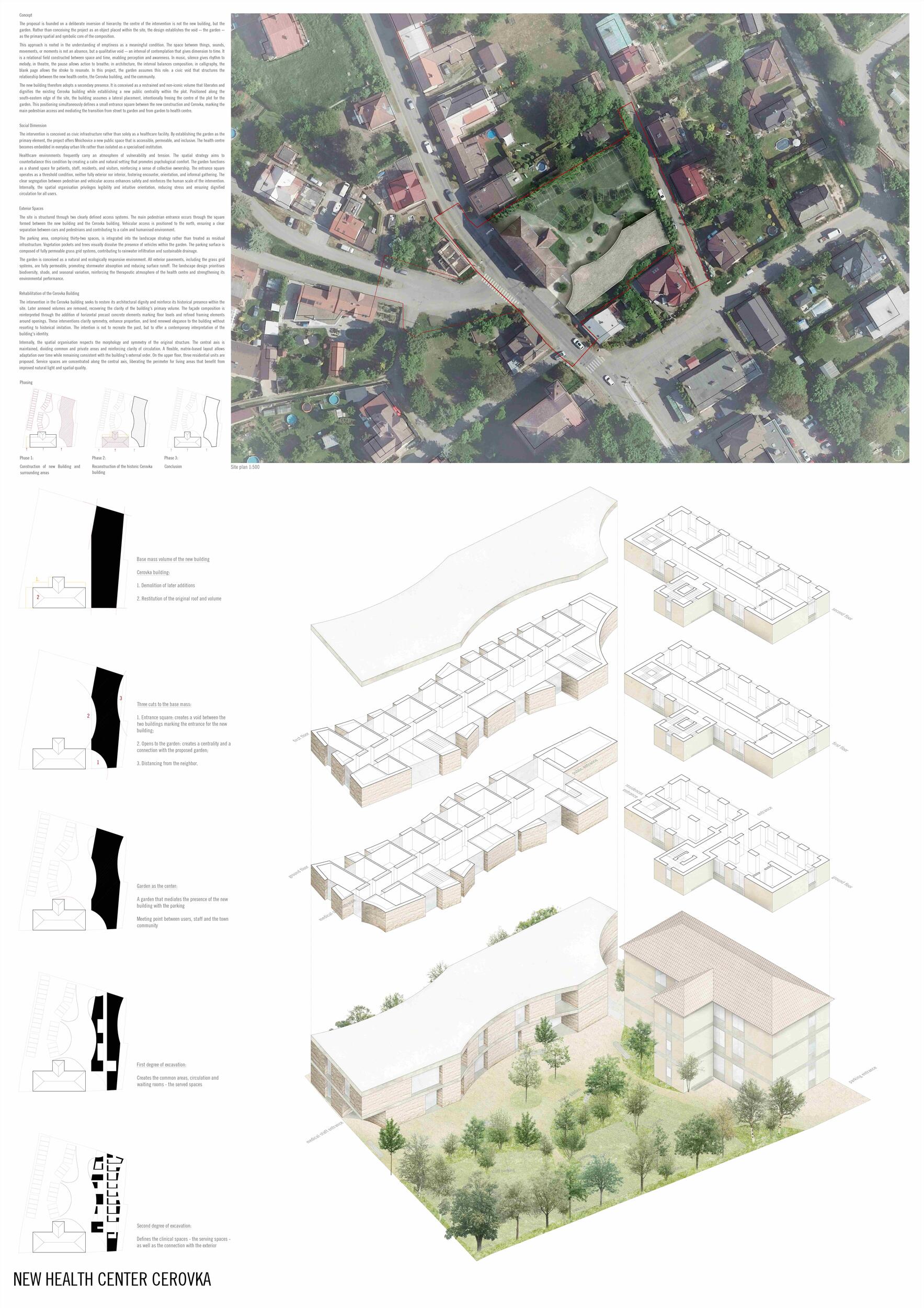
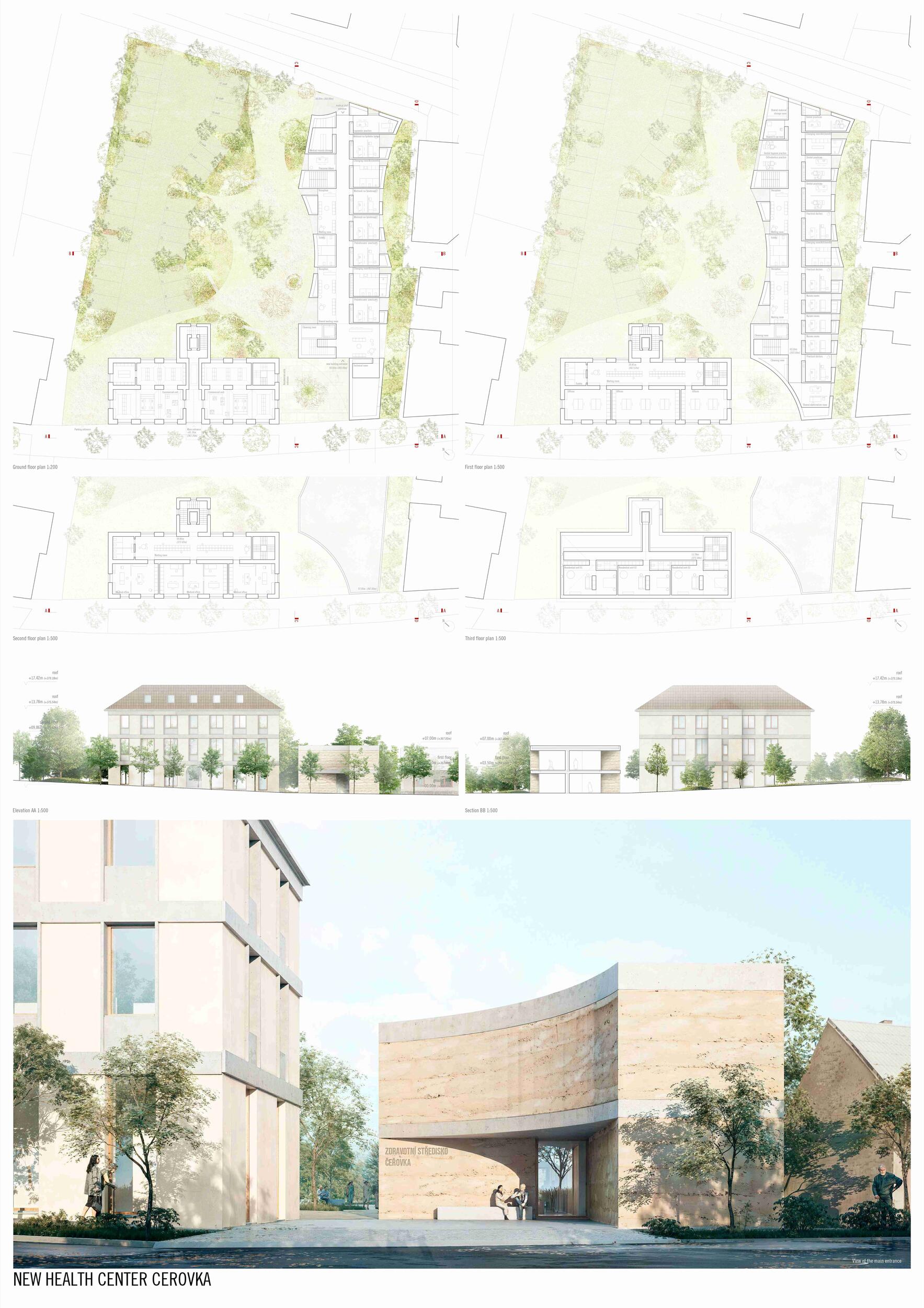
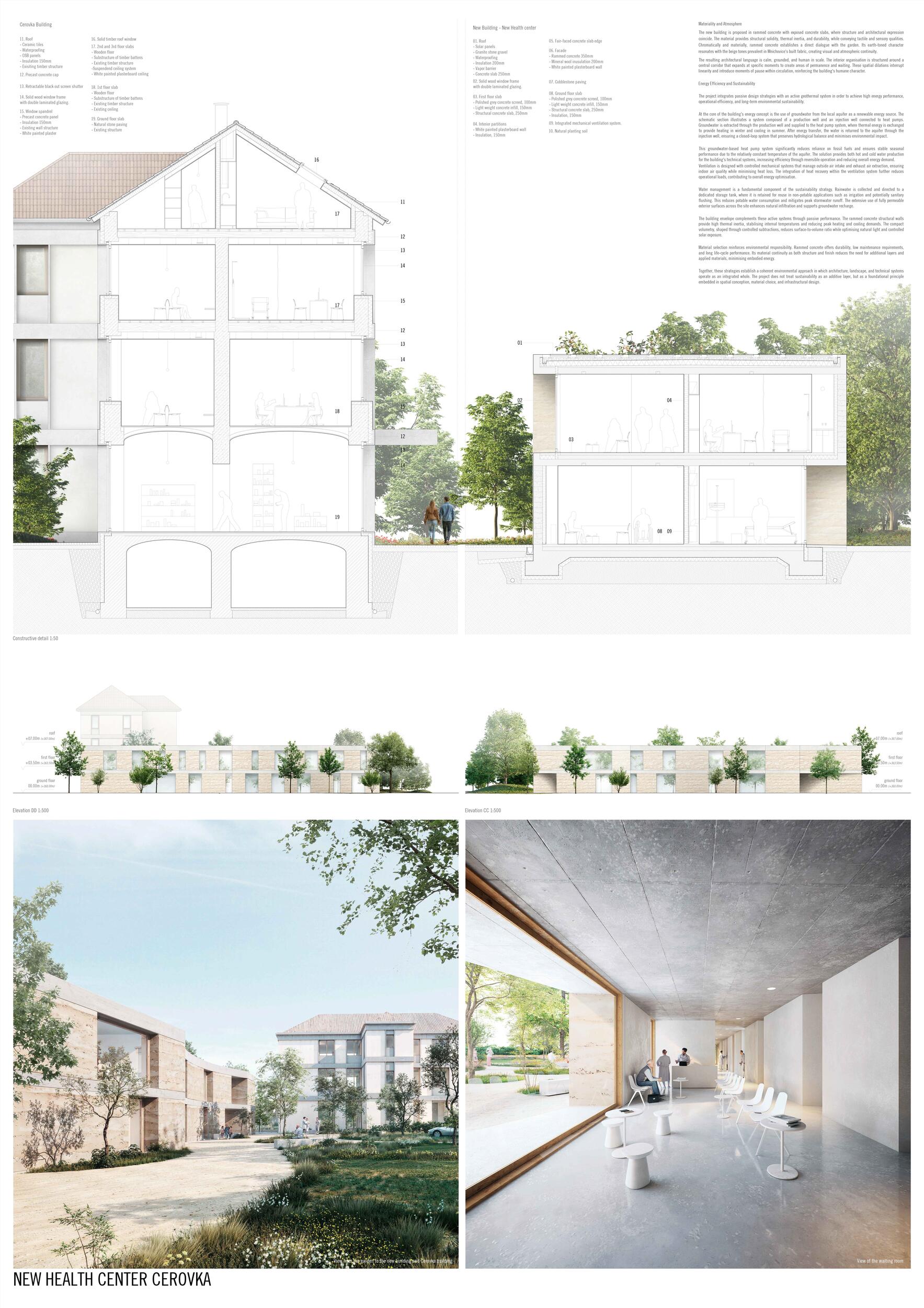
The proposal is founded on a deliberate inversion of hierarchy: the centre of the intervention is not the new building, but the garden. Rather than conceiving the project as an object placed within the site, the design establishes the void — the garden — as the primary spatial and symbolic core of the composition. This approach is rooted in the understanding of emptiness as a meaningful condition. The space between things, sounds, movements, or moments is not an absence, but a qualitative void — an interval of contemplation that gives dimension to time. It is a relational field constructed between space and time, enabling perception and awareness. In music, silence gives rhythm to melody; in theatre, the pause allows action to breathe; in architecture, the interval balances composition; in calligraphy, the blank page allows the stroke to resonate. In this project, the garden assumes this role: a civic void that structures the relationship between the new health centre, the Cerovka building, and the community.The new building therefore adopts a secondary presence. It is conceived as a restrained and non-iconic volume that liberates and dignifies the existing Cerovka building while establishing a new public centrality within the plot. Positioned along the south-eastern edge of the site, the building assumes a lateral placement, intentionally freeing the centre of the plot for the garden. This positioning simultaneously defines asmall entrance square between the new construction and Cerovka, marking the main pedestrian access and mediating the transition from street togarden and from garden to health centre.

Jury Evaluation

Urban Planning and traffic solutions: The design places the new building along the eastern boundary of the site. Together with the original Čeřovka building, it deliberately forms a central garden intended as a new, intimate public space in the city, where visitors to the health center, residents of the new apartments, and perhaps even some passersby will gather. Viewed from the presence of a public institution and creating a pleasant little square that serves as the entrance area to the center and, at the same time, as a link and an invitation to visit the courtyard garden. The garden incorporates a parking lot with the required capacity. The convincing landscape design demonstrates that it is possible to satisfactorily combine a recreational and pleasant-looking garden with the operational need for parking; the design achieves this through the irregular layout of the parking lot and naturally integrated islands of denser vegetation that screen the view of parked cars. In some places, however, vehicle traffic patterns would still need to be reviewed. A shortcoming of the design is the failure to address the reality of the sloping terrain toward Úzká Street. The proposed northern entrance is unfeasible in its current form. It is unclear how the proposed building mass would relate to the sloping terrain. From the north side, the building would in any case reach a height of nearly three stories. Architectural design: The shaping of the building mass combines the rational simplicity of a three-wing corridor layout with a very sensitive and refined undulation of the building’s perimeter. The rhythmic organization of the interior space through open waiting areas functions effectively and provides the interior with a pleasant scale as well as a connection to the garden. The recessed doors to the examination rooms are a successful detail that supports the overall concept. An aspect not explained in the presentation is the empty spaces between the undulating perimeter wall and the interior walls. From an economic standpoint, it is unreasonable for them to remain unused. The materiality of the facades stems from a clear architectural rationale and generally impressed the jury; however, in the context of the city and its budgetary constraints, the design appears inadequate. The design treats the original Čeřovka building sensitively in terms of both massing and layout. However, the treatment of the facade did not convince the jury. The design clearly attempts to enhance the connection with the new building through the addition of prefabricated concrete mezzanine cornices. However, the jury does not consider this principle appropriate given the building’s structural system and history. The apartments designed on the top floor feature simple and fresh layouts. From the perspective of cultural norms, however, it would be necessary to make the restroom facilities accessible from the public area of the layout. Technical Solution, Sustainability, Economics: The design offers a rational structural solution and a thoughtful approach to building technologies. From an economic standpoint, it would be necessary to evaluate the unconventional structural and material solution for the facade. The building’s relationship to the sloping terrain remains unclear in terms of both massing and structure.

Previous Next