- Author ADEPT
- Team Anders Lonka, Nicolai Lindberg, Tatyana Eneva, Alberte Danvig, Asger Rasmussen
- Copenhagen, Denmark
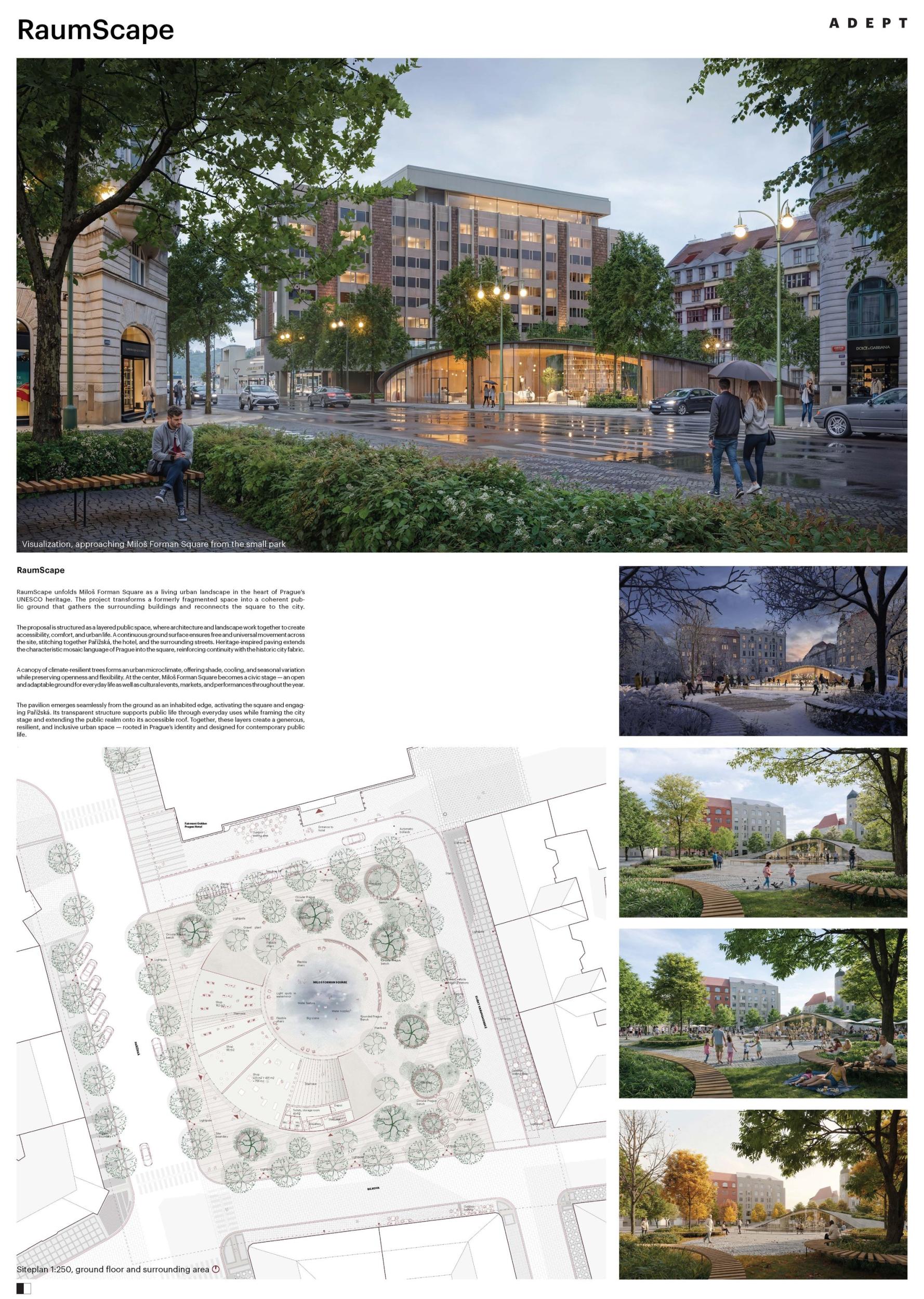
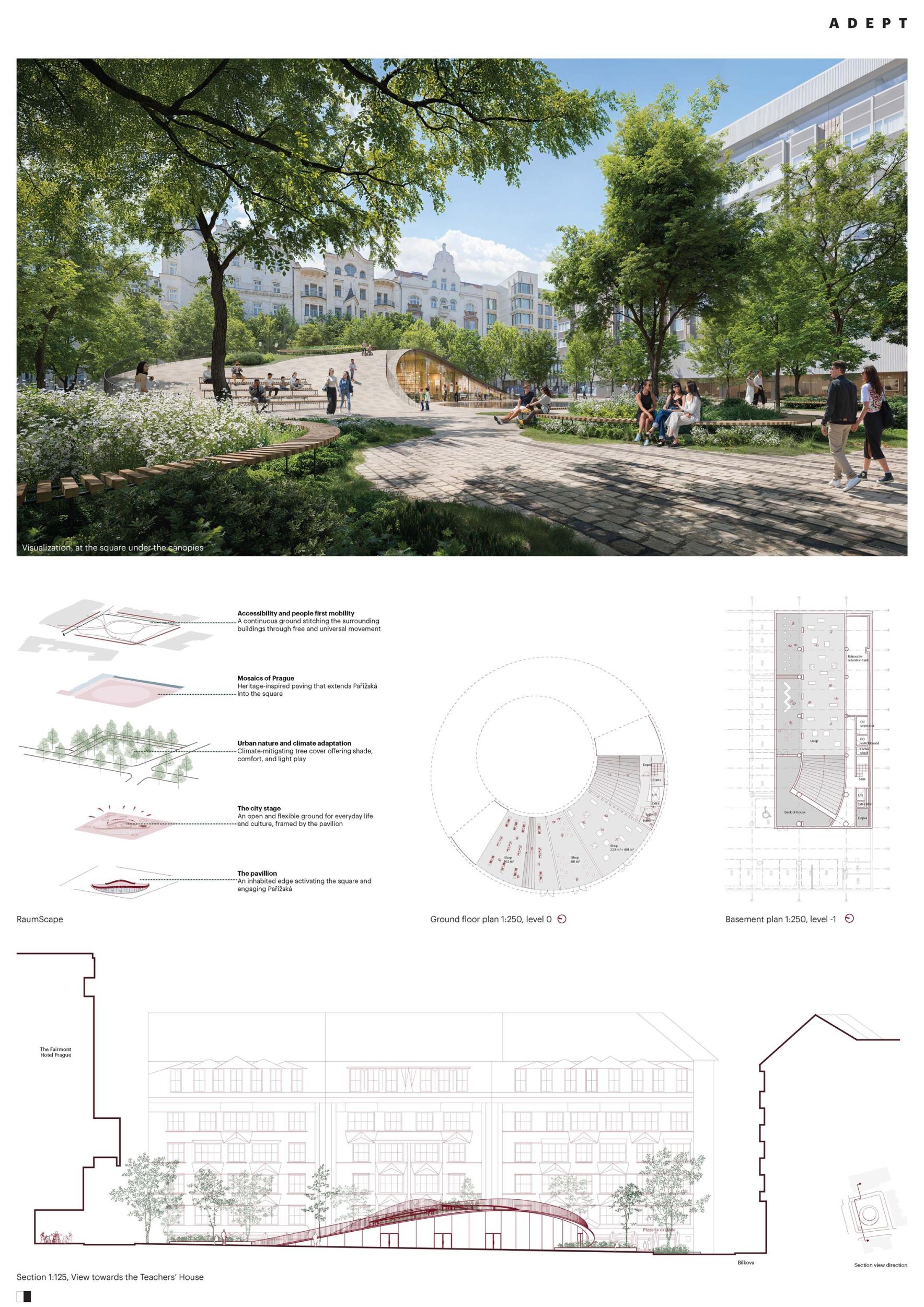
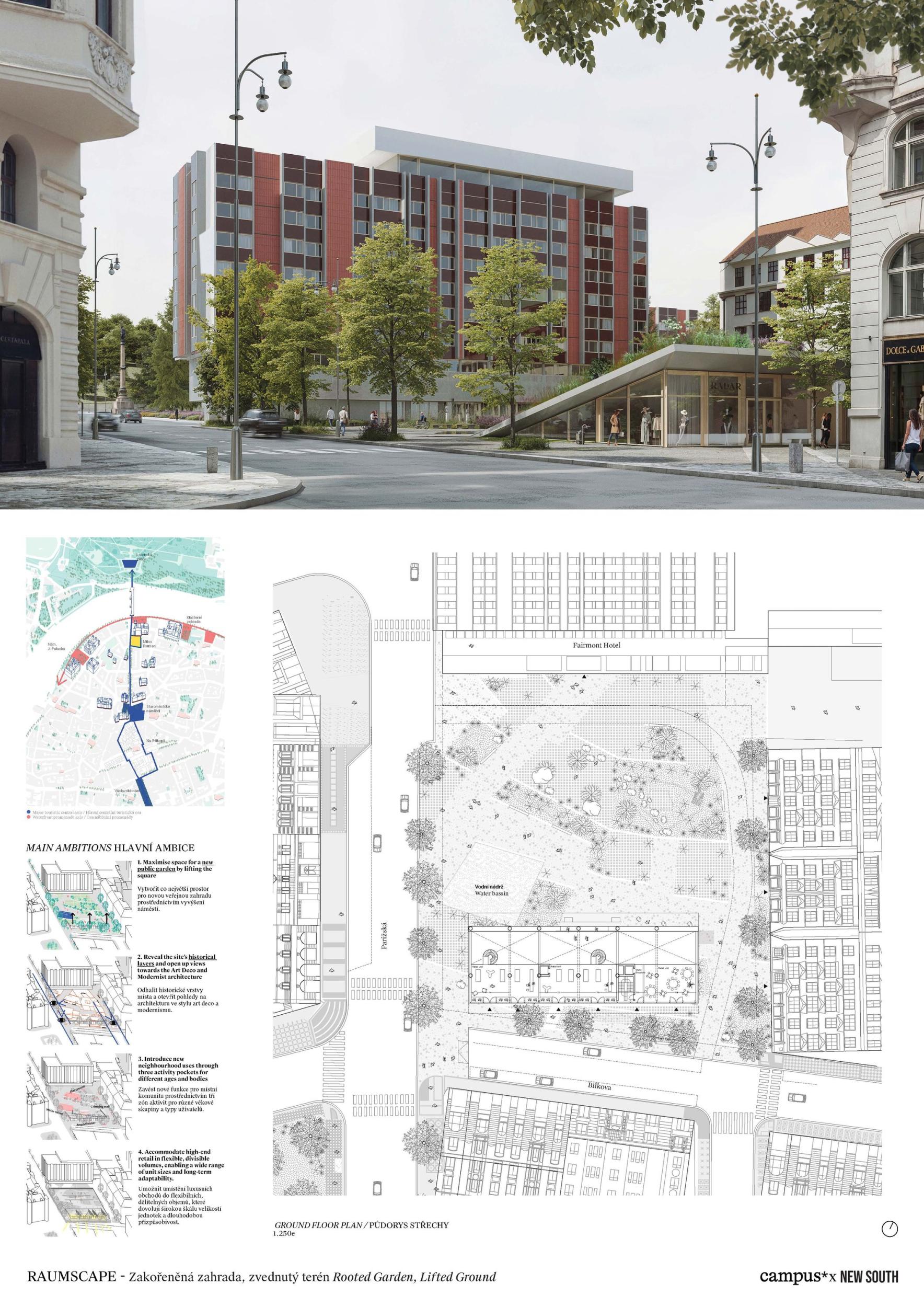
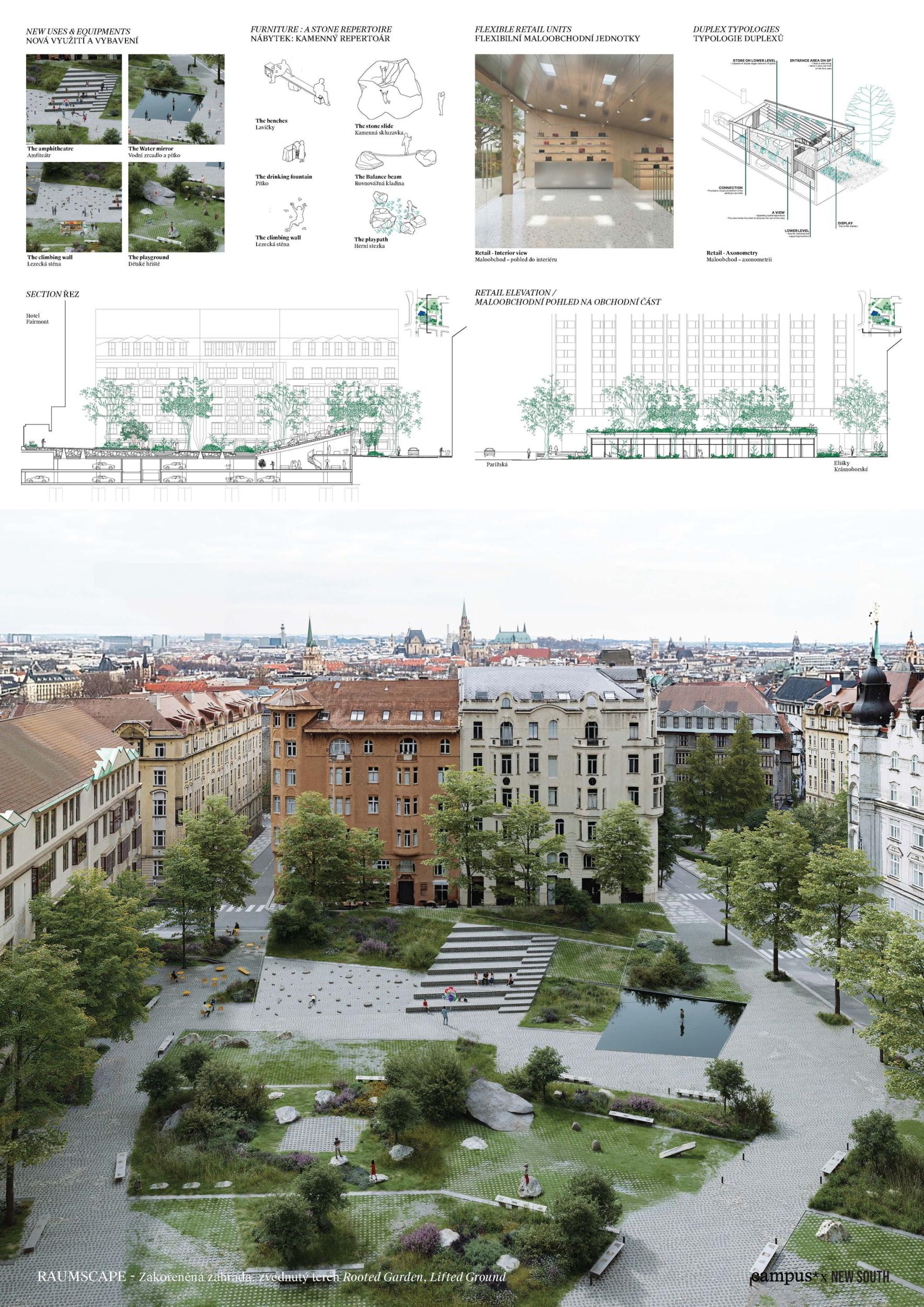
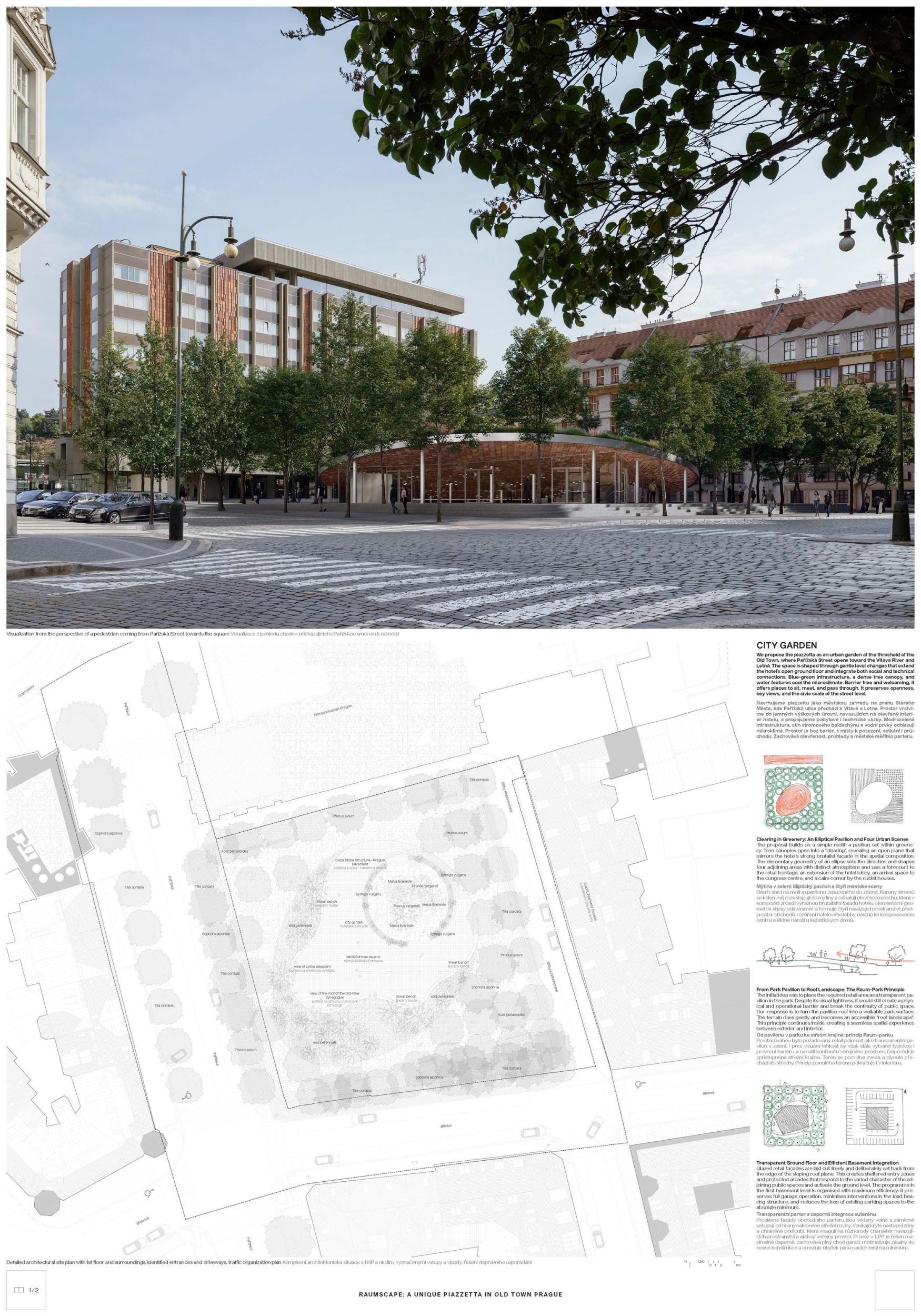
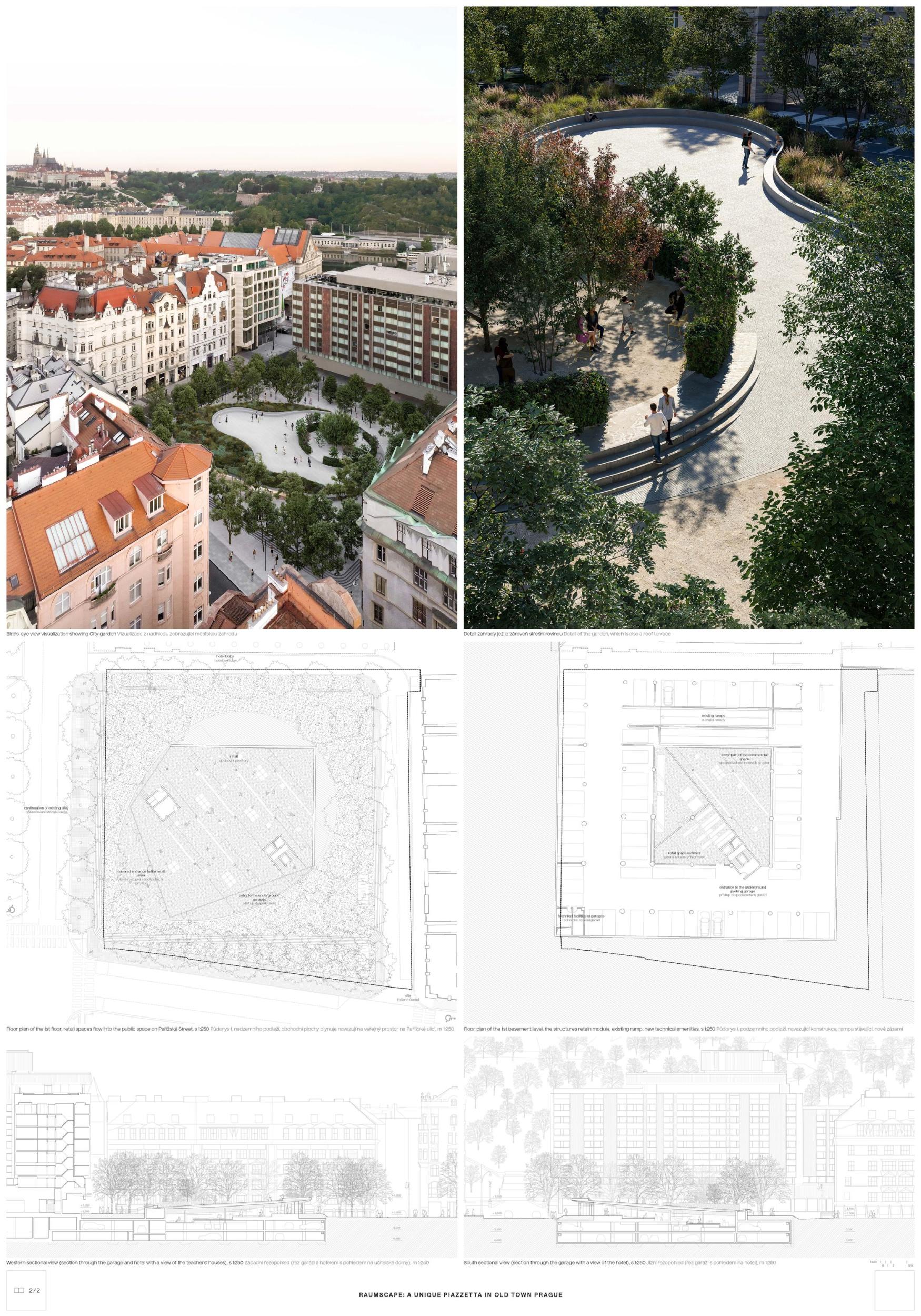
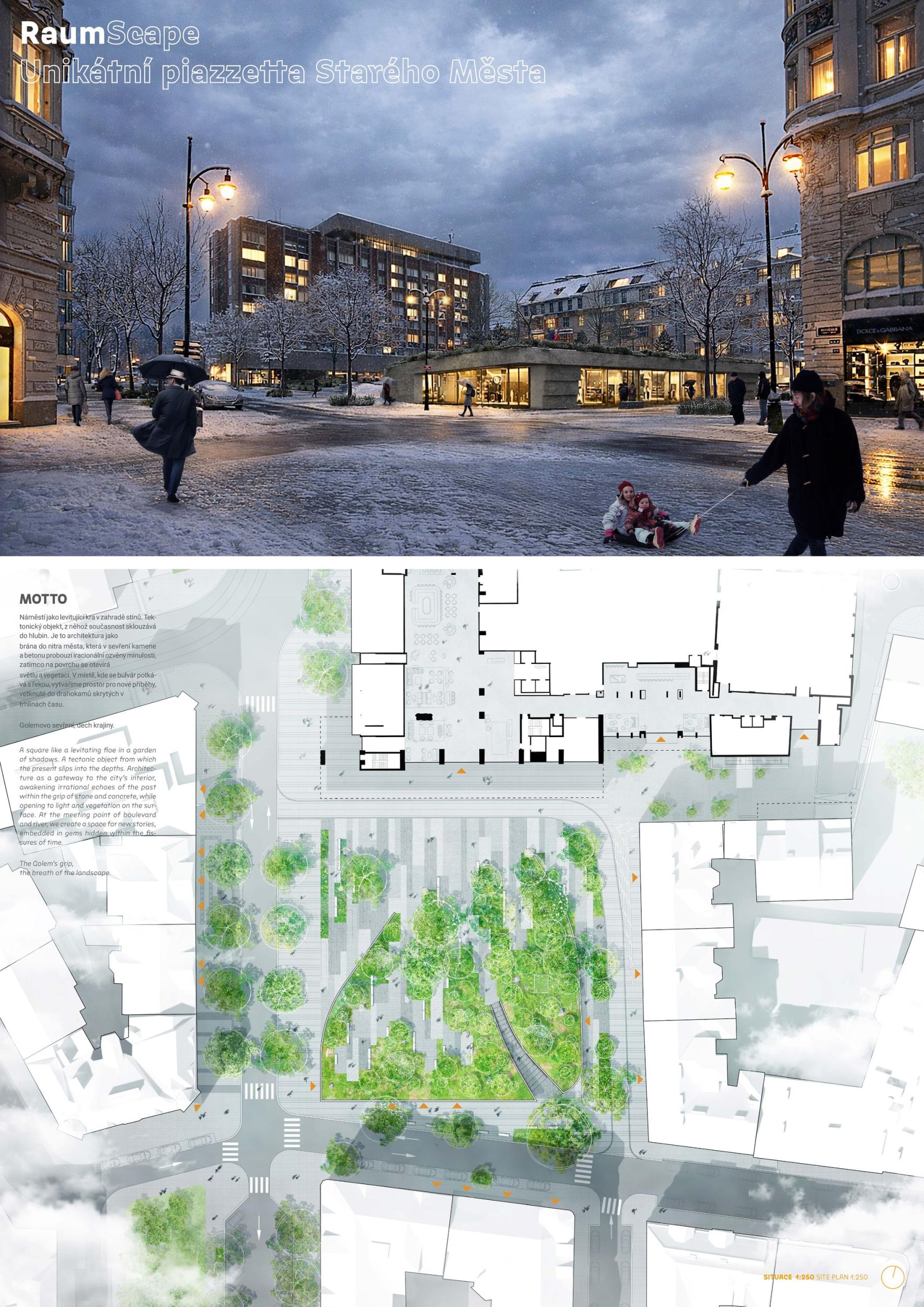
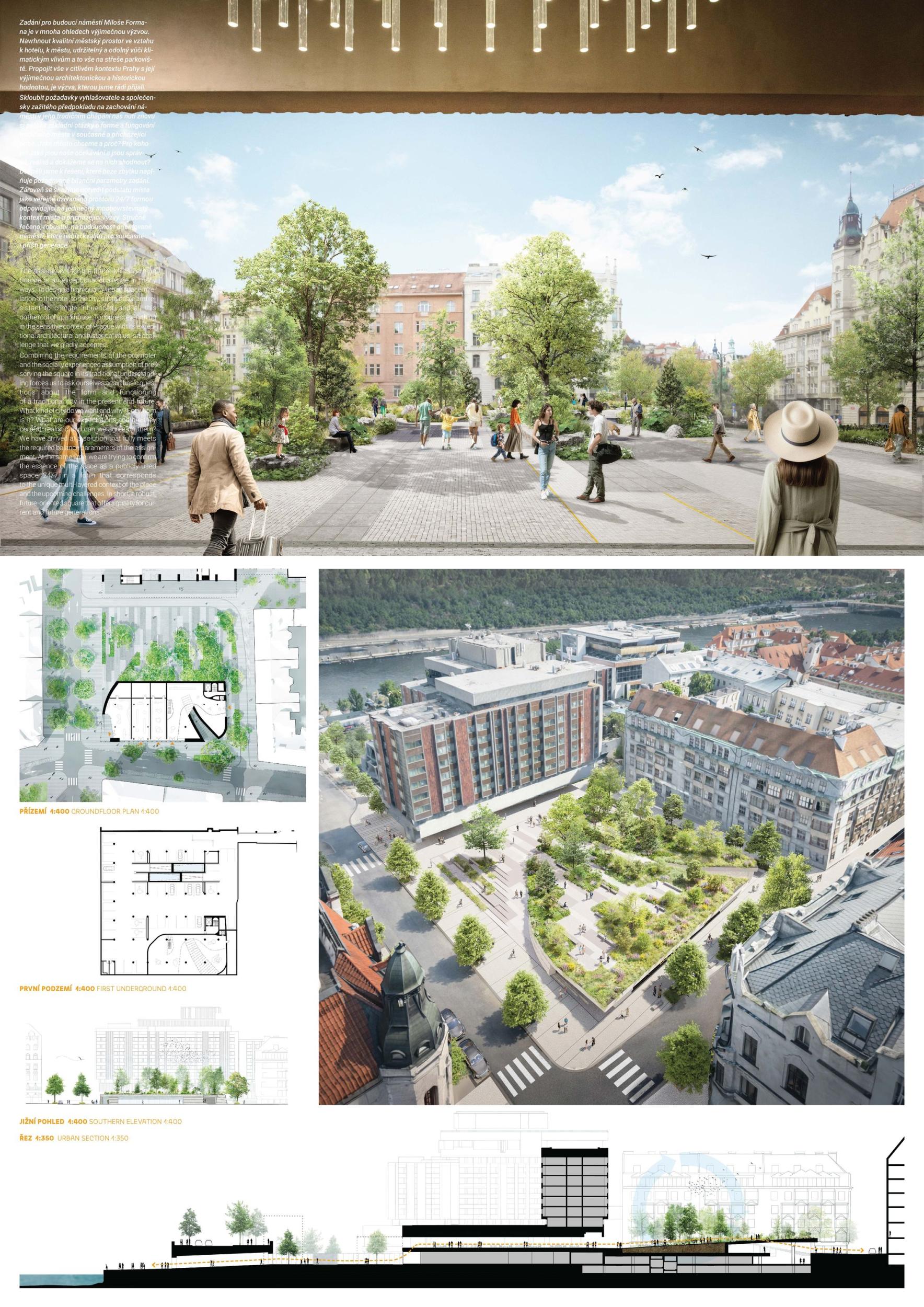
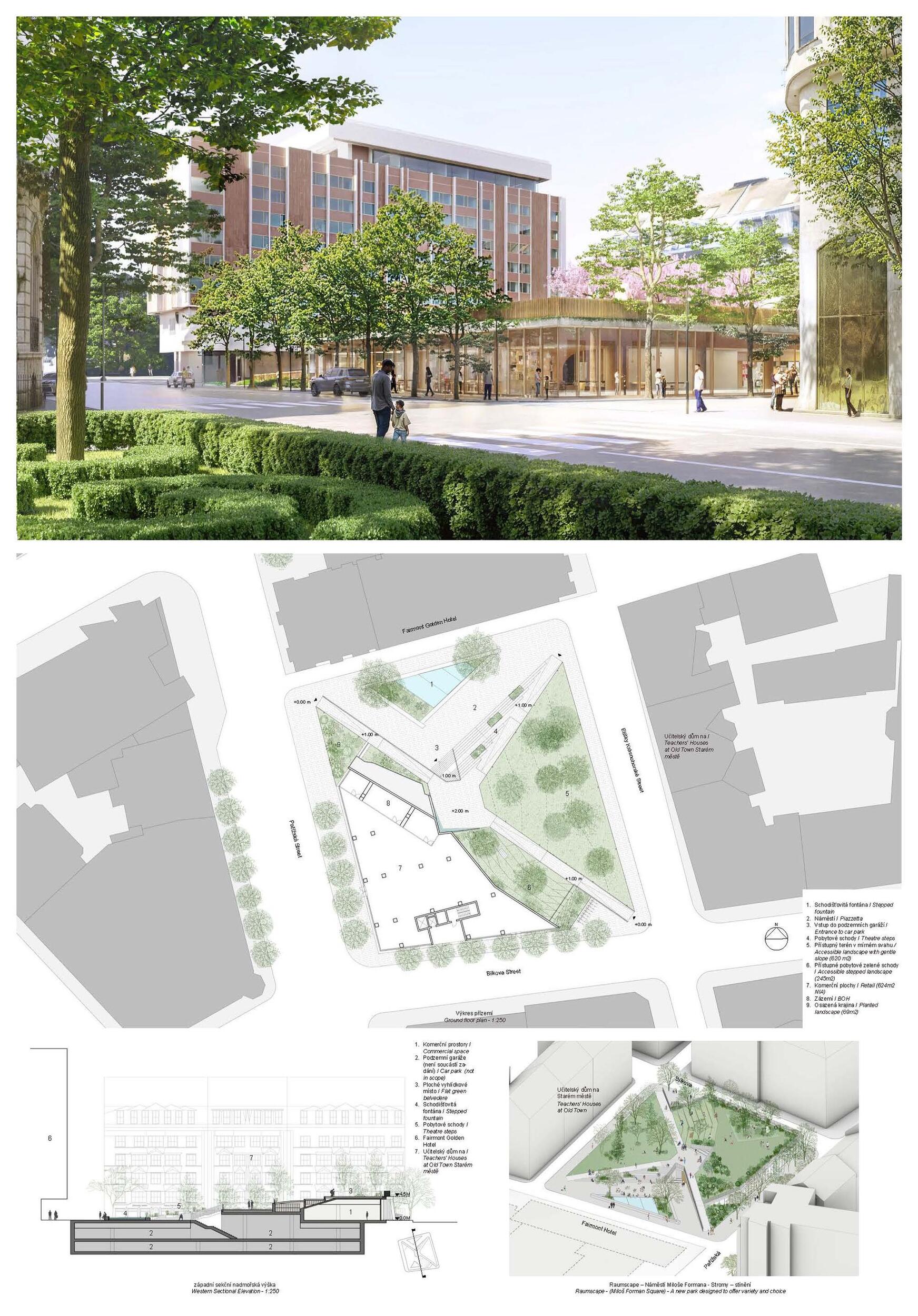
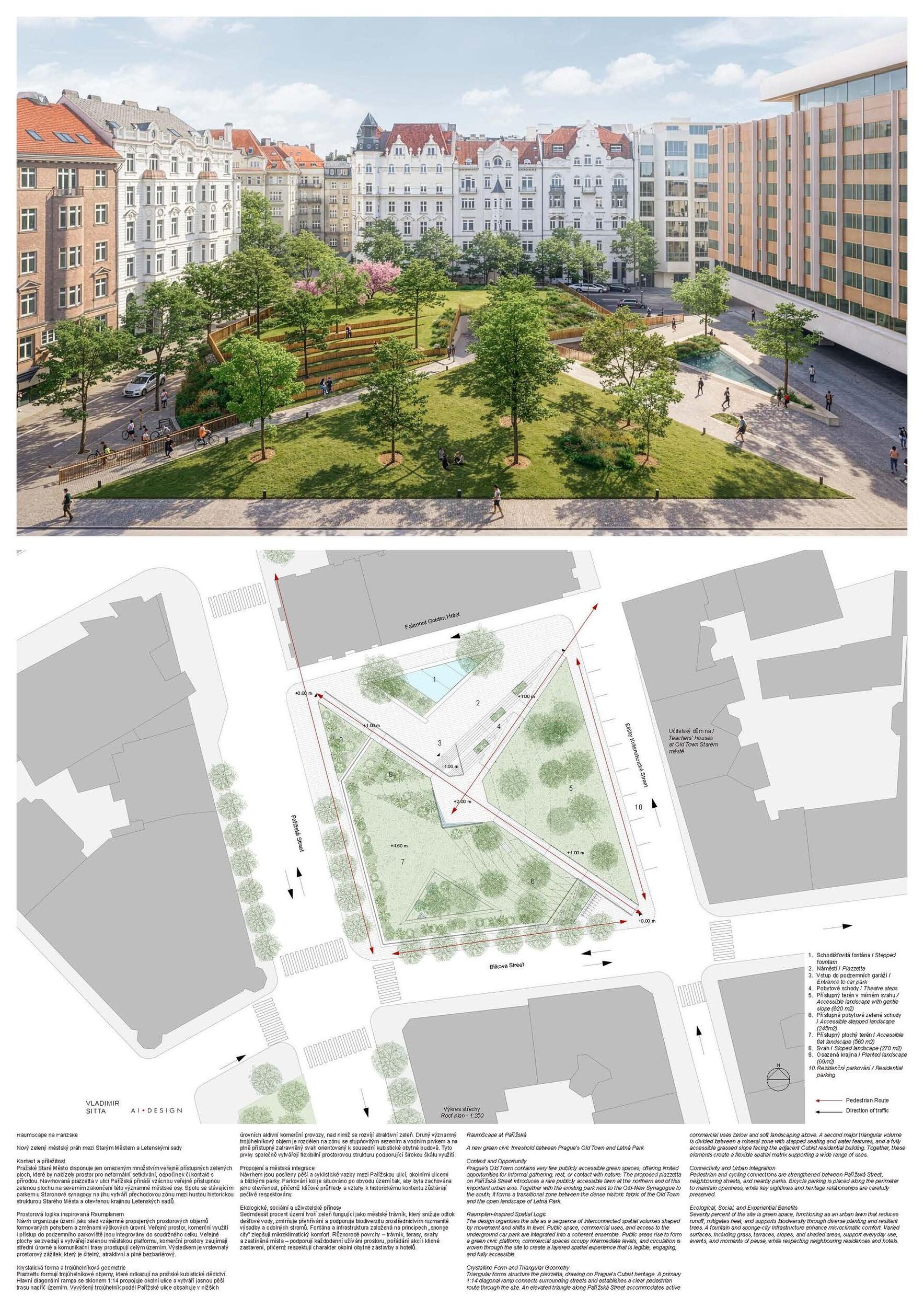
RaumScape unfolds Miloš Forman Square as a living urban landscape in the heart of Prague’s UNESCO heritage. The project transforms a formerly fragmented space into a coherent public ground that gathers the surrounding buildings and reconnects the square to the city. The proposal is structured as a layered public space, where architecture and landscape work together to create accessibility, comfort, and urban life. A continuous ground surface ensures free and universal movement across the site, stitching together Pařížská, the hotel, and the surrounding streets. Heritage-inspired paving extends the characteristic mosaic language of Prague into the square, reinforcing continuity with the historic city fabric. A canopy of climate-resilient trees forms an urban microclimate, offering shade, cooling, and seasonal variation while preserving openness and flexibility. At the center, Miloš Forman Square becomes a civic stage — an open and adaptable ground for everyday life as well as cultural events, markets, and performances throughout the year. The pavilion emerges seamlessly from the ground as an inhabited edge, activating the square and engaging Pařížská. Its transparent structure supports public life through everyday uses while framing the city stage and extending the public realm onto its accessible roof. Together, these layers create a generous, resilient, and inclusive urban space — rooted in Prague’s identity and designed for contemporary public life.
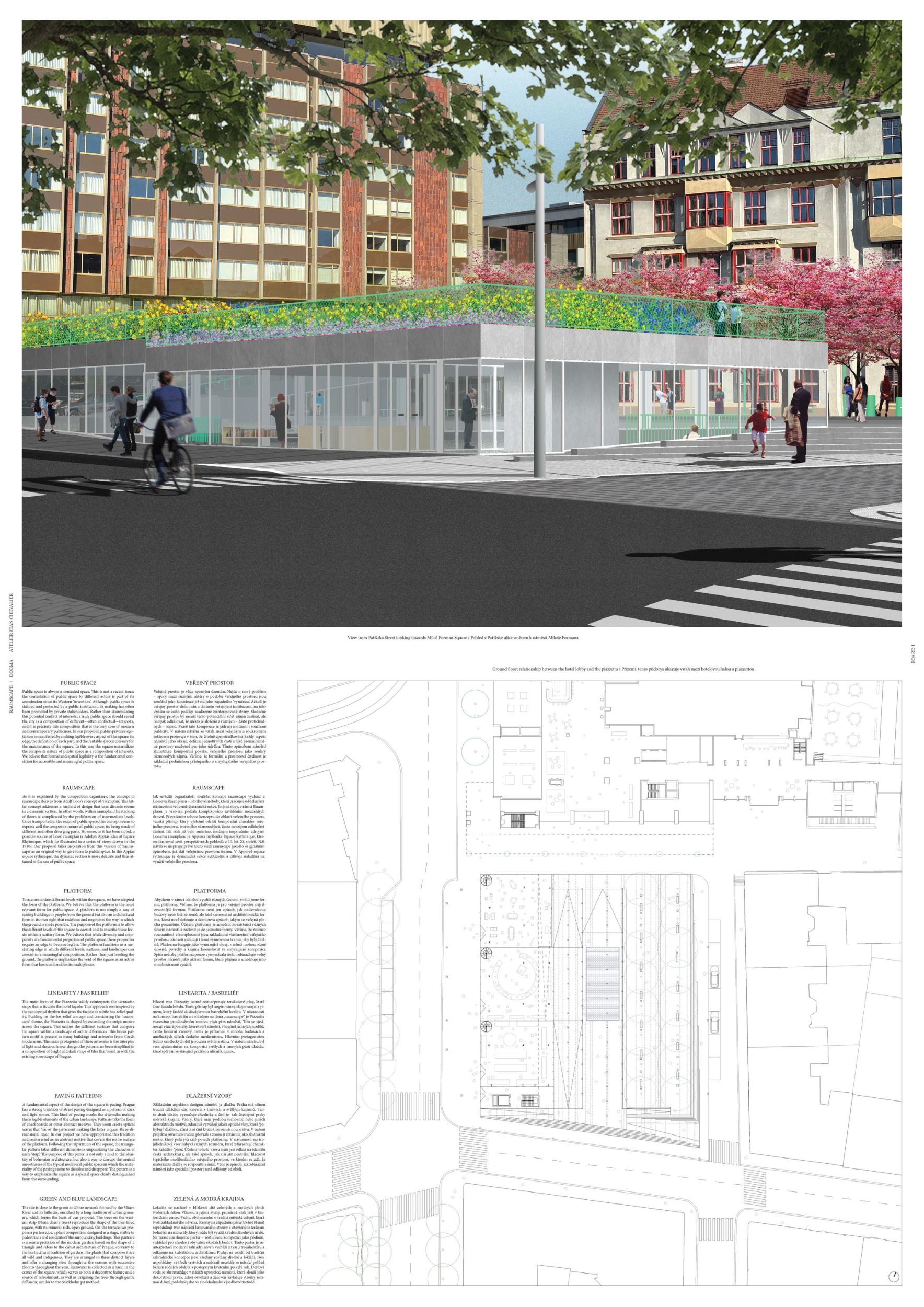
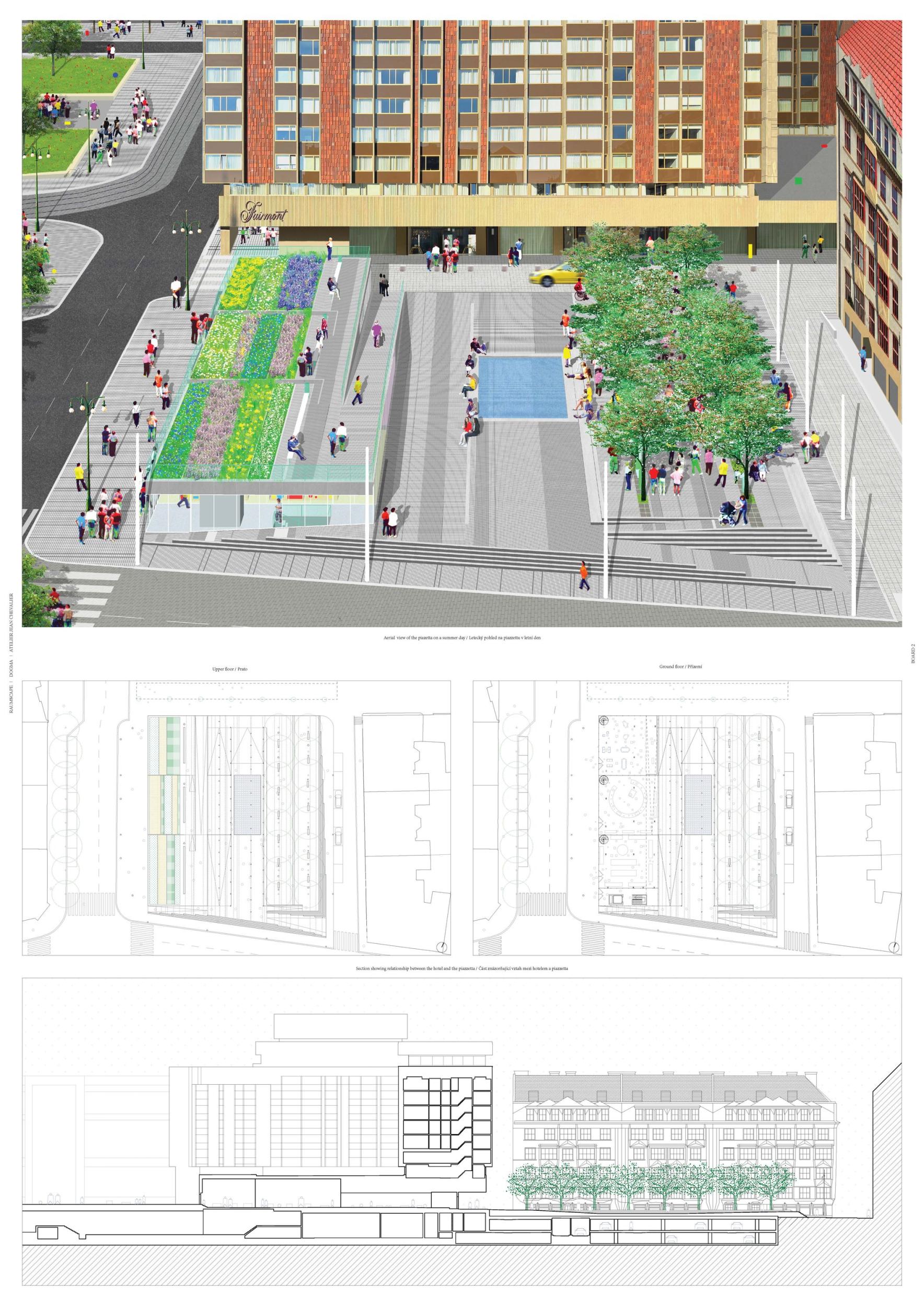
The jury is thrilled by what this proposal offers to the city: it appreciates the well-considered scale of both the pavilion and the open spaces, the permeability of the site, and its relationship to the Brutalist hotel. The open piazzetta will become a public space supporting a variety of opportunities for social interaction. The pavilion forms an integral part of the open space and activates the potential of Pařížská Street as well as the piazzetta itself. The landscape design successfully meets the requirements for spatial clarity and environmental adaptability. The slope of the pavilion roof and its potential public use should be further elaborated.