New Quarter for the Bata's Town of Zruč

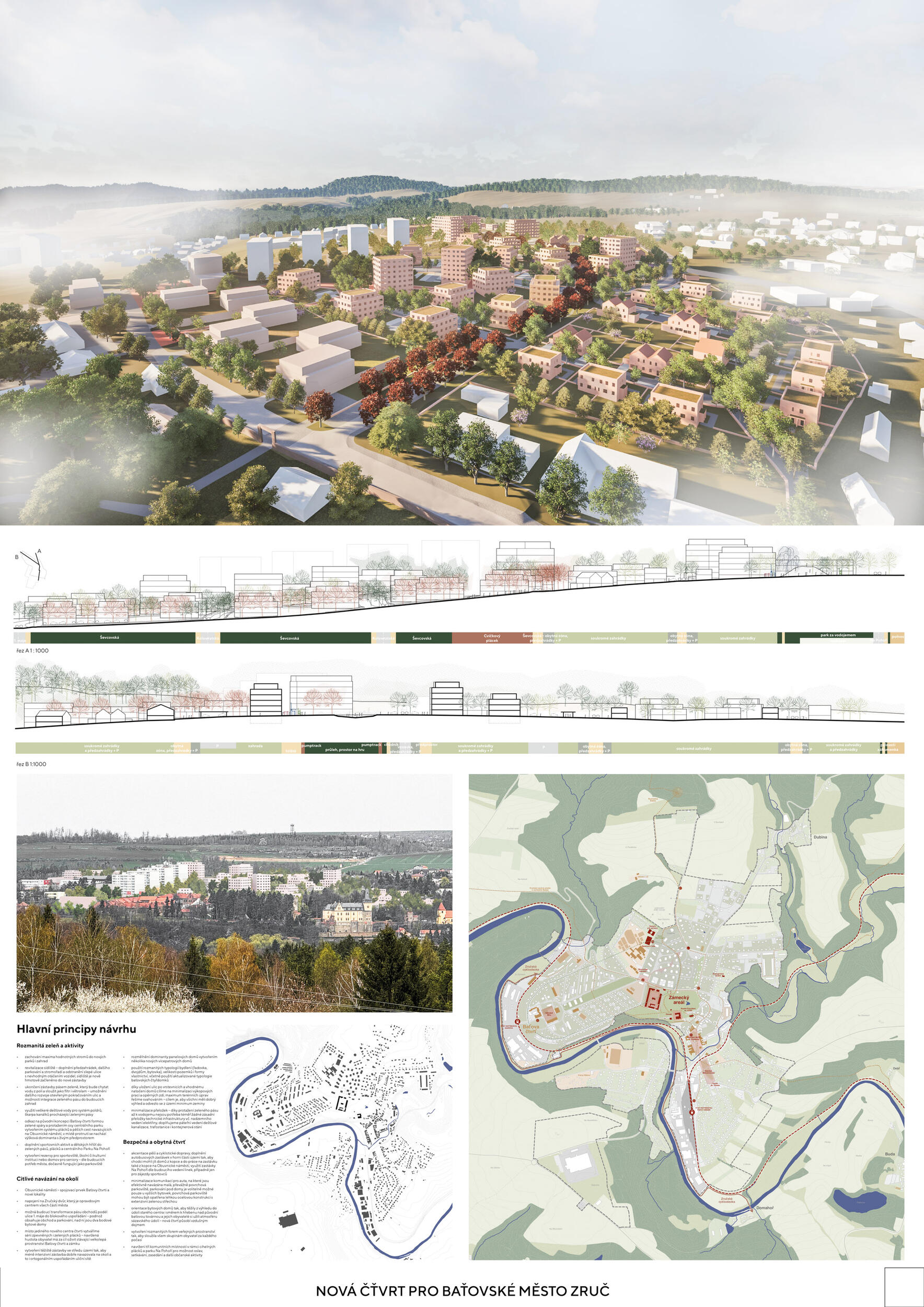
1st prize
  • Author gogolák + grasse
  • Team Ivan Gogolák, Lukáš Grasse / collaboration: Štěpán Matějka, Milan Kubeš, Matúš Berák, Karolína Řízek Čechová, Alexandra Nichtová
  • Prague, Czechia
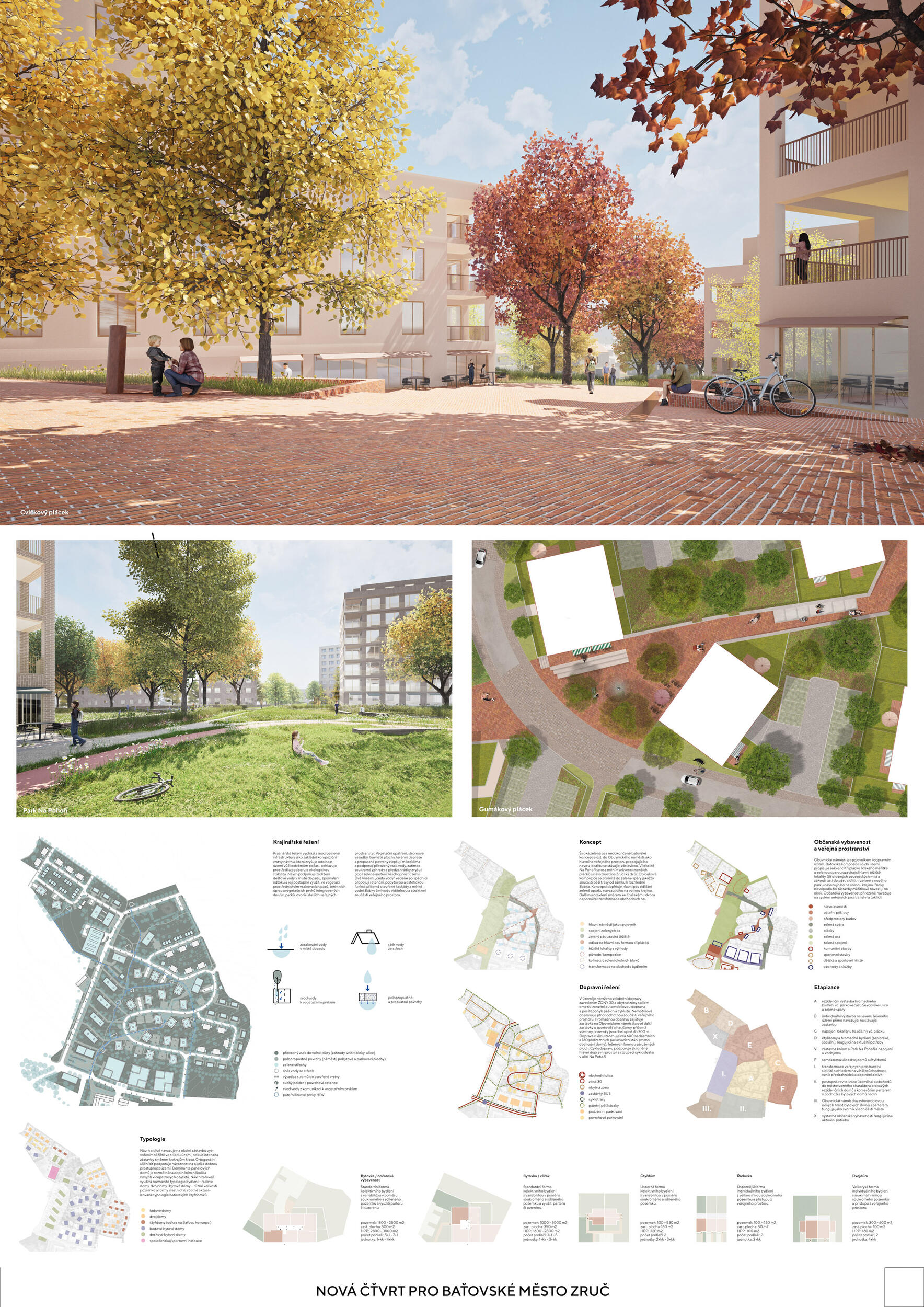
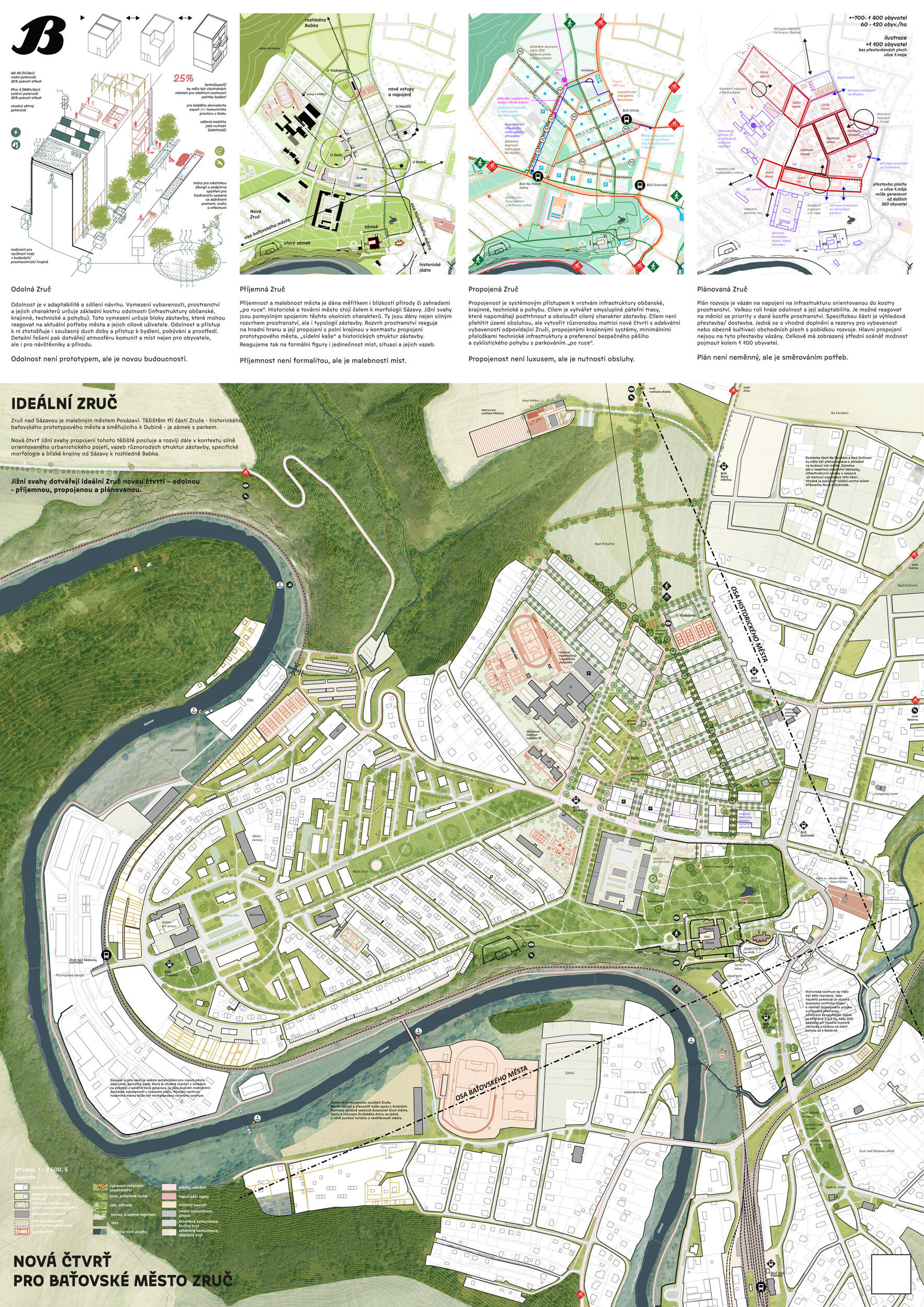
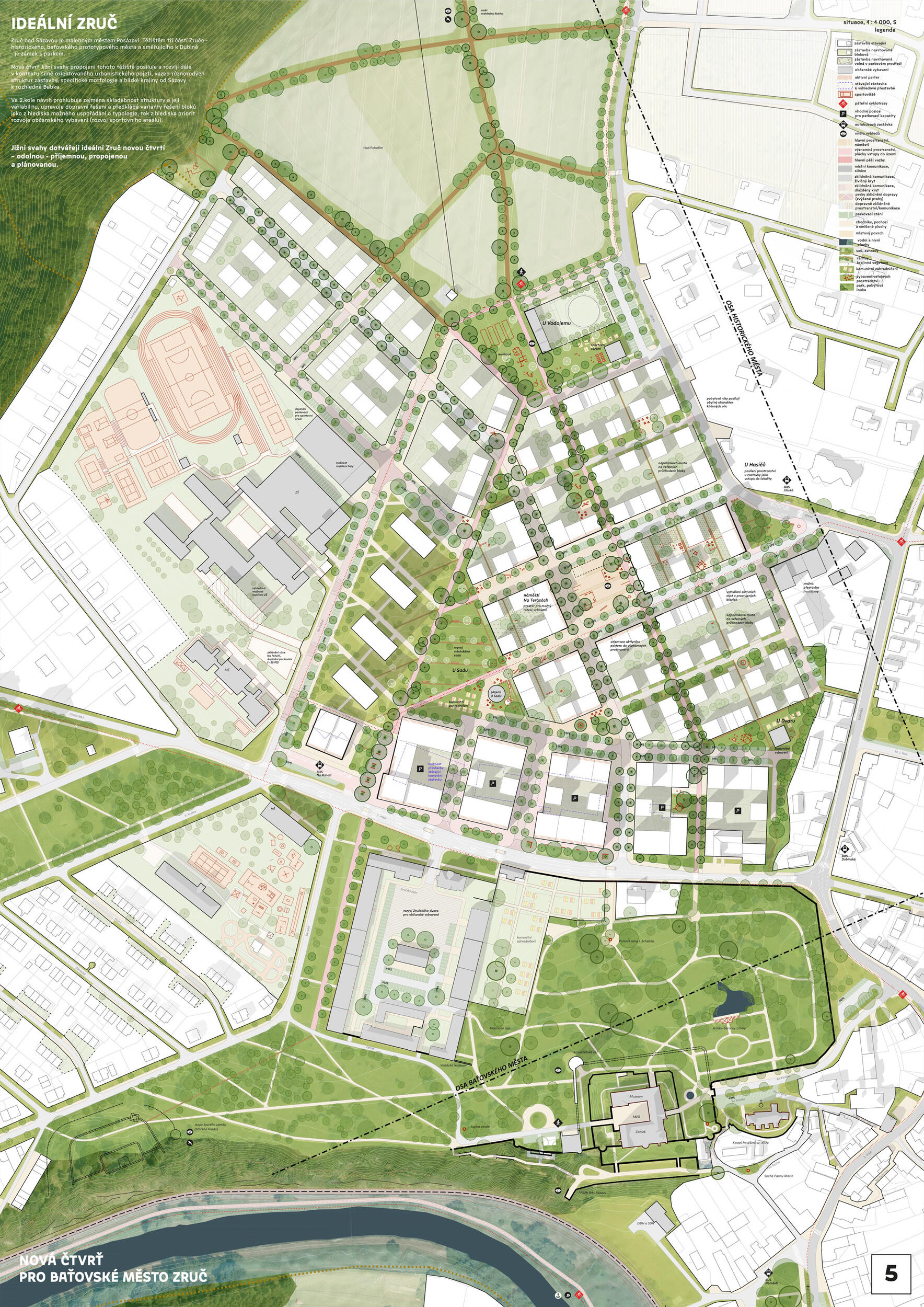
Annotation

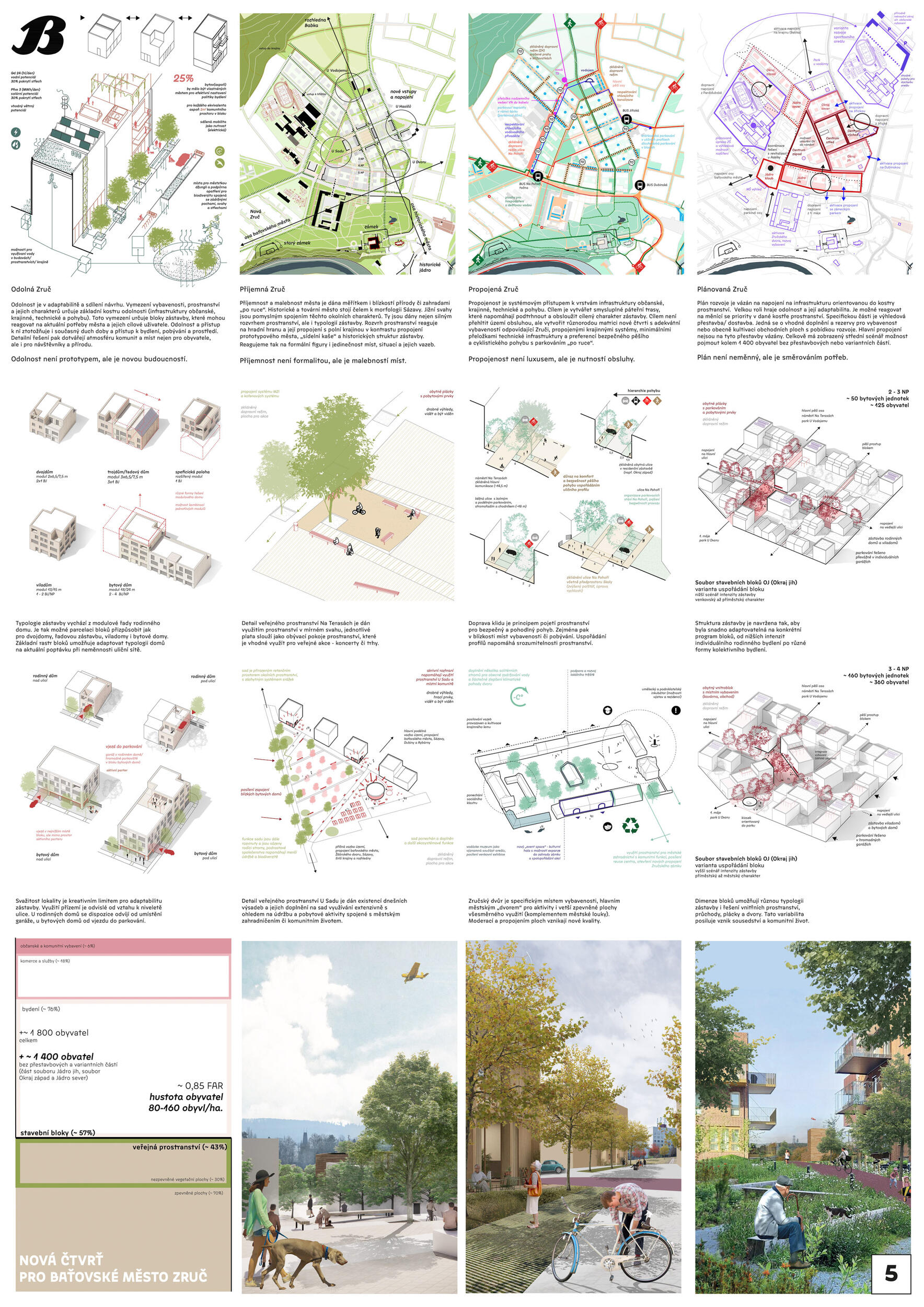
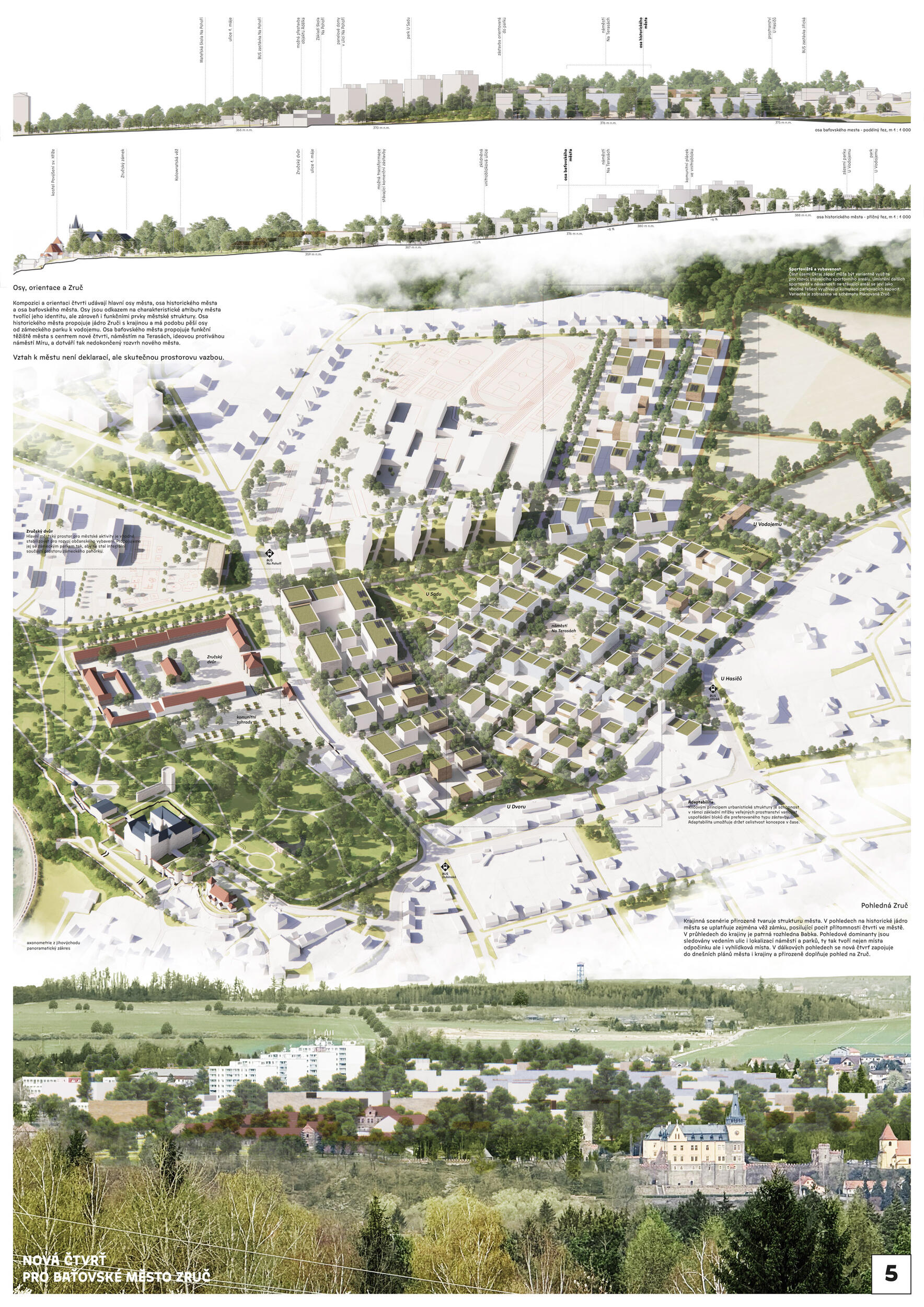
*The Ideal Zruč *presents a holistic vision for the future development of Zruč as a town of up to 10,000 inhabitants. It imagines a community of residents who value the town's close relationship with its surrounding landscape and choose to live and work locally because of its high-quality environment and strong social ties. The proposal prioritises walkability, neighbourhood interaction, local shops and services, supported by appropriate civic amenities. During the summer, the town shares its cultural life with canoeists, an inseparable part of the Sázava River, while throughout the year it welcomes visitors exploring both the historic town and its remarkable natural surroundings. The concept builds upon Baťa's progressive vision through the sensitive regeneration of the Baťa heritage and the transformation of Sázavanka into a new centre of innovation and production. Respect for cultural heritage, historic landmarks and the château landscape is combined with a rejection of large-scale commercial developments that undermine the character of towns. Rather than becoming a commuter settlement, Zruč is envisioned as one of the most desirable places to live in the wider region.

Jury Evaluation

The jury awarded the proposal the First Prize for its most convincing overall approach to the site. The proposal is based on a clear and legible concept that uses a system of public spaces as the primary element connecting the historic town centre, the Baťa-era neighbourhood, and the new development area. A key strength of the proposal lies in its coherent narrative, consistently reflected in both the urban design solution and the accompanying landscape interventions. The jury particularly appreciated the exceptionally well-developed relationships with the surrounding context, especially the connection to Zruč Manor, the high degree of site permeability, and the carefully considered network of pedestrian links. The proposal ranks among the strongest entries in terms of connecting different parts of the town and addressing broader urban relationships. The northern edge of the site and its transition into the surrounding landscape were also evaluated very positively. The concept of an agricultural landscape made accessible through a network of paths represents a sustainable yet realistic model of public space with low future maintenance requirements. Another quality of the proposal is its compact urban structure, appropriately scaled to the character of Zruč nad Sázavou. The proposed blocks allow for a relatively intensive use of the site without compromising its residential character. The jury also appreciated the flexibility of the solution, its capacity to respond to various future development scenarios, and the thorough incorporation of comments from the first stage of the competition. Despite its undeniable qualities, the jury identified several issues that will require further development. In particular, greater attention should be paid to the site's topography and the accessibility of the main pedestrian routes, whose gradients may present challenges in certain locations. The size of the main public space, the proposed treatment of the Adélka building, and certain parts of the proposed block structure—particularly those located north of the existing apartment buildings—also warrant further discussion. The jury additionally found that the proposal lacked a clearer strategy for integrating the existing buildings along 1. máje Street into the initial phases of development and recommends giving greater consideration to existing property ownership patterns and the site's realistic development constraints in the next stage. Despite these reservations, the jury concluded that the proposal best fulfils the objectives of the competition. It successfully connects the town with the surrounding landscape, creates a high-quality system of public spaces, and offers a realistic and long-term sustainable vision for the development of the site.
Previous Next
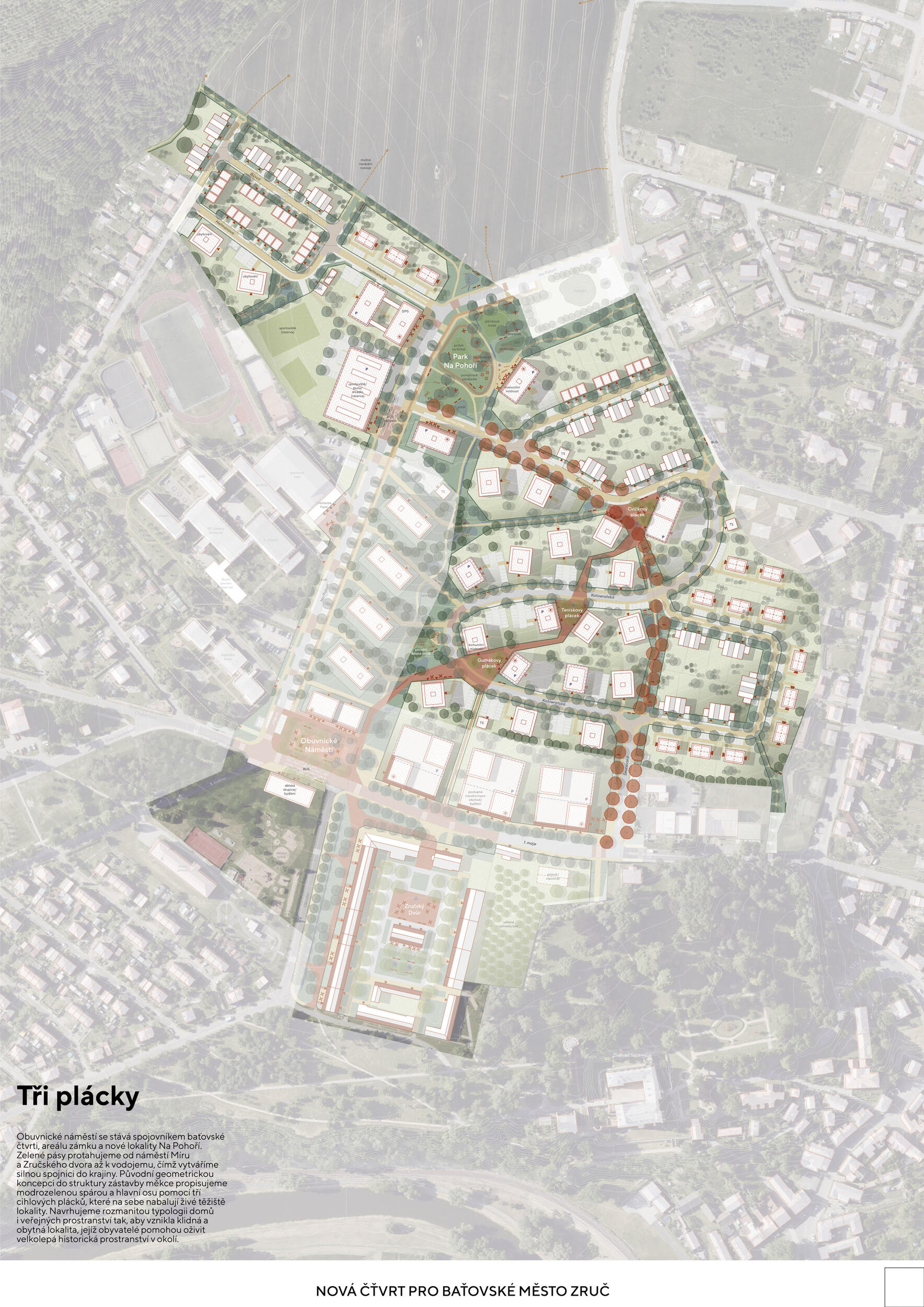
2nd prize
  • Author Bis+Chudý
  • Team Vojtěch Bis, Ondřej Chudý / collaboration: Magdalena Smetanová (landscape), Michal Uhlík (transport consultation)
  • Dolní Újezd / Tábor
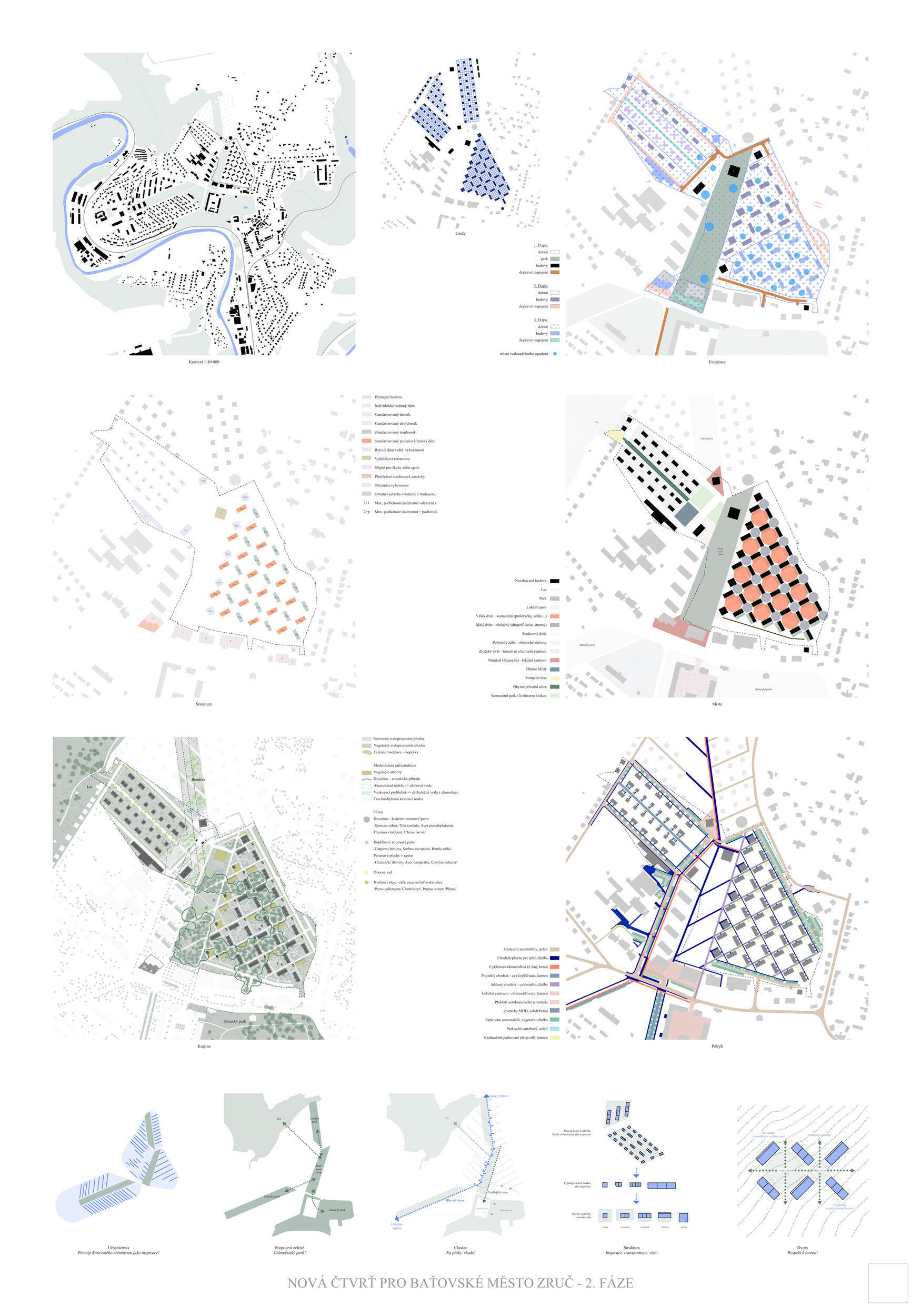
Annotation

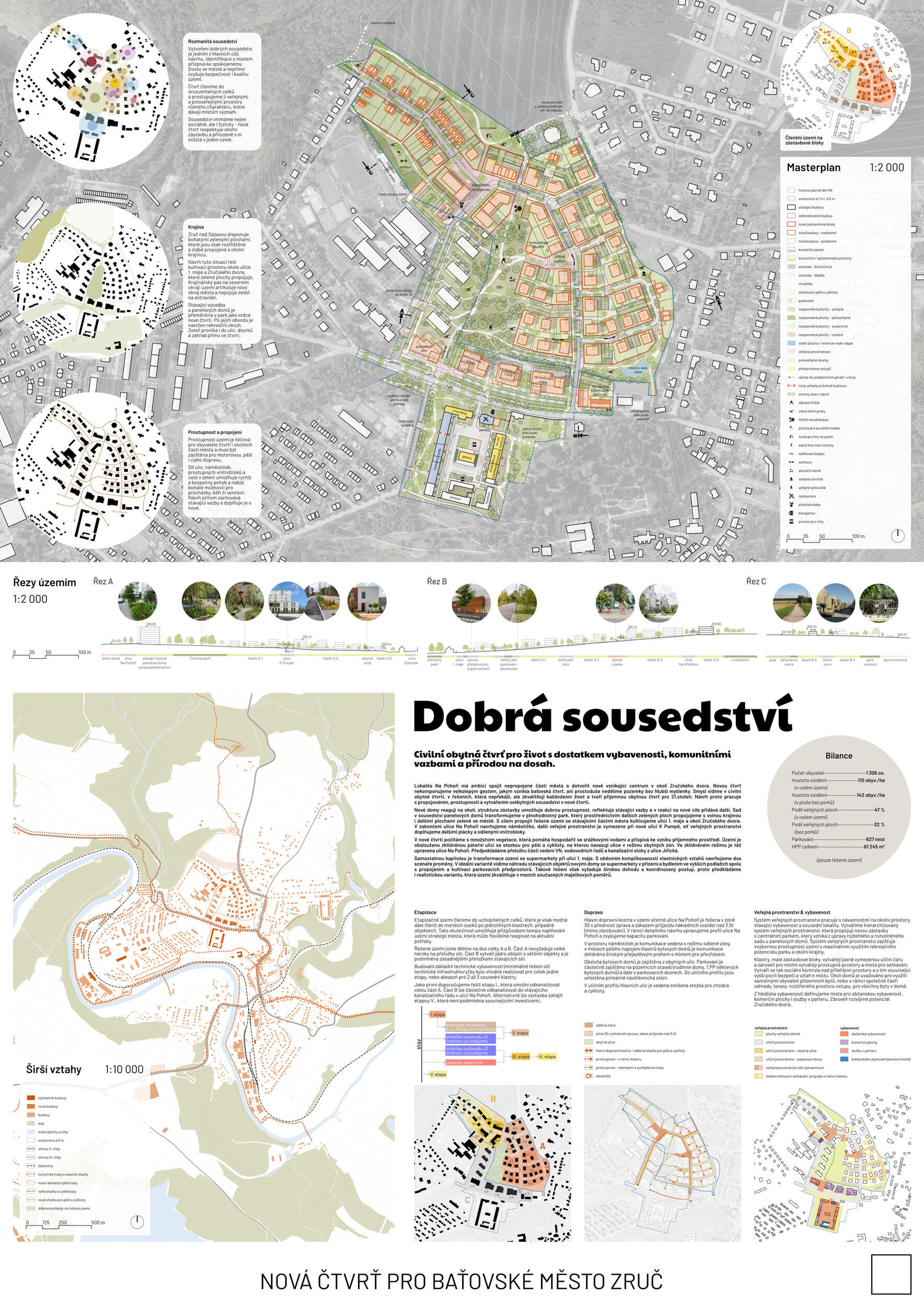
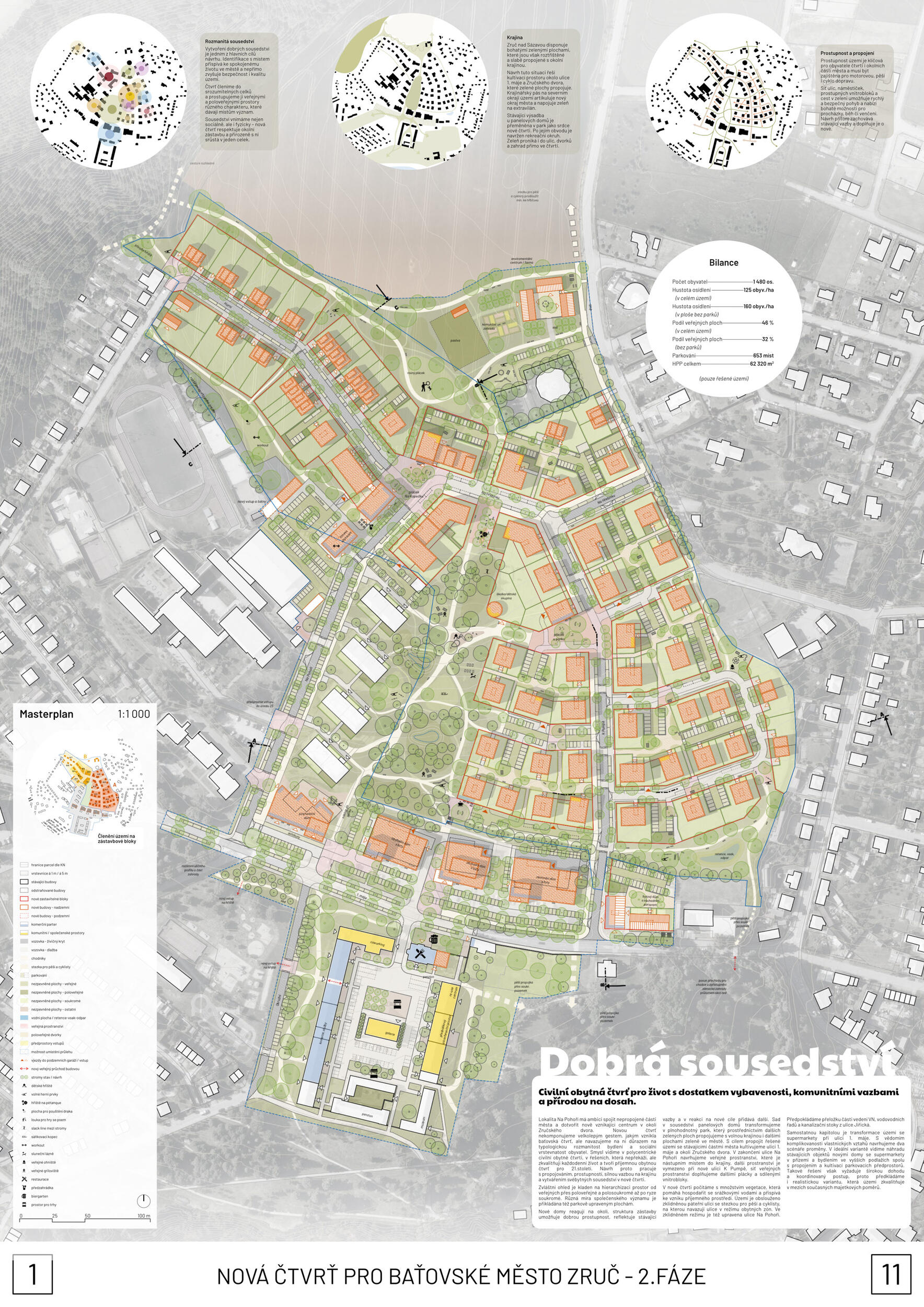
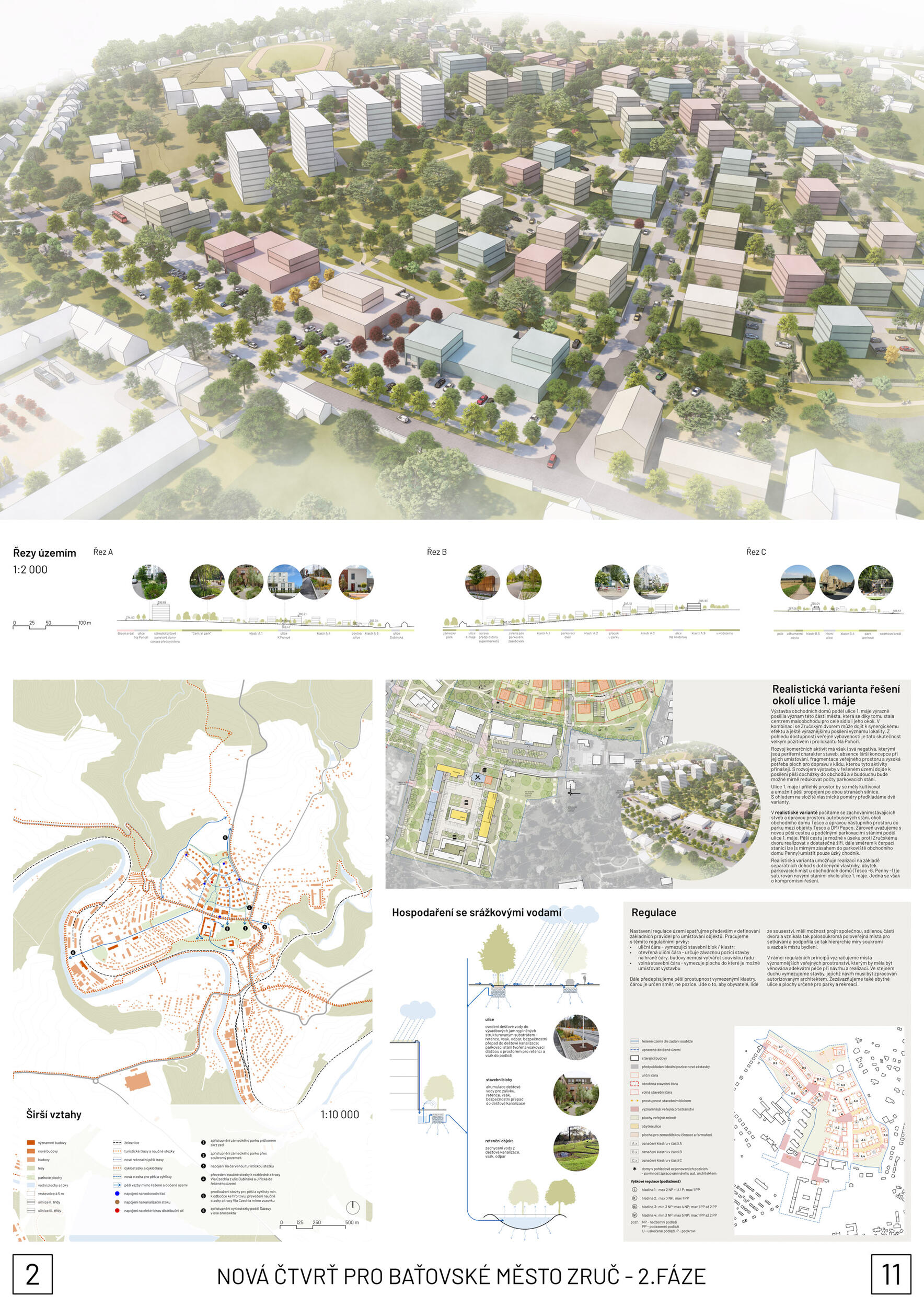
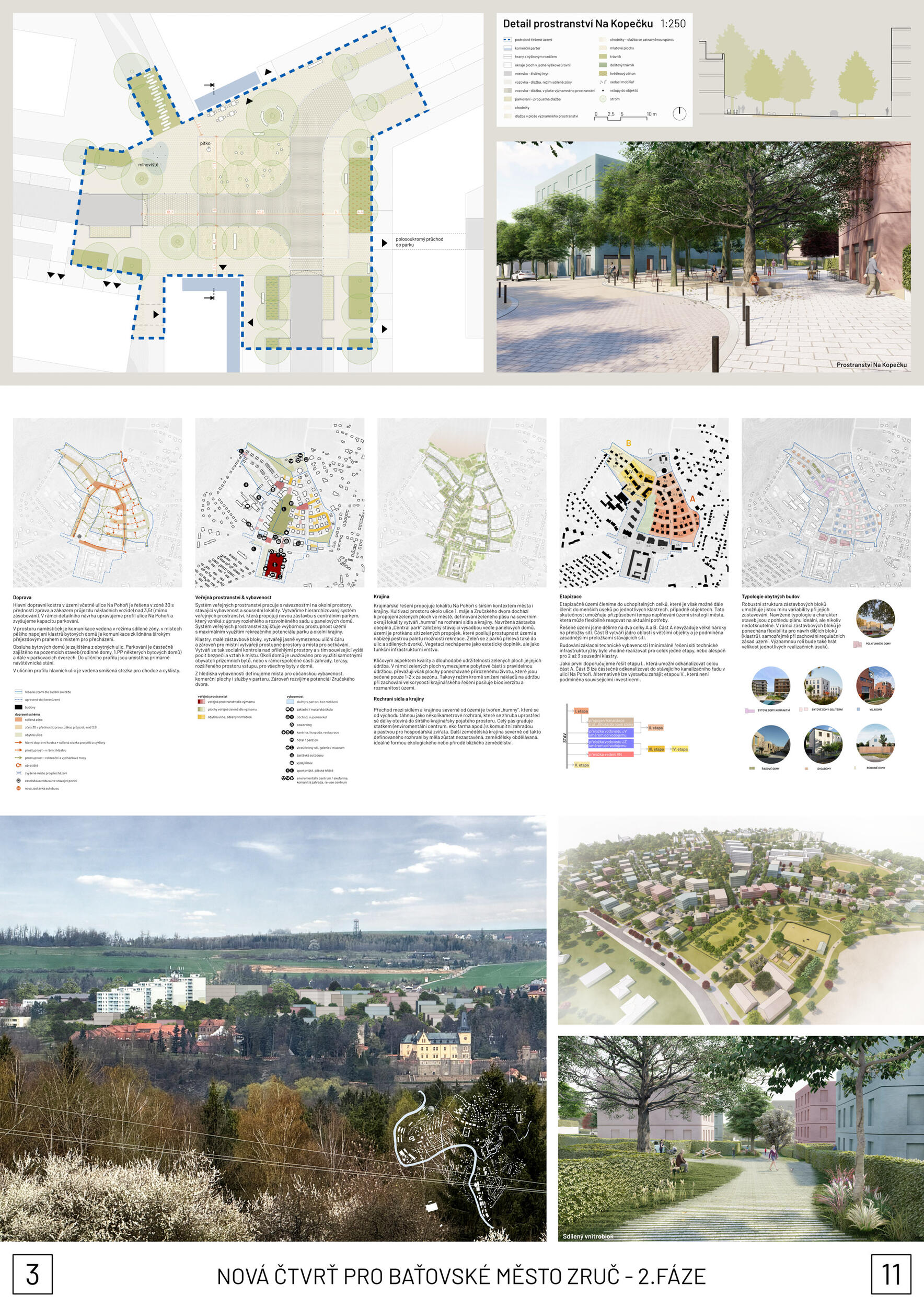
The proposal envisions an unpretentious residential neighbourhood offering a high quality of everyday life through generous amenities, strong community ties and immediate access to nature. The Na Pohoří site is conceived as a catalyst for reconnecting previously fragmented parts of the town while completing the emerging centre around Zručský dvůr. Rather than relying on a monumental gesture, the design builds upon the Baťa legacy through a diverse housing typology and a socially mixed community. A polycentric neighbourhood structure supports permeability, close integration with the surrounding landscape and the creation of distinctive local communities. Particular emphasis is placed on a clear hierarchy of public, semi-public, semi-private and private spaces. An existing orchard adjacent to the housing estate is transformed into a fully-fledged park connected to the open countryside. The proposal enhances 1. máje Street and the surroundings of Zručský dvůr by introducing new public spaces, a network of small squares and shared courtyards. The area is organised around a traffic-calmed main street with dedicated pedestrian and cycling routes, while abundant vegetation contributes to sustainable stormwater management. The transformation of the supermarket area along 1. máje Street is addressed through two scenarios: an ideal vision replacing the existing buildings with new urban blocks, and a realistic strategy that improves the area within current ownership constraints.

Jury Evaluation

The jury awarded the proposal the Second Prize for its highly realistic and carefully considered approach to the development of the site. The proposal is based on a thorough understanding of both the town's current needs and its future development, reflected in the urban design concept as well as in the transport and landscape design solutions. The jury particularly appreciated the robustness of the proposed structure, its appropriate scale, and its ability to respond to the site's real conditions. A major strength of the proposal is its treatment of connections and broader relationships. The design establishes convincing links with the surrounding parts of the town, provides good site permeability, and sensitively addresses the transition into the surrounding landscape. The role of the school as an important local centre was evaluated positively, as were the high-quality public spaces around the water tower and the smaller gathering spaces associated with the park areas. The proposal also offers a well-considered transport solution, including traffic calming measures along Na Pohoří Street in the vicinity of the school. The landscape design and the integration of blue-green infrastructure elements were likewise positively assessed. The jury also appreciated the thoroughness of the analytical component of the proposal, which ranked among the strongest in the competition and provided a convincing basis for the proposed solution. The proposed urban structure appears stable and realistic and offers an appropriate framework for the gradual development of the site. Some reservations, however, were raised regarding the proposed built form itself. Although its scale and underlying principles function convincingly, the proposal lacks a stronger urban ambition and a more distinctive identity. In some respects, it appears to be a compromise solution that does not offer a sufficiently compelling concept. Questions also remain regarding the relationship between the proposed structure and the Baťa urban heritage, which the proposal addresses only to a limited extent. The jury likewise found that comments raised during the first stage of the competition had not been developed in sufficient depth. Despite these reservations, the jury concluded that the proposal represents a highly capable, realistic, and well-substantiated vision for the development of the Na Pohoří site. Its principal strength lies in its thorough understanding of the place, the quality of its connections and relationships, and its ability to provide a functional and implementable framework for long-term future development.
Previous Next
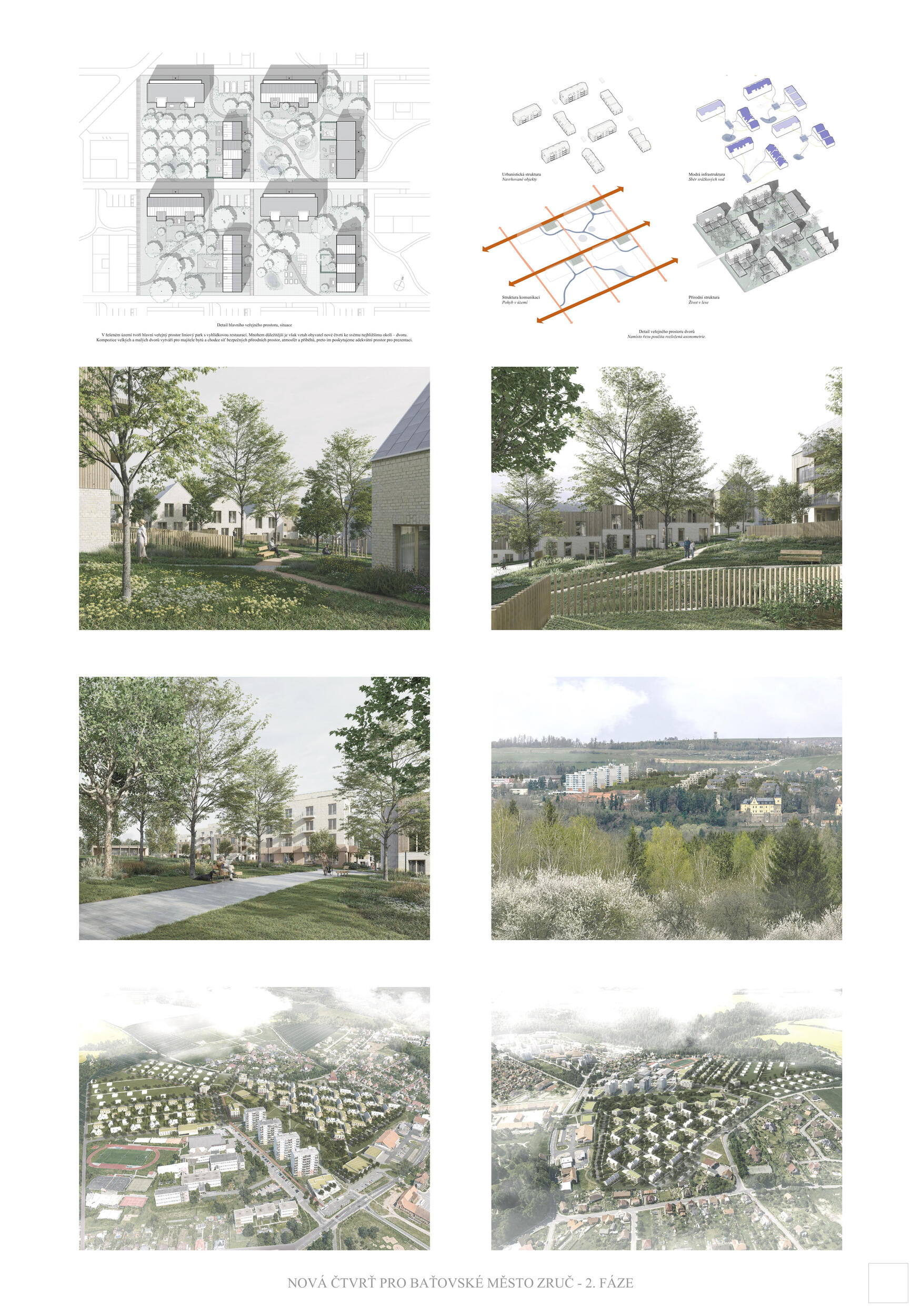
3rd prize
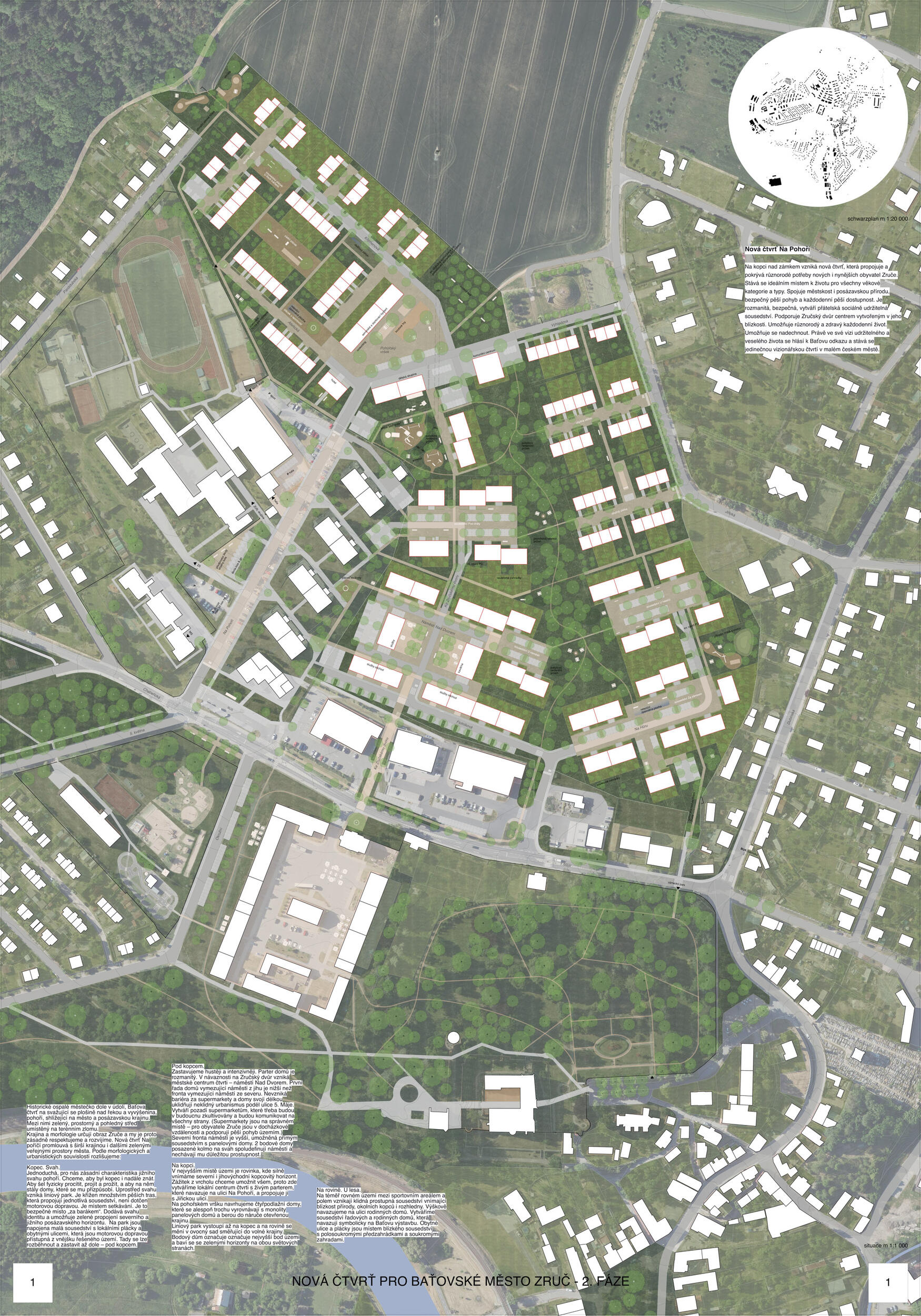
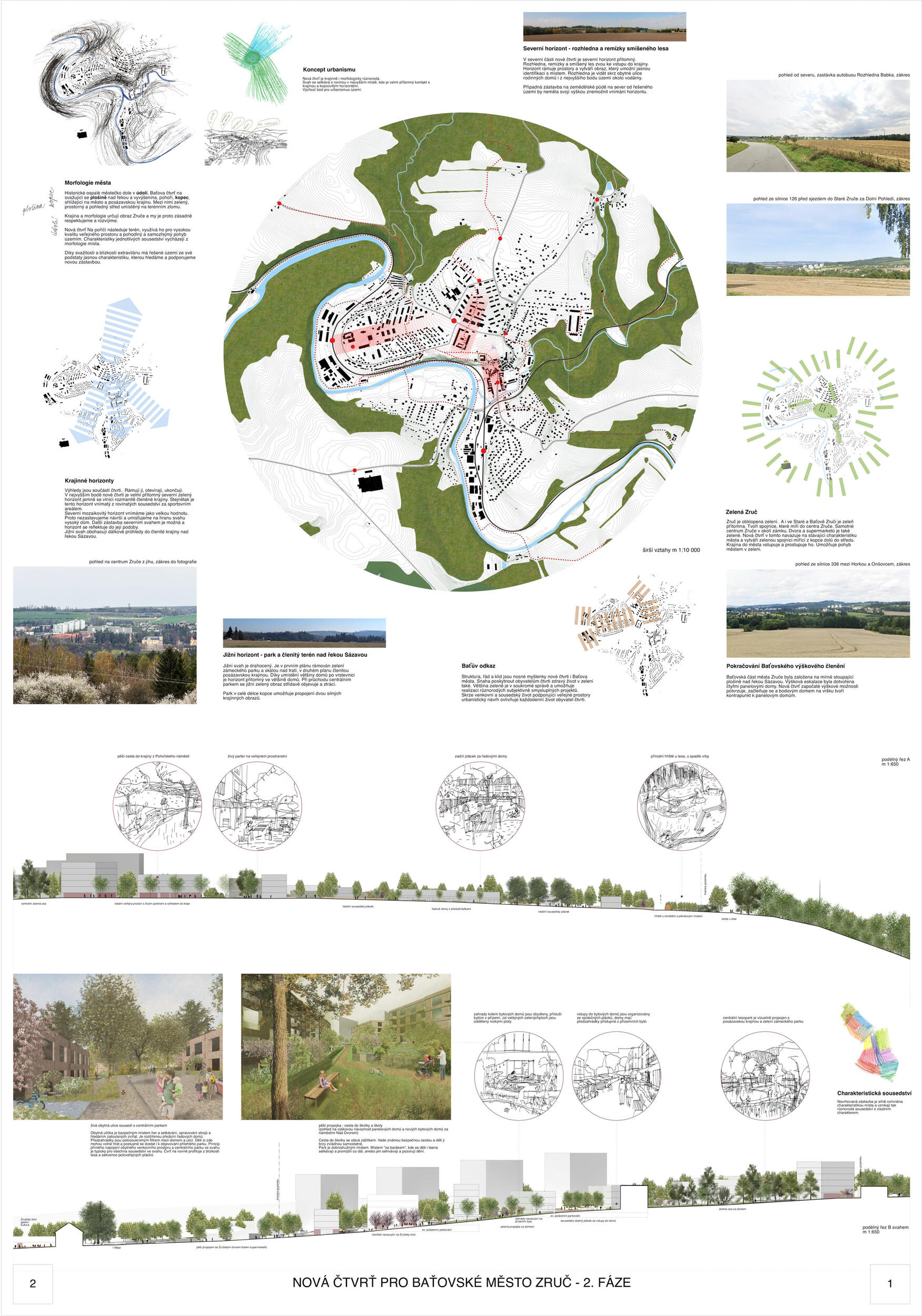
  • Author Lucký architects
  • Team Marián Lucký (architecture and urban planning), Dominika Lovasíková (landscape), Anna Kolčiterová (landscape)
  • Bratislava, Slovakia
Annotation

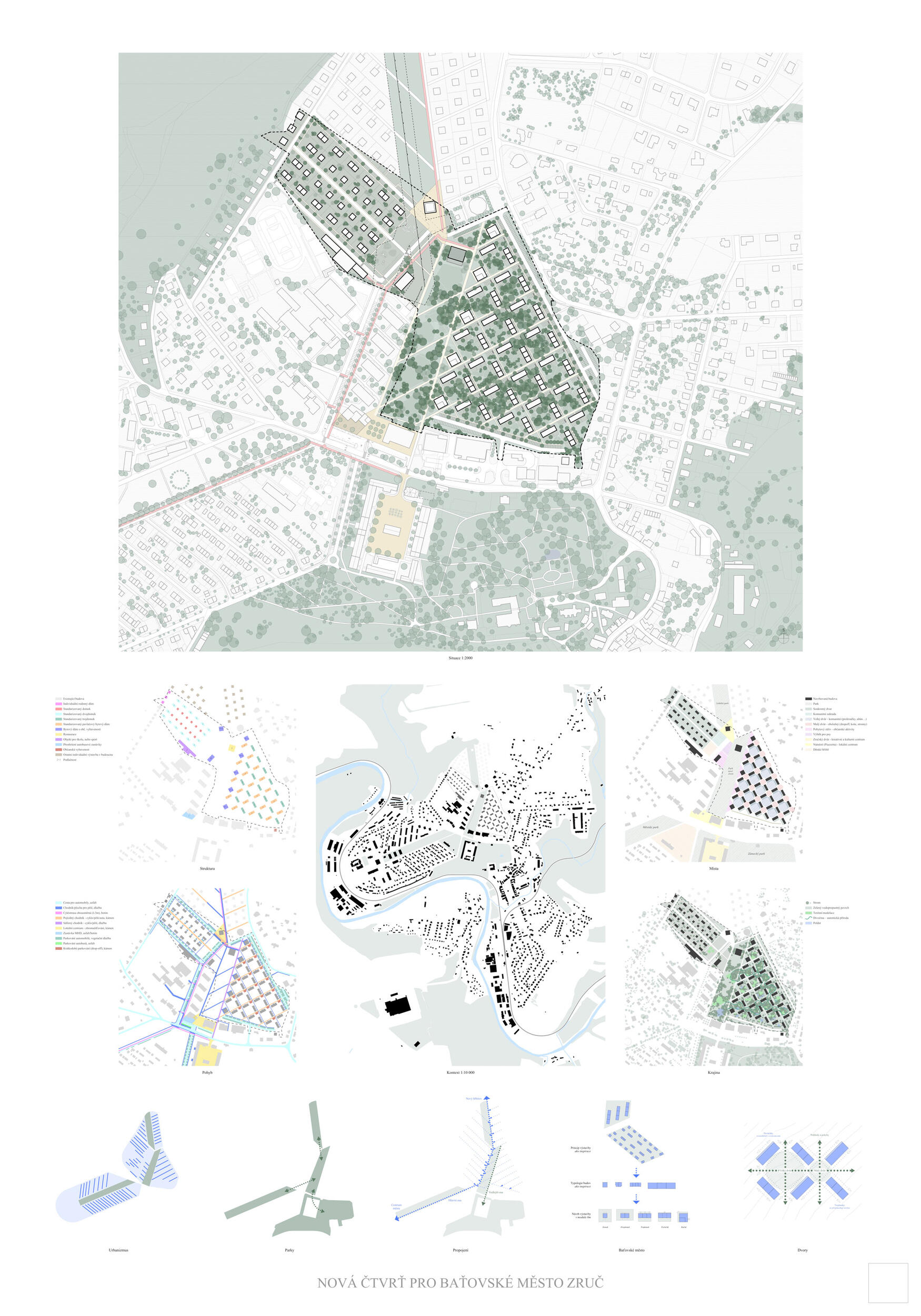
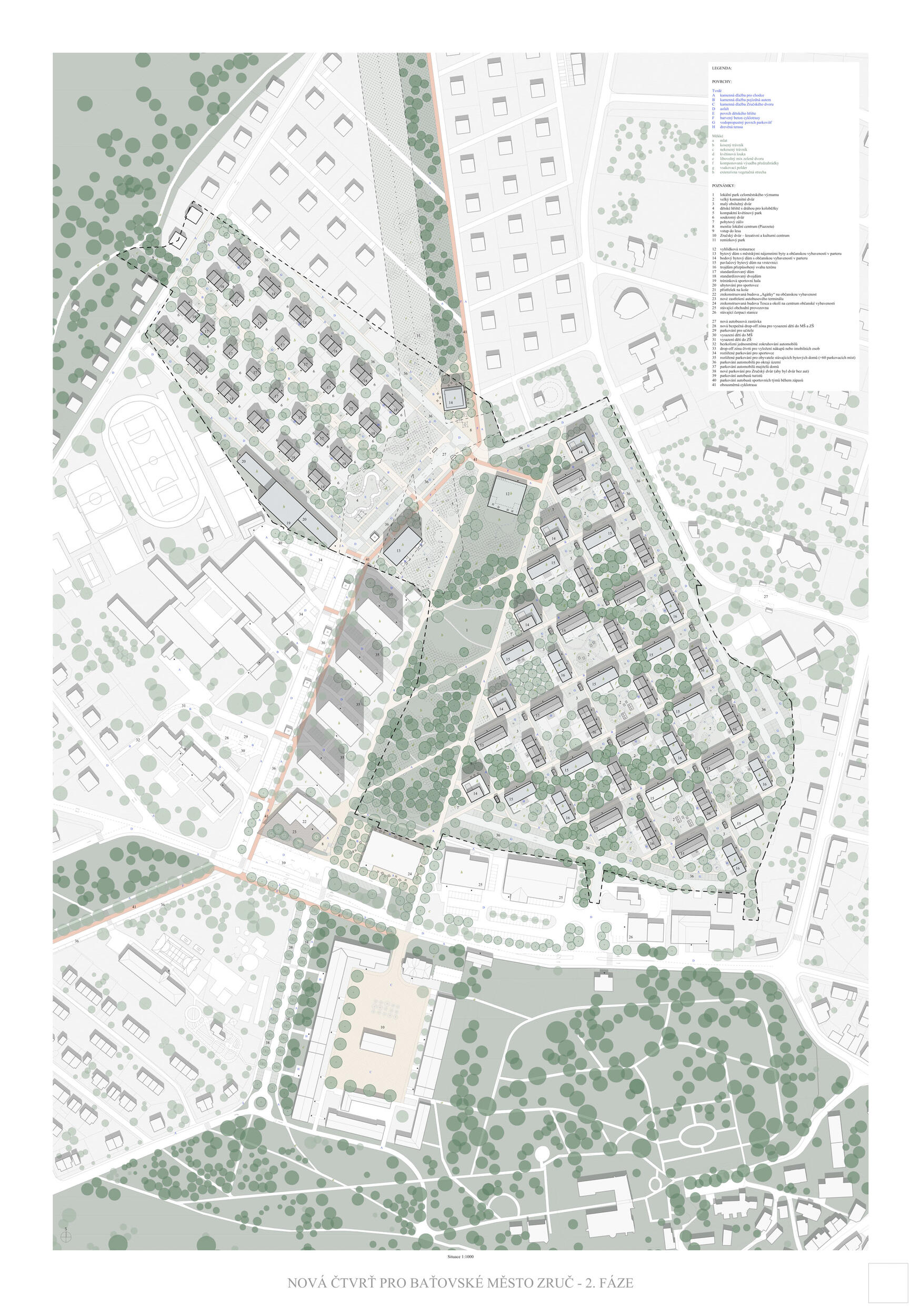
The proposal draws inspiration from the urbanism of Baťa towns, both through the composition of the overall urban structure and the organisation of individual buildings. It also reflects Baťa's visionary approach to city-making, placing the needs of residents at the forefront. Long before the concept became widely recognised, Baťa was already creating what would now be described as a fifteen-minute city. The proposal reinterprets the characteristic Baťa urban grid, combining a human-centred approach with a bold spatial framework that responds sensitively to the site's topography. A new park divides the area into two distinct urban structures: a more open arrangement of detached and semi-detached houses to the west, and a denser eastern neighbourhood of terraced, gallery-access and point buildings. Both parts converge naturally into the central park through diagonal pedestrian routes, recalling one of the defining features of Baťa urbanism. The regular network of pedestrian paths is interwoven with an organic landscape of trees and planting, creating a green environment with generous shade and views towards the surrounding countryside. The careful arrangement of buildings at right angles and regular intervals forms a rich sequence of interconnected communal courtyards, ensuring excellent ventilation, daylight and permeability throughout the neighbourhood. The result is a town immersed in greenery, resembling a park and largely separated from vehicular traffic.

Jury Evaluation

The jury awarded the proposal the third Prize for its strong conceptual ambition and its ability to offer an original perspective on the future development of the site. The proposal is distinguished by a clearly articulated vision, a strong architectural expression, and a consistently developed concept that ranked among the most distinctive in the competition. The jury particularly appreciated the proposal’s willingness to explore new forms of housing and neighbourhood relationships and to present an inspiring vision of a community-oriented environment responding to the changing needs of future generations. Among the proposal’s key strengths are its careful consideration of the scale of the residential environment and the typological diversity of the built form. The development of different housing types and the introduction of community courtyards were evaluated particularly positively, representing a significant improvement compared to the first stage of the competition. The jury also appreciated the high-quality landscape design, the integration of blue-green infrastructure, and the transport solution for the western part of the site in connection with Zruč Manor. At the same time, however, the jury felt that the proposal was primarily driven by an architectural perspective on the site rather than by the urban logic of its long-term development. The strong concept creates an attractive and convincing image of a future neighbourhood, yet questions remain as to whether it can be developed into a realistic solution in subsequent phases without compromising its principal qualities. The proposal offers only limited opportunities for phasing, and certain aspects of its operation—particularly the parking strategy, including the pair of central parking areas—were considered problematic by the jury. The jury also found that the proposal did not respond sufficiently to the sloping character of the site. The urban structure is largely determined by the concept itself and engages with the site's topography less than the character of the location would require. In some respects, the proposal therefore appears more as a strong architectural vision than as a robust urban framework capable of guiding the long-term development of the site. The jury also noted that most of the comments raised during the first stage of the competition had not been adequately addressed. Despite these reservations, the jury concluded that the proposal represents an exceptionally inspiring contribution to the competition. Its strength lies in its clear vision, emphasis on the quality of neighbourhood relationships, and willingness to explore new forms of urban living. It was precisely this conceptual ambition and originality that led to the award of the third Prize.
Previous Next
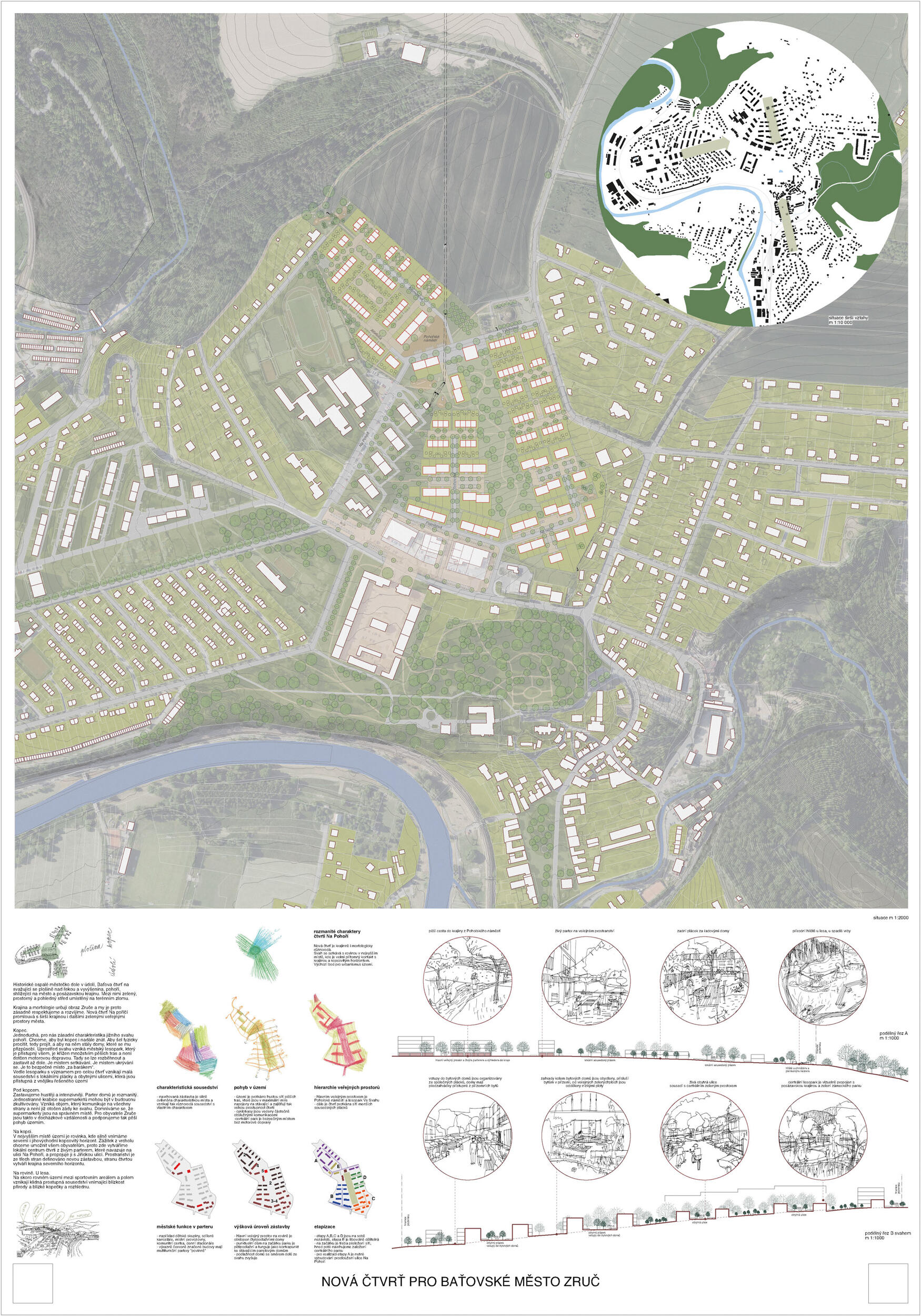
4th prize
  • Author rozenska wozniak architects
  • Team Michaela Roženská, Tomáš Wožniak
  • Vyskytná nad Jihlavou, Czechia / Zürich, Switzerland
Annotation

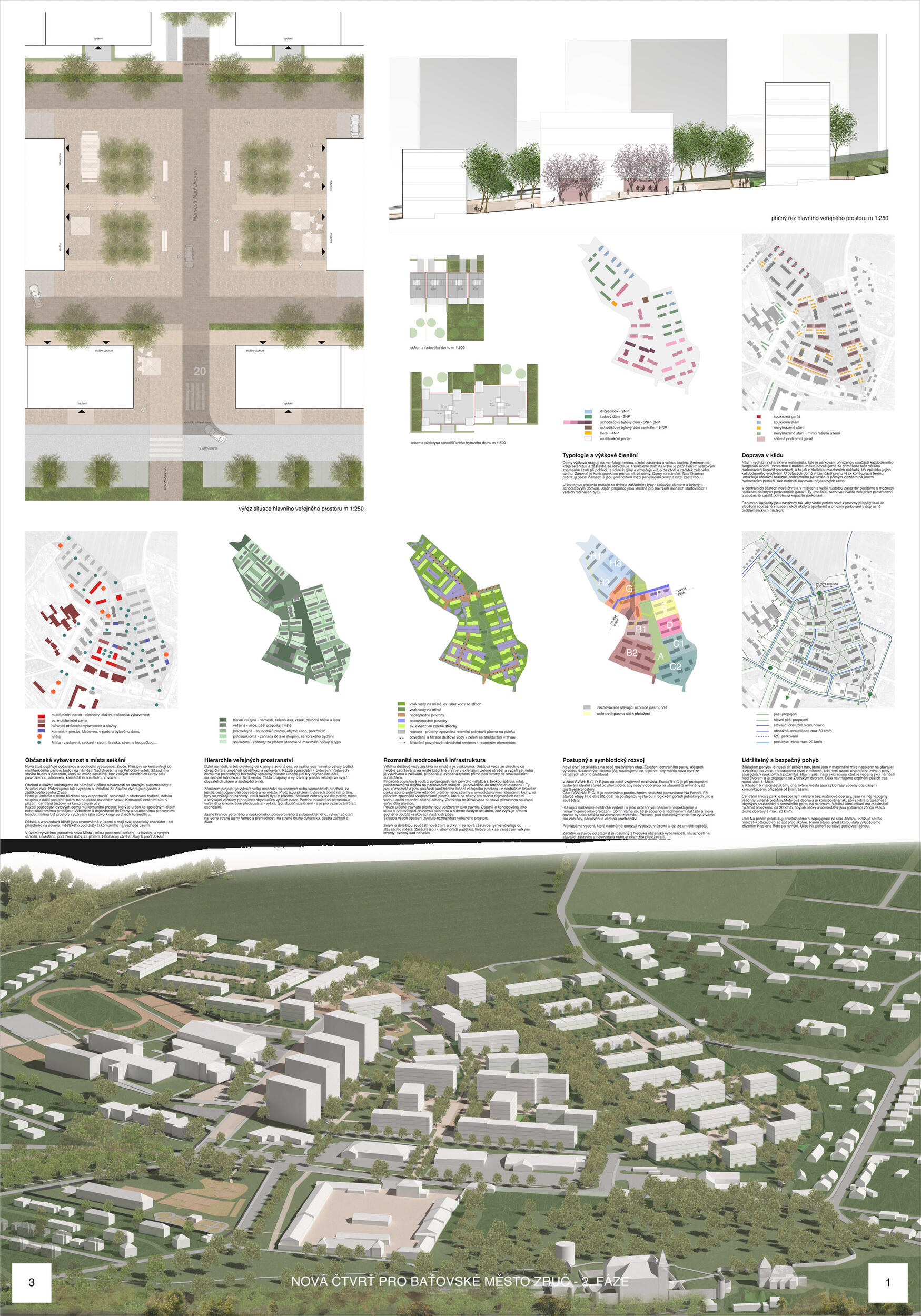
A new neighbourhood is envisioned on the hill above the château, linking the historic town with the Baťa district while accommodating the diverse needs of both current and future residents of Zruč. It is conceived as an attractive place to live for people of all ages and backgrounds, combining an urban character with the natural landscape of the Sázava valley. Safe pedestrian movement, walkable daily amenities and diverse public spaces foster welcoming, socially sustainable neighbourhoods. The proposal reinforces the role of Zručský dvůr by establishing a new local centre in its immediate vicinity. It promotes a healthy and varied everyday life, offering space to breathe and connect. Through its vision of sustainable and joyful living, the proposal embraces the legacy of Baťa and reinterprets it as a distinctive model for a contemporary Czech town.

Jury Evaluation

The jury awarded the proposal the fourth prize for its sensitive response to the site's topography and its thoughtful engagement with the morphology of the area. The proposal is consistently derived from the site's terrain configuration, organising the built form along contour lines and creating a natural network of routes and connections. Another strength of the proposal is the restrained scale of the development, which is appropriate to the character of Zruč nad Sázavou, as well as the sensitive integration of new buildings into the landscape framework. The jury appreciated the manner in which the proposal articulates the Baťa-era part of the town. The proposed principle of height gradation from east to west was evaluated positively, as was the economic realism of the proposed solution. The proposal offers a pragmatic and implementable framework for future development and ranks among the most economically efficient solutions in the competition. At the same time, however, the jury found the hierarchy of public spaces insufficiently clear and the overall narrative of the proposal less convincing than expected. Although the urban structure appears logical and consistent, the proposal lacks a stronger identity and a compelling explanation of the vision it offers for the future development of the site. In places, the public spaces appear more as a supporting layer of the proposal than as one of its defining principles. The jury’s reservations also concerned several specific design decisions. Of particular concern is the location of parking areas adjacent to the existing apartment buildings at the expense of green space, the preservation of which was one of the key themes identified through public participation. Questions were also raised regarding the relationship to the Adélka area, weakened by the presence of parking, as well as the role of the solitary building located at the highest point of the site, whose significance is not fully explained by the proposal. The jury additionally found the treatment of spatial hierarchy, view corridors, and certain aspects of the massing arrangement insufficiently convincing. The jury also noted the absence of a satisfactory response to comments raised during the first stage of the competition. Despite these reservations, the jury recognised the proposal as a refined and realistic solution whose principal strengths lie in its sensitive response to the terrain, the appropriately chosen character of the built form, and its economic sustainability.
Previous Next
5th prize
  • Author ateliér tečka
  • Team tečka: Luboš Klabík, Eliška Vasko, Anna Křížová, Barbora Husáková, Tomáš Klapka, Anna Zikmundová / ven ku: Julie Horáčková, Iveta Olšovská, Ondřej Valigura, Magdalena Benešová / Karel Králíček
  • Benešov, Czechia
Annotation

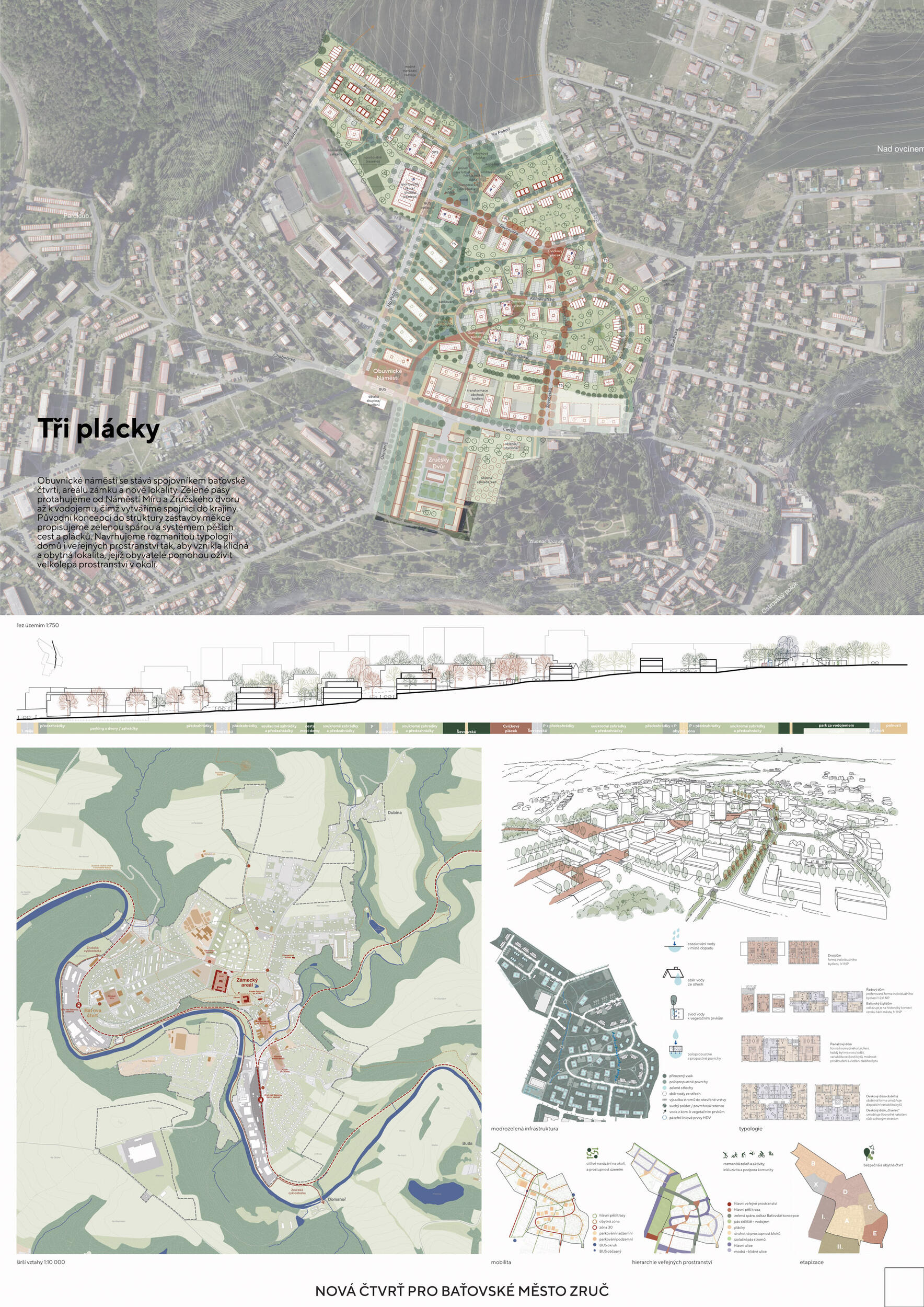
A broad green axis, completing the unfinished Baťa urban concept, culminates in Shoemakers' Square as the principal public space connecting the new neighbourhood with the existing town. Within the Na Pohoří area, the axis transforms into a sequence of smaller public spaces linked to Zručský dvůr. The curved composition continues as a green corridor forming part of the pedestrian route from the château to the Babka lookout tower. The concept is complemented by a continuous belt of residential greenery and parkland extending into the surrounding landscape. The gradual transformation of the retail halls further strengthens the connection towards Zručský dvůr.

Jury Evaluation

The jury particularly appreciated the proposal’s sensitive response to the morphology of the site and its high-quality approach to landscape, permeability, and spatial detail. The proposal responds carefully to the site's topography, works with a natural network of routes, and pays close attention to barrier-free movement. The jury also evaluated very positively the sophisticated integration of blue-green infrastructure, the quality of the landscape design, and the effort to create a network of smaller community spaces appropriate to the scale of Zruč nad Sázavou. The emphasis on connecting different parts of the site and the diversity of public spaces was likewise appreciated. Another strength of the proposal lies in its understanding and reinforcement of relationships with the surrounding area. The jury nevertheless had significant doubts regarding the urban logic of the proposal. Despite its undeniable strengths in terms of permeability and landscape design, it lacked a sufficiently legible concept capable of bringing the different parts of the site together into a coherent whole. Particular concerns relate to the division of the site into markedly different areas and the manner in which various building typologies are combined. The eastern part of the proposal, in particular, appears inconsistent with the rest of the scheme in both density and character. The jury was also unconvinced by the proposed relationship between the built form and the public spaces. In the jury’s view, the proposal therefore does not provide a sufficiently robust urban framework for the long-term development of the site. The jury further noted that, compared to the first stage, the proposal had not demonstrated substantial progress in addressing the issues that had been the subject of earlier discussion. Despite these reservations, the proposal represents a valuable contribution to the competition thanks to its sensitive treatment of landscape, permeability, and the site's topography.
Previous Next