Exhibition of the Museum of Totalitarianism

1st Prize
  • Author HOUSE OF NATURE
  • Team Jana Vodičková in collaboration with All Things Studio
  • London, UK
Annotation

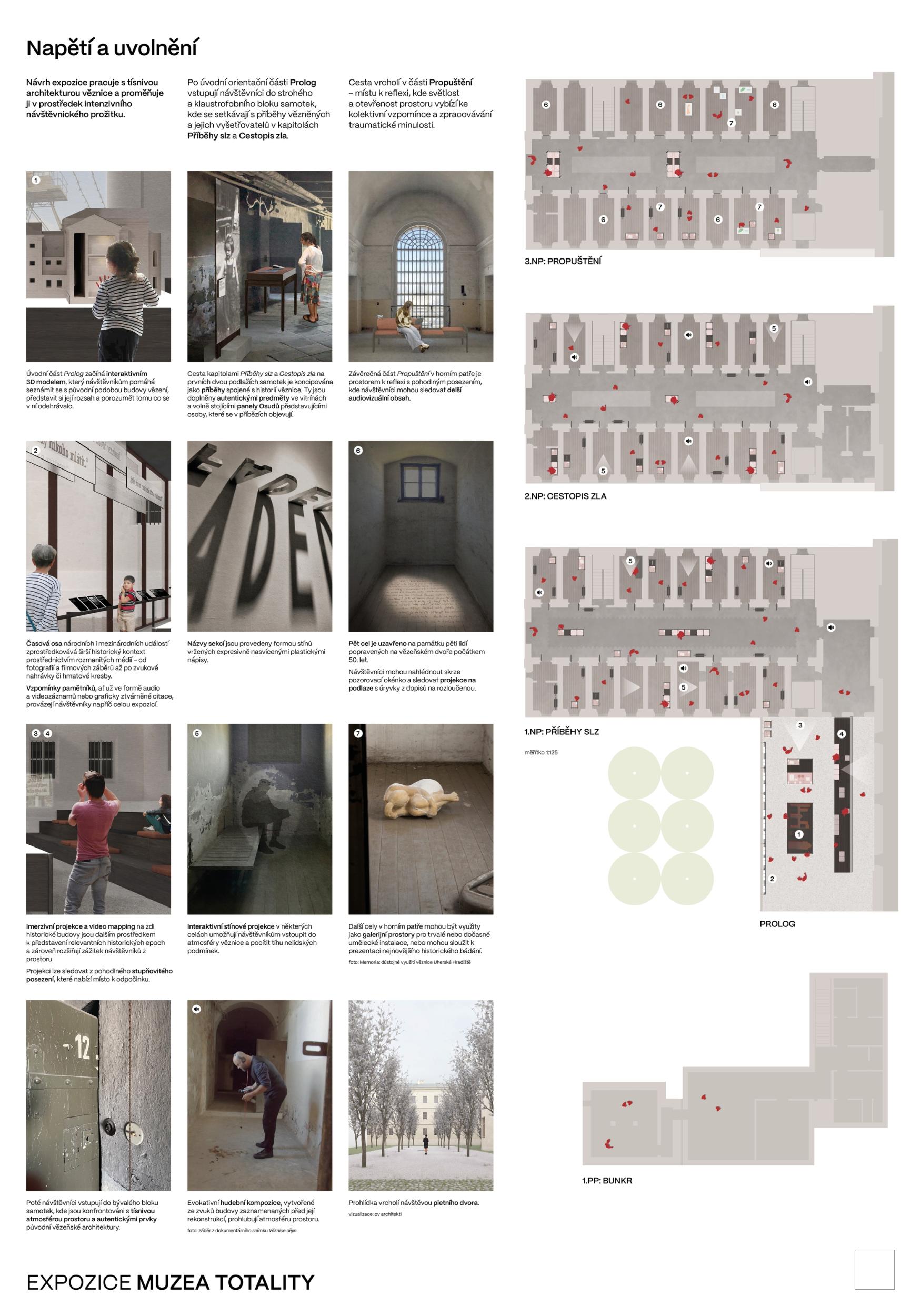
The exhibition design engages directly with the oppressive architecture of the prison and transforms it into a medium for an intense visitor experience. After the introductory orientation section, Prologue, visitors enter the stark and claustrophobic solitary confinement block, where they encounter the stories of prisoners and their interrogators in the chapters Stories of Tears and A Travelogue of Evil. The journey culminates in Release—a space for reflection where brightness and openness invite collective remembrance and the processing of a traumatic past.

Jury Evaluation

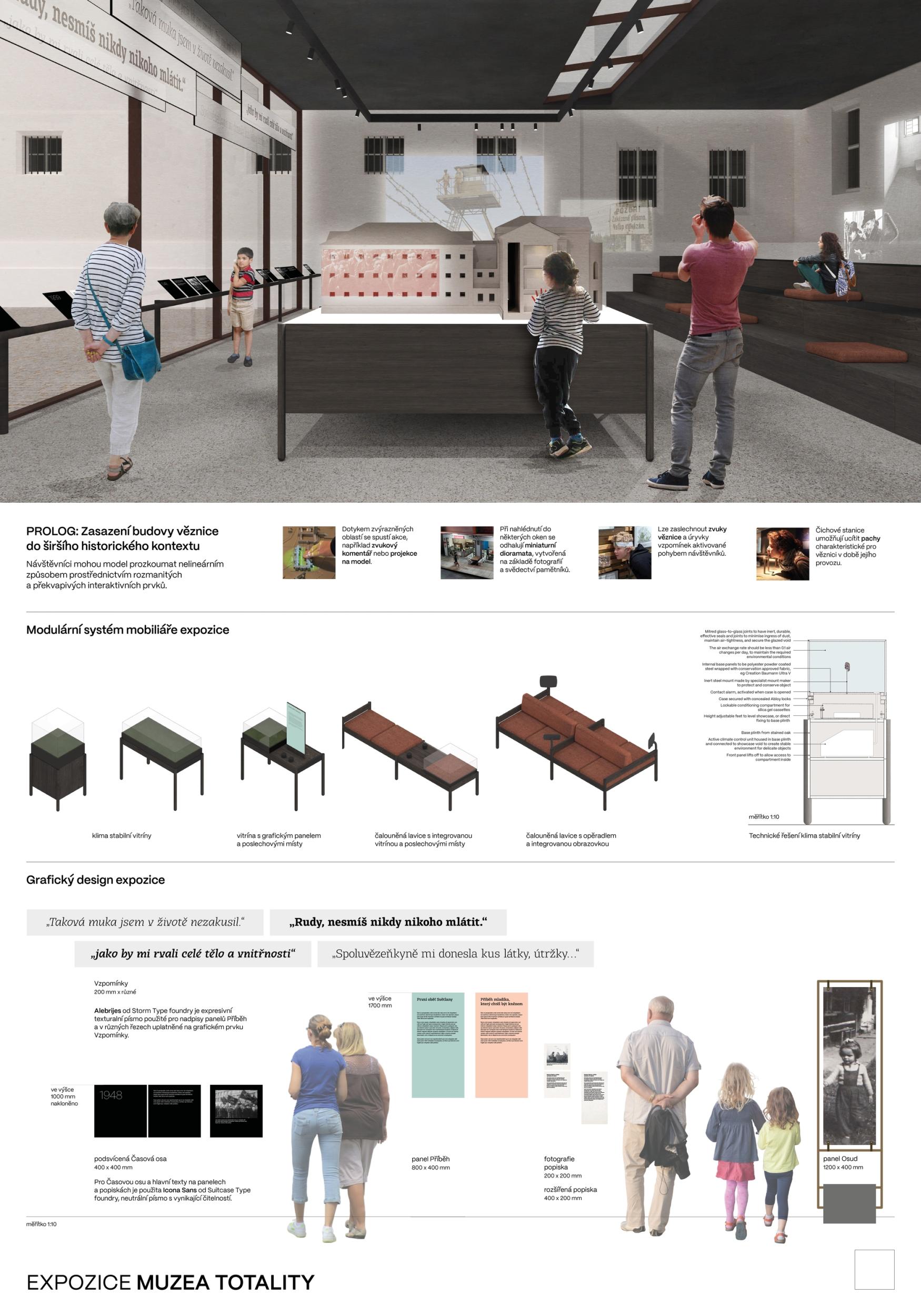
The design presents a dignified and sophisticated concept for a contemporary museum exhibition with a sense of place and the purpose of the institution. Its simple, minimalist, even austere tone emphasises the atmosphere of the prison as a place of suffering and a place for reflection on the history of 20th-century totalitarianism. The exhibition follows the logic of the libretto, works in detail with the material content, and appropriately highlights the fates of individuals in contrast to the bureaucratic repressive apparatus. The modular furniture integrates sufficient opportunities for visitors to rest, including a detailed drawing of climate-stable display cases. The programme proposes sufficient interactive elements for the work of the museum's education department, as well as audiovisual and olfactory attractions. The jury considers the offer of participatory work with the Memoria Association, the Moravian Museum and the local community on the possibility of reflection to be innovative. The graphic design is suitable for all formats of museum texts, including work with image materials, quotations, captions, and 3D typography. A point of discussion was the scope of architectural modifications to the existing renovated state and the possibility of restoring the prison's inner courtyard. The restoration of the galleries and partial connection via "bridges" with resting elements is indicated but not elaborated. The jury would consider it appropriate to examine this in the context of the construction modifications to the museum and the building as a whole.
Previous Next
2nd Prize
  • Author DL studio
  • Team David Marek, Klára Tauschová, Johana Odvody; Play to lift / Barbora Klapalová; graphic design: Marcela Schneiberková; illustration schemes: Philippe Kastner; illustration cells: Lucie Doubravová
  • Prague
Annotation

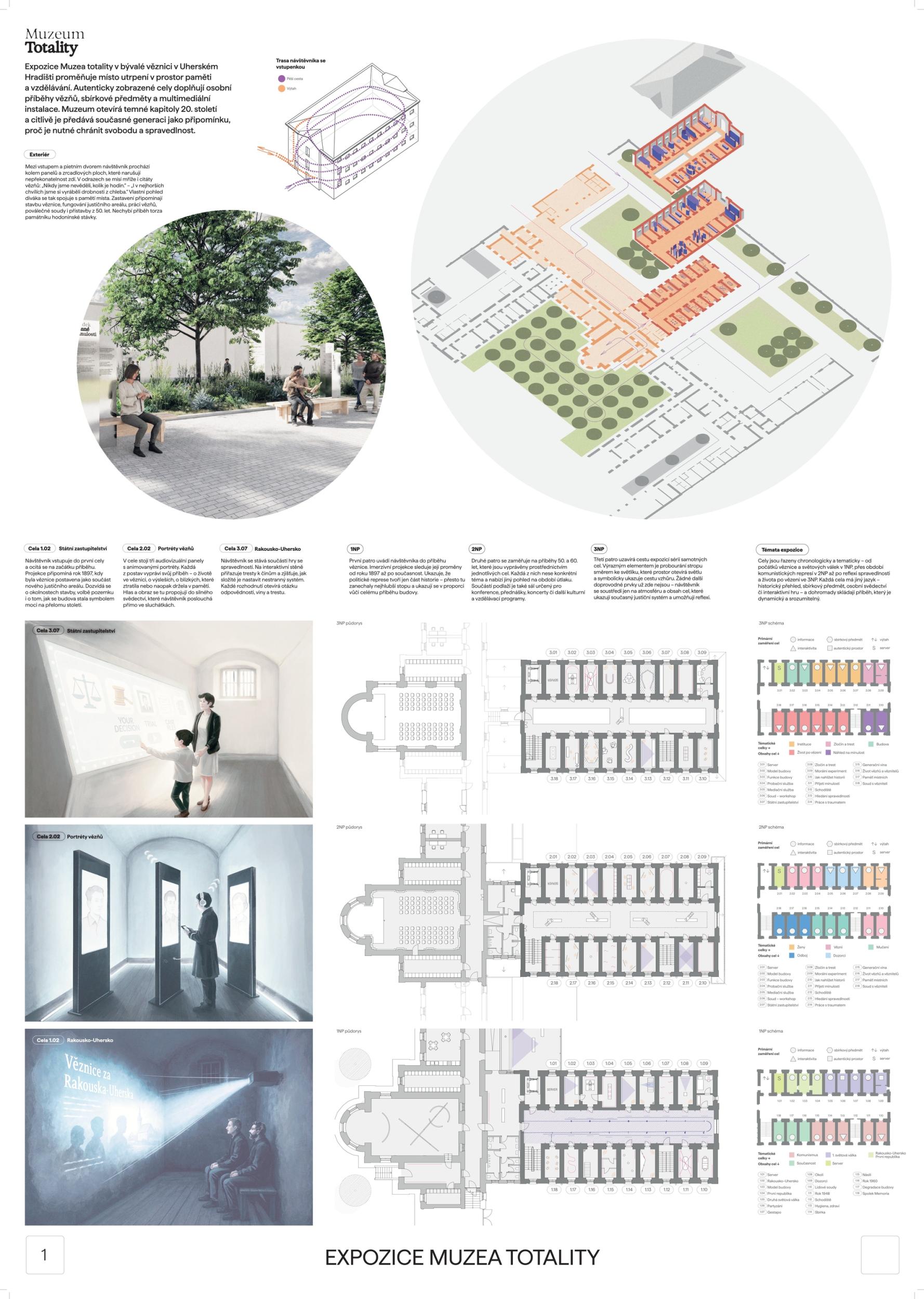
The exhibition of the Museum of Totalitarianism in the former prison in Uherské Hradiště transforms a place of suffering into a space of memory and education. Authentic prison cells are complemented by personal stories of inmates, collection objects, and multimedia installations. The museum opens the darkest chapters of the 20th century and conveys them sensitively to today’s generation as a reminder of why freedom and justice must be protected. The concept of the Museum of Totalitarianism builds on the authenticity of the prison itself. The building in Uherské Hradiště is transformed into a space for remembrance, learning, and civic reflection. The central medium of the exhibition is the prison cell—each one introduces a specific theme connected to human stories, collection artefacts, and an audiovisual layer.

Jury Evaluation

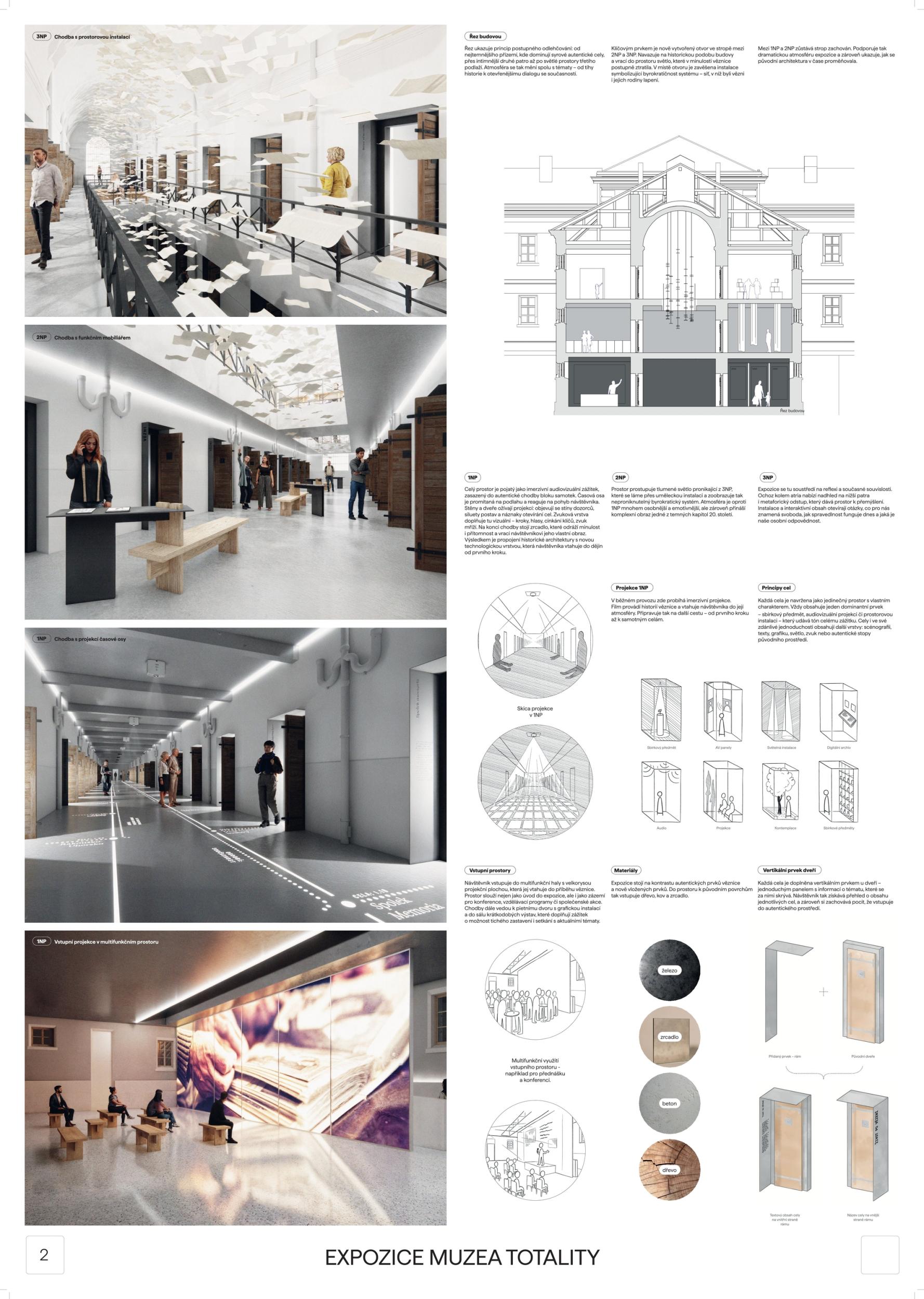
The jury evaluates the detailed reading of the libretto exhibition, as well as the work with the exhibit content, positively. The design breaks through only the top floor and allows daylight to enter at the second floor level. The visitor flow is logical, and the thematic framework is clustered into visitor-friendly units. The biggest weakness is the incoherent artistic presentation and the ambiguity of the designer's thinking about the furniture. The "cleaned-up" visualisations in the spirit of office space and the inauthentic space appeared debatable. Some aspects of the exhibition's installation, such as the fluttering leaflets as a metaphor for liberation or the timeline projected onto the floor, are not considered successful. The suggested graphic design appears to be suitable for the exhibition's needs.

Previous Next
3rd Prize
  • Author Makeshift in cooperation with Natálie Najbrtová and Josefina Karlíková
  • Team Alexander Storek, Jakub Wiesner, Konrád Karlík
  • Prague
Annotation

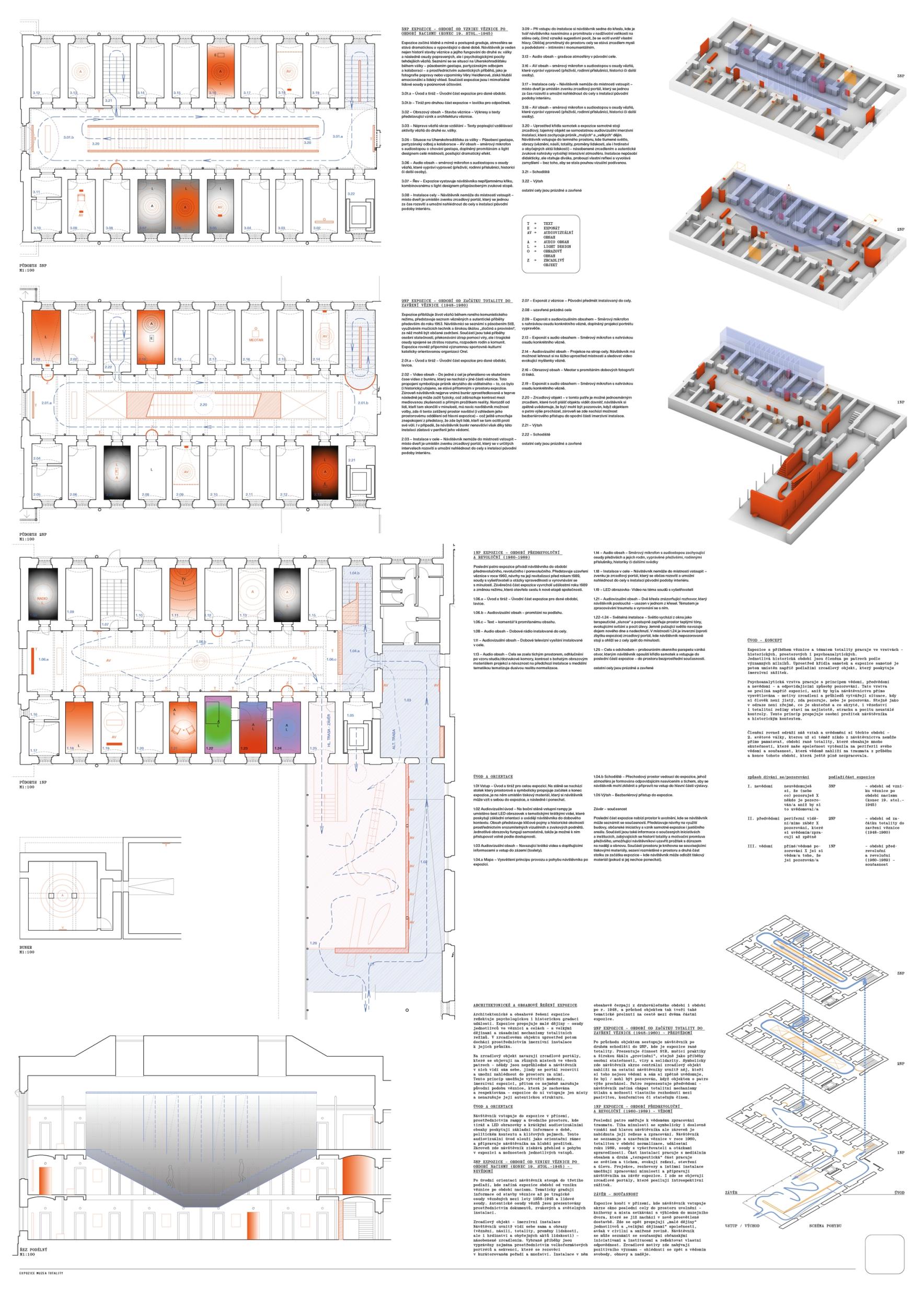
The exhibition addressing the story of the prison and the theme of totalitarianism operates on multiple layers—historical, spatial, and psychoanalytic. The individual historical periods are organised by floor, structured according to key milestones. At the centre of the solitary-wing layout, and of the exhibition itself, a mirrored object spans several storeys, offering an immersive experience. The psychoanalytic layer draws on the principles of the conscious, the preconscious, and the unconscious, reflected in corresponding modes of observation. This layer permeates the exhibition without being explicitly explained to visitors—motifs of reflection and transparency create situations in which one cannot be certain whether they are observing or being observed. Just as a reflection obscures what is real and what is hidden, imprisonment and totalitarian regimes rely on uncertainty, fear, and the sense of constant surveillance. This principle bridges the visitor’s personal experience with the broader historical context.

Jury Evaluation

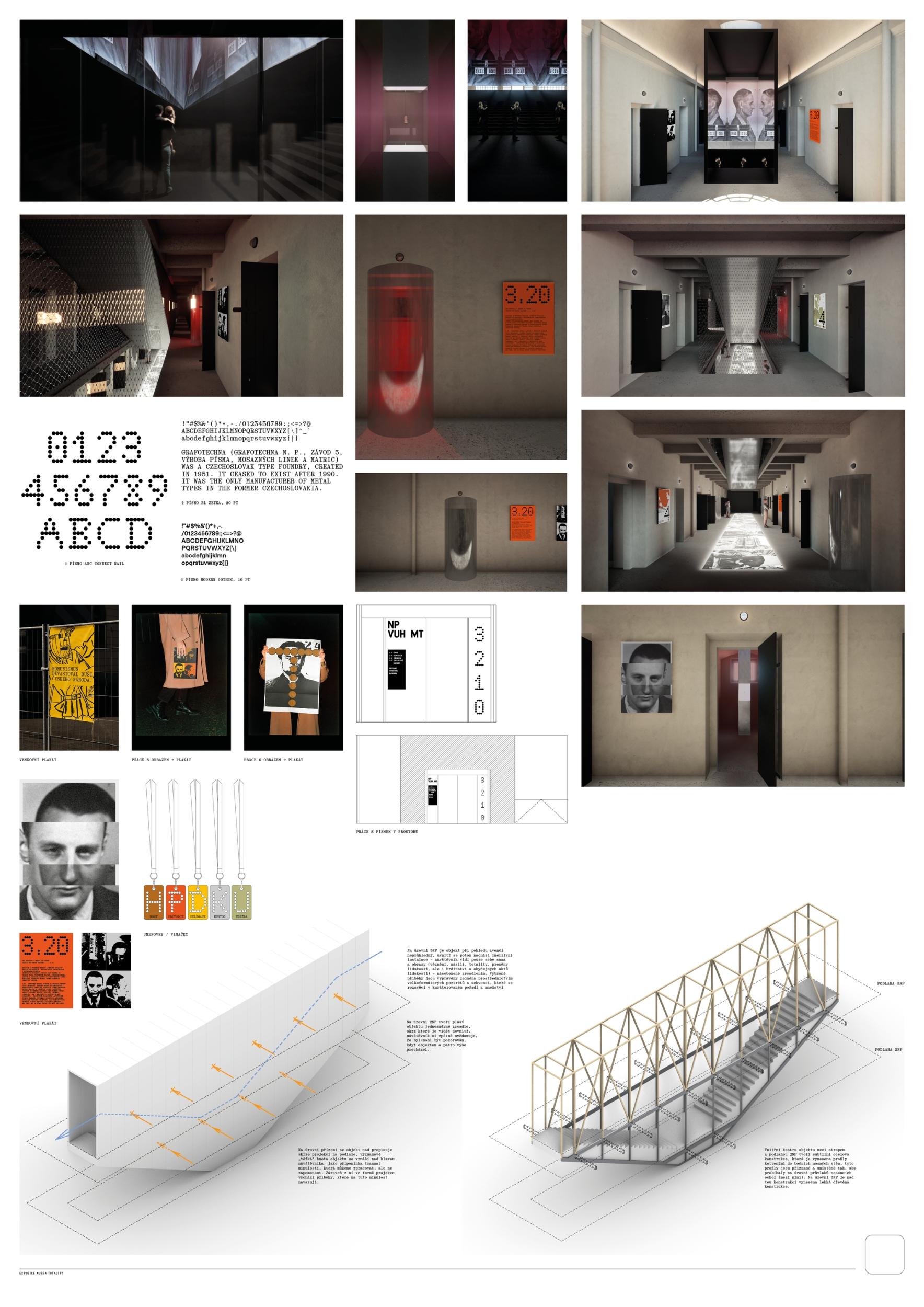
The jury appreciates the comprehensive concept, which includes theoretical and psychological considerations, as well as an understanding of the confrontation between the "personal histories" of the stories and the meta-history of totalitarian regimes and their repressive apparatus. The decision to reverse the flow of the exhibition and begin with reflection and a theoretical framework at the entrance, proceeding from the most recent history – the use of the prison during normalisation – to the period of Stalinist and Nazi terror, and finally to the establishment of the prison on the third floor, was considered a highly innovative approach. Architecturally, the gallery has been restored, and an immersive mirror object has been inserted into the hall space to embody the emergence of consciousness and repressed memories. Inside the immersive object, a projection onto suspended screens is planned; visitors descend to the second floor and return to the third floor. The object minimises the effect of daylight. The graphic representation is highly rated as convincing and detailed, including three-dimensional typography, work with large-format image panels, labels, and visually attractive printed outputs. The furniture is designed in line with the references, and the proposed material design gave the impression of being very costly to implement. The jury found the intense scenography and inversion of the function of the inner courtyard, which to a large extent overturns the architectural logic of the building, to be the most debatable aspects.

Previous Next