Vision Kladno

1st Place
  • Author Cobe + monom
  • Team Cobe: Mads Birgens, Rune Boserup, Nicolai Hende, Michala Lietavová, Sara Falbe Hansen, Hanna Höhne, Nick Dyhr, Emilia Senderovitz, Kristoffer Tjerrild; monom: Igor Hobza, Michal Bernart, Kseniya Kavalionak, Antonín Suk, Ondřej Hejda, Jiří Petrželka, Jakub Vašek; visualizations: Francisco Tirado
  • Denmark, Czech Republic
Annotation

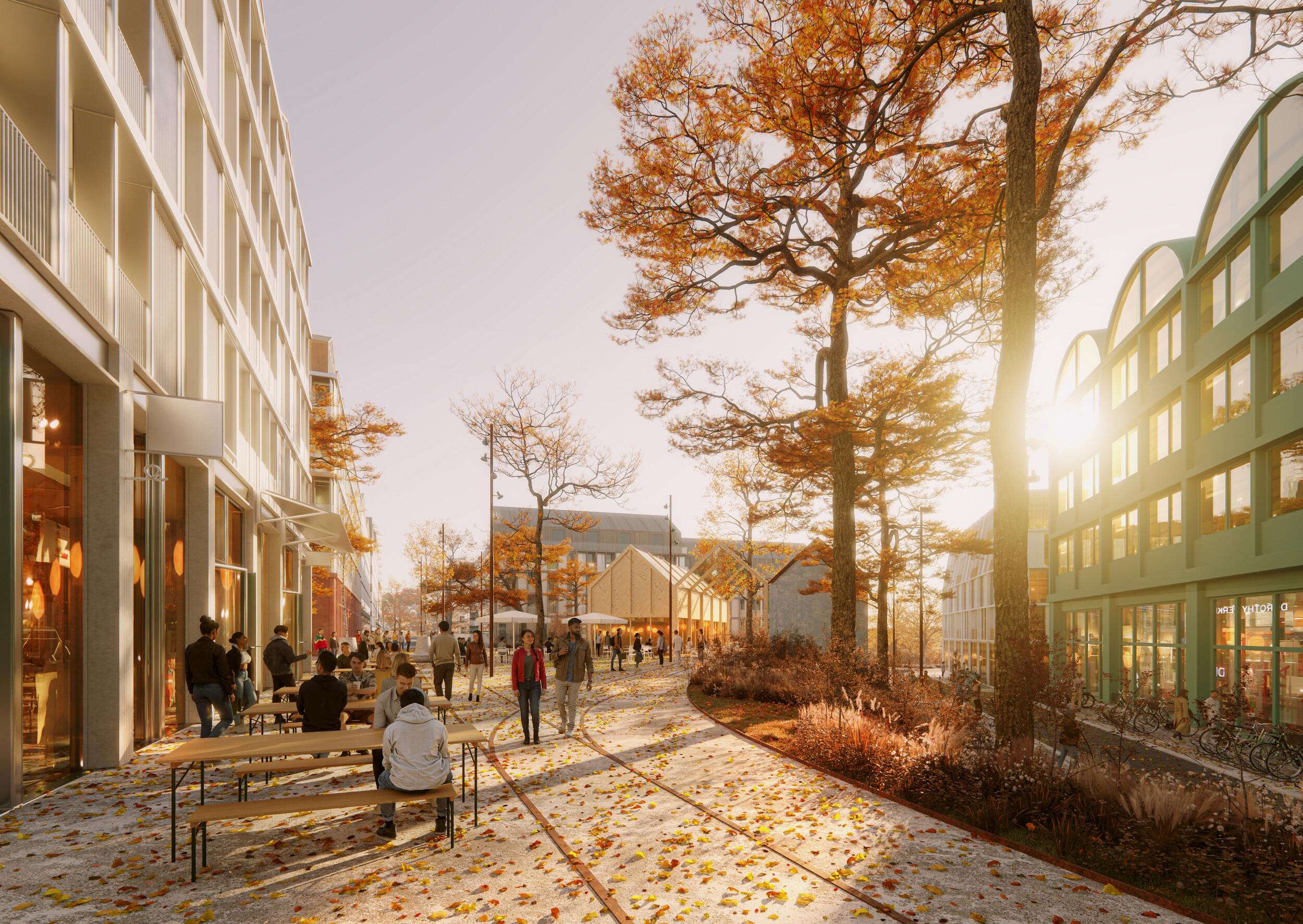
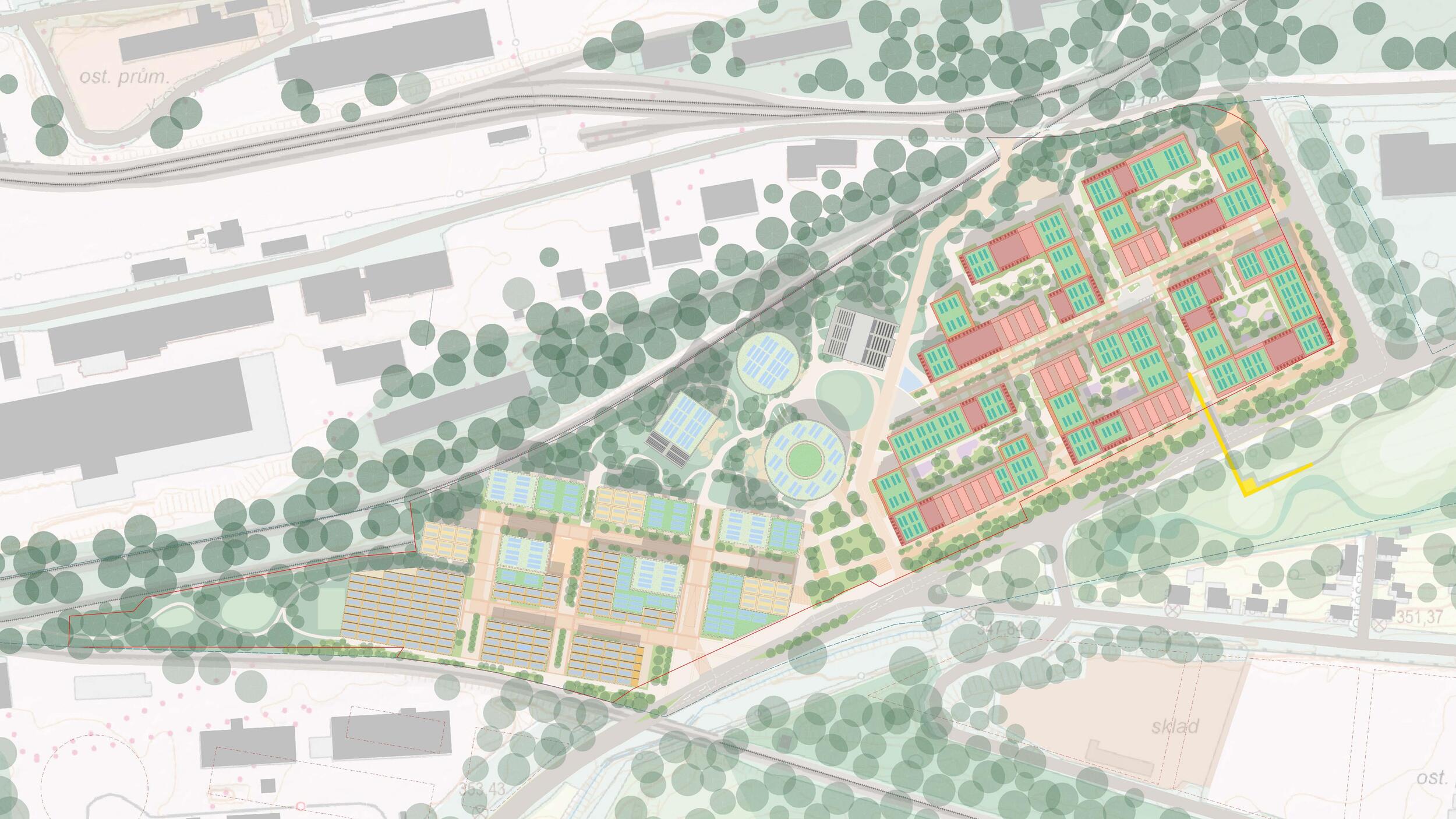
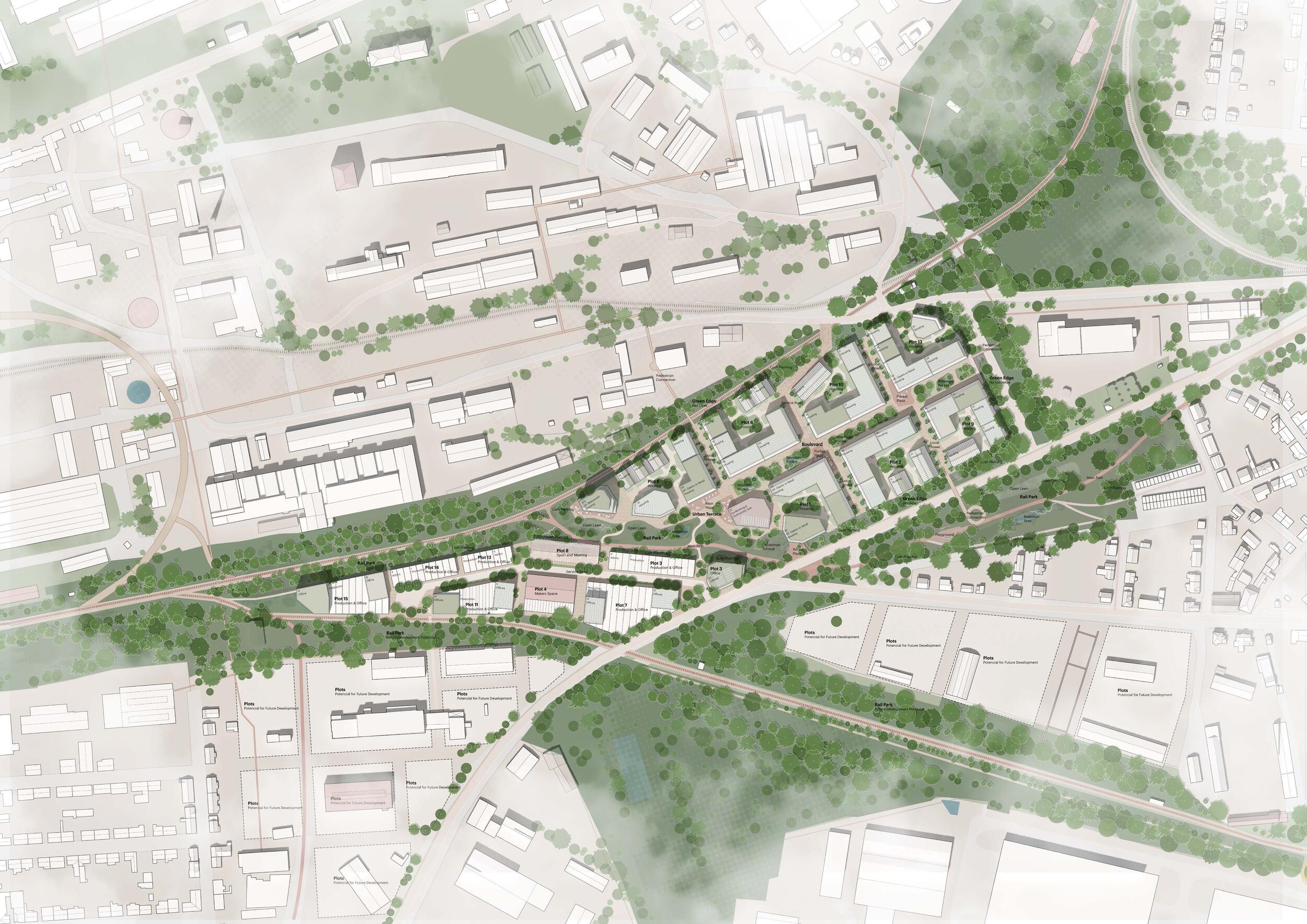
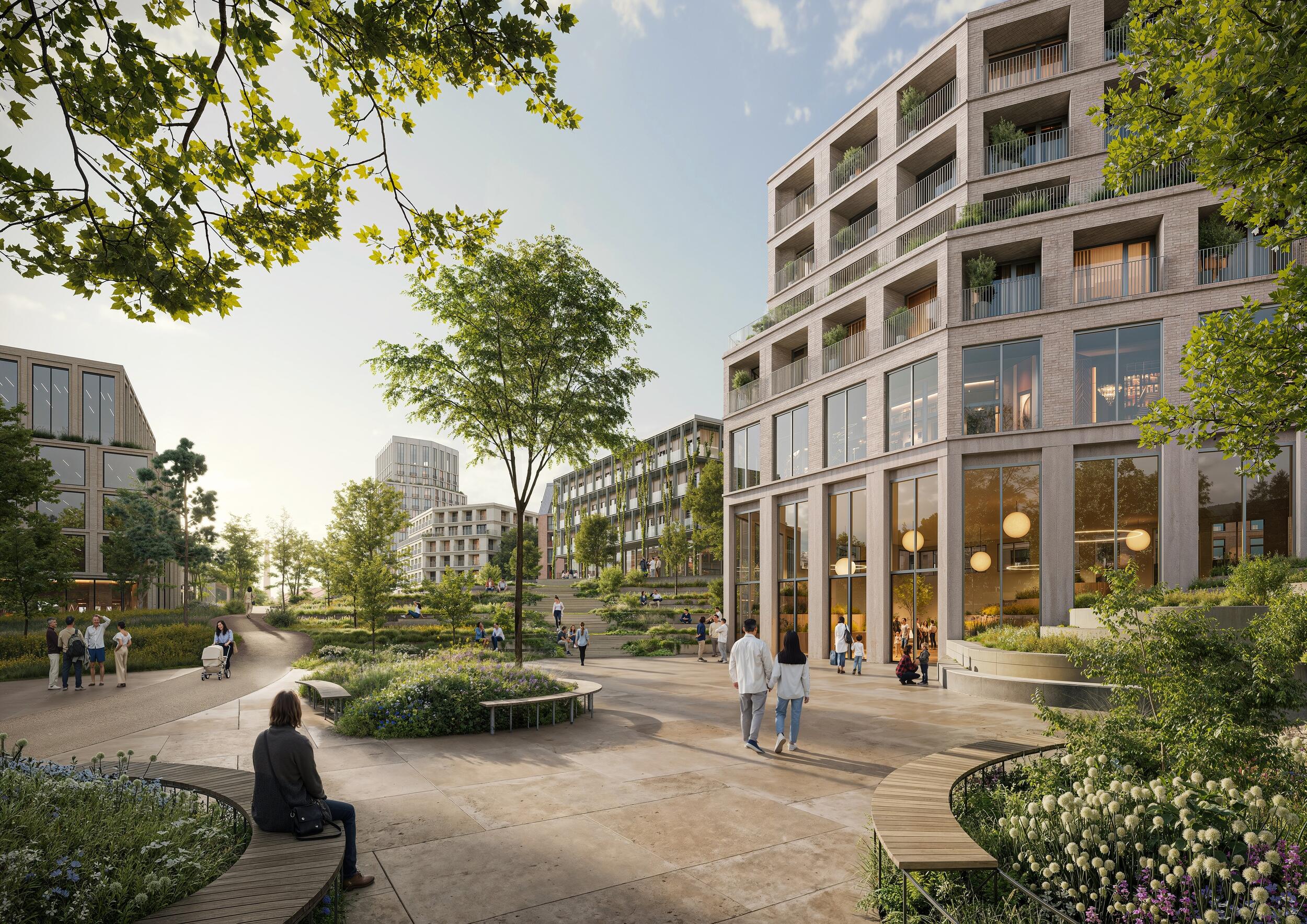
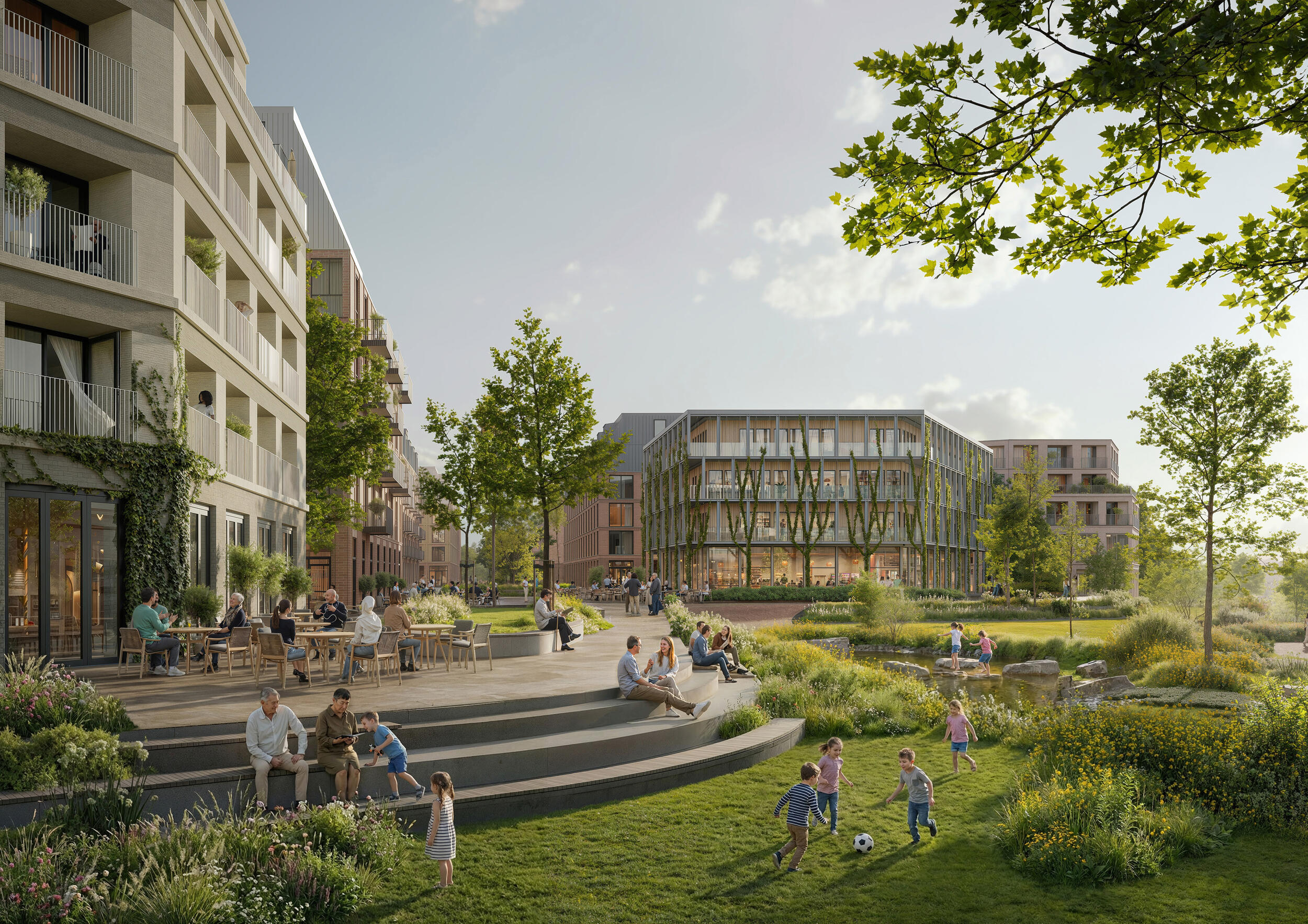
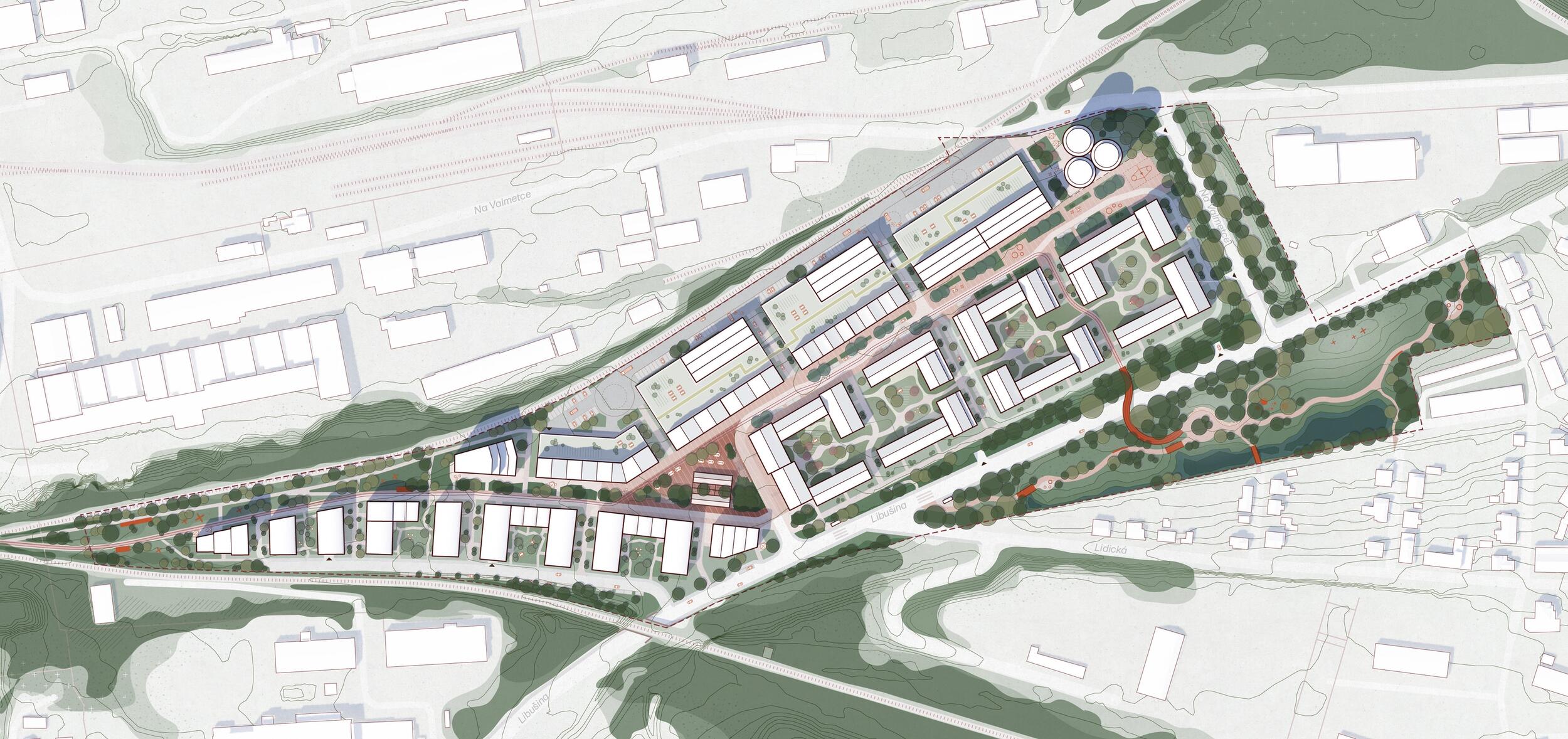
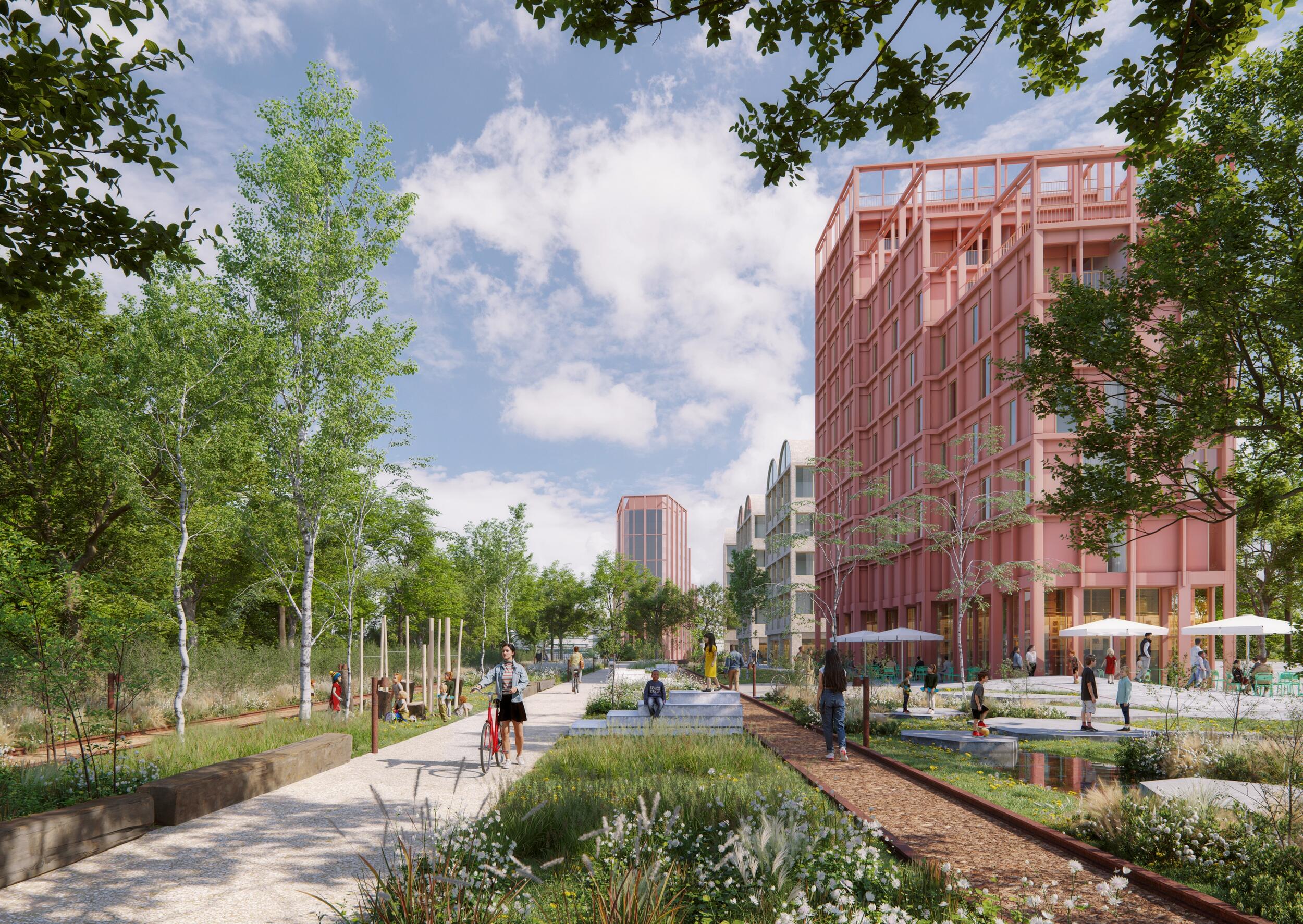
For more than a century, the Poldi Kladno steelworks shaped both the terrain and the identity of Kladno. Its industrial processes formed landscapes, infrastructures, and social structures that defined Kladno’s role within the wider region. Today, with major steel production ceased, these once-active areas have become extensive brownfields—vast, coherent territories carrying exceptional potential for transformation. Their scale and position within the urban fabric present a rare opportunity: not simply to redevelop isolated plots, but to fundamentally rethink the workings of Kladno as a city. The site lies between contrasting conditions. Remnants of industrial buildings and unused lots coexist with residential neighborhoods of varying typologies, gradually transitioning toward the city center and its commercial zones. Acting as a buffer between the former industrial core and everyday residential Kladno, the site area is uniquely positioned to mediate past and future, production and habitation. Such an assignment demands a perspective beyond the site itself. The sheer size of the brownfields requires a strategy that operates simultaneously at the urban and regional scale. With the new rail connection to Prague’s airport, demographic dynamics are shifting, and a renewed appetite is emerging for living and working in Kladno. This moment offers a chance to strengthen Kladno’s position within the Greater Prague area—not by competing with the capital, but by defining its own distinct identity. Our proposal draws inspiration from the Ruhr District, where former industrial landscapes have been transformed into continuous urban and ecological systems. We envision the Poldi brownfields as a connected strip: a sequence of spaces that link preserved industrial heritage with new architectural icons, public programs, and future development. The former rail infrastructure—once the veins of heavy industry—becomes the guiding structure of this transformation. These rails shaped the industrial landscape, defining plots, cutting through neighborhoods, and connecting production halls. Rather than erasing this structure, we propose to reuse it as a soft, green framework: a continuous landscape corridor that stretches edge to edge of the city through the historic center. No longer carrying steel and coal, the rail linesbecome paths for movement, ecology, and social life. The rails connect new landmarks of Kladno, reconnect neighborhoods long divided by industrial barriers, and stitch together the city’s green systems. They become the spatial memory upon which new buildings, programs, and communities are formed. The infrastructure of the past thus becomes the foundation for multiple futures—flexible, adaptive, and resilient. We are not proposing a single fixed vision, but an iconic landscape capable of absorbing different programs, sizes of buildings and demograpic change. An adaptable project for mutible futures.

Jury Evaluation

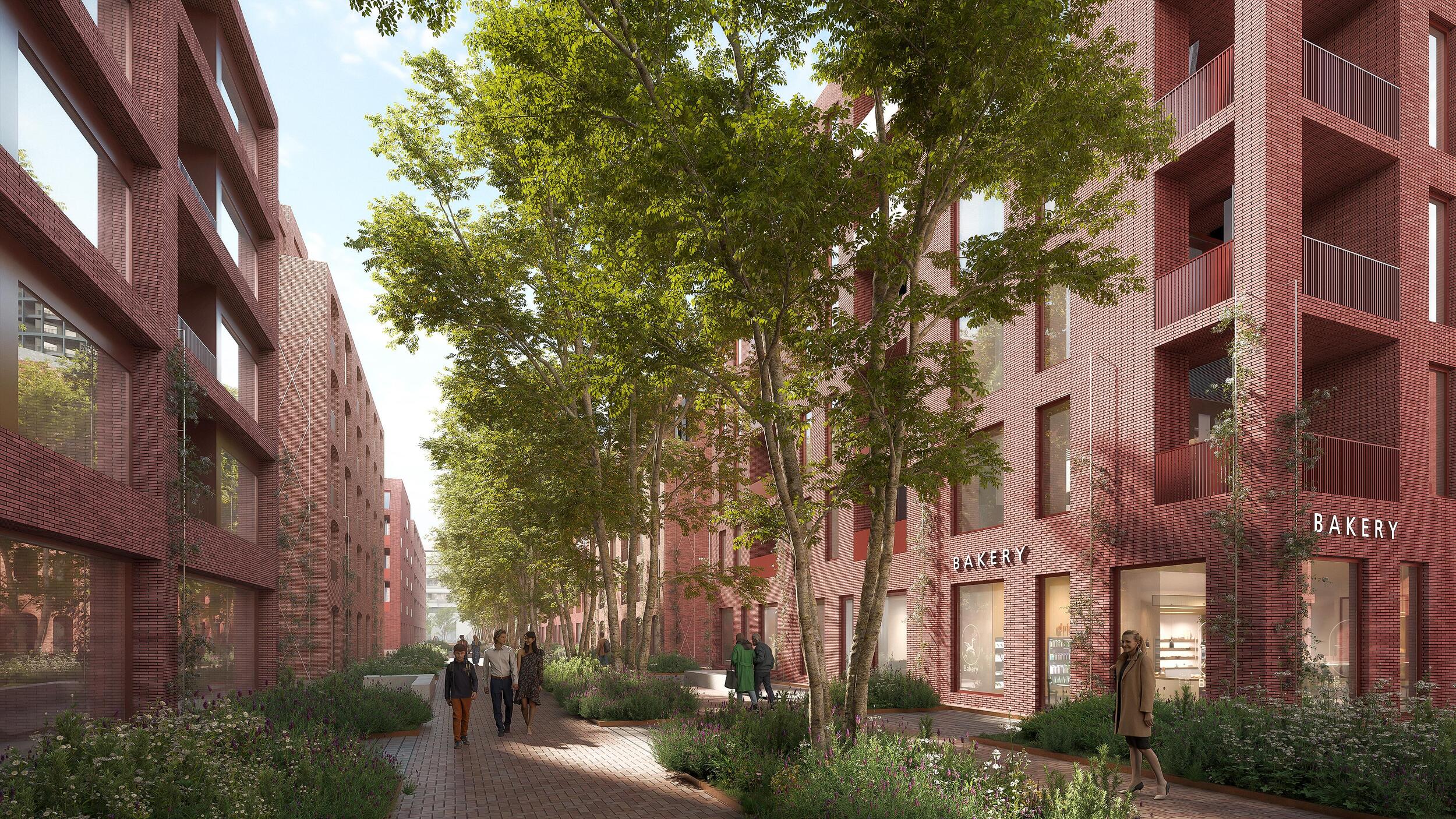
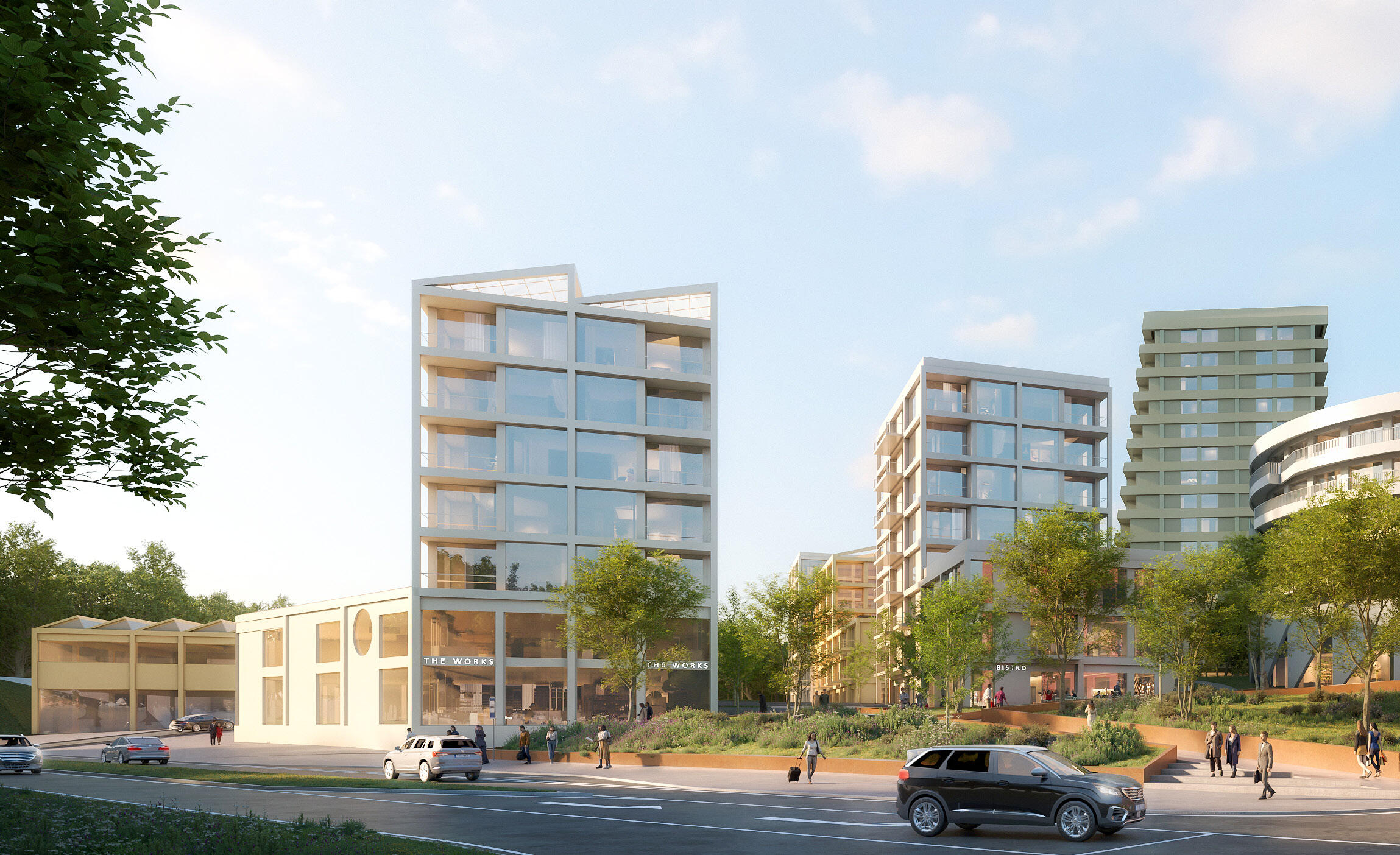
The winning design by Cobe and monom studios is appreciated by the jury for its understandable, appropriate and at the same time layered approach, which combines a strong concept with a high degree of flexibility. The design appears balanced even at first reading and offers a well-chosen scale corresponding to the character of the area. The jury considers the work with the landscape and public space to be of particularly high quality. The design sensitively follows the green belt and convincingly formulates the edge of the designed area, while the center is activated in a natural and functional way. The urban design is also considered well-thought-out in terms of operation and future development. The design offers high-quality public spaces, including a well-functioning square, and allows for logical phasing. The rotation of the residential structure towards the industrial zone with an emphasis on Libušina Street is also positively evaluated. The jury appreciates the design's ability to clearly formulate its identity and clearly define iconic elements without the need for formal ostentatiousness. Overall, the design appears as a user-friendly solution with an emphasis on the quality of the environment for everyday life. The jury considers the proposal to be of exceptional quality, which convincingly connects urban and landscape principles and offers a robust foundation for further development of the area.
Previous Next
2nd Place
  • Author Benthem Crouwel Architects + ov architekti + Felixx Landscape Architects
  • Team BCA: Pascal Cornips, Saartje van der Made, Willem Jan van der Gugten, Nienke Kloosterman, Lisa Brunner, Rhona de Lange, Bas Plaisier, Volker Krenz, Pieter Vergeer, Menno Ruijter; OVA: Štěpán Valouch, Jiří Opočenský, Ondřej Králík, Iva Věnečková, Ondřej Suk, Barbora Říhová, Karolína Myšková, Ariungerel Horáková, Patrik Domín, Greta Gorgerin; Felixx: Michiel van Driessche, Natalia Andreeva, Luc Waalders, Jiaming Huang, Ahmadreza Dehghani
  • Netherlands, Czech Republic
Annotation

Both the industrial history and the forested landscape are deeply rooted in the genius loci of Kladno. They are embedded in the collective memory of the community and visibly present in everyday life. When shaping the main structure of Vision Kladno, we drew inspiration from the underlying patterns of both landscape and industry, and especially from the symbiosis between the two. Their strong contrasts generate distinct qualities, and where they meet, they create a unique environment. What was once landscape became industry, and today the landscape is gradually returning. The patterns of the landscape form the carriers, the lifelines, for new connections. The patterns of industrial development bring diversity, energy, and identity, yet also rationality and calmness.The spatial organization of the site converges at a central point: the entrance from Libušina Street. This public space acts as the primary gateway into the development. Combined with the adjacent sloping park landscape, the entrance square becomes the social and spatial heart of the project—linking key routes, activating surrounding programs, and establishing a strong identity for the new neighborhood.Existing industrial structures shape the urban framework on the site, providing character and a strong connection to the surrounding context. Rather than resisting the industrial setting, the design embraces its strength and uses it as a driving force for the urban structure and identity. The heat plant, reimagined as the social hub of the site, remains a central element of the concept while clusters of typologies and grids meet around it. This clustered diversity, clearly readable in the existing urban fabric, is reflected in our vision for Kladno’s new district.

Jury Evaluation

The jury appreciates the design by Benthem Crouwel Architects, ova architects and Felixx Landscape for its legible urban structure and the effort to clearly name the archetypes and individual parts of the design. This approach contributes to the clarity of the solution, but at the same time leads to a significant schematicity. The jury considers the main problem of the design to be the central part of the area, which appears unbalanced and does not correspond to its surroundings in scale. The designed square lacks sufficiently defining facades that would frame it spatially, and the whole loses its persuasiveness here. The diagrammatic principle of the design falls apart at this point. The jury perceives the landscaping solution as an ambitious and important theme of the design, but its real benefit is debatable. To achieve a climatic effect, greater involvement of greenery on the terrain would be necessary, which the design does not achieve in its submitted form. At the same time, the jury draws attention to the misleading nature of the visualizations. The strength of the legible structure is weakened by the problematic solution of the center and the insufficient integration of individual functions. Overall, the jury considers the design to be currently unbalanced due to the rigid functional division, but with a clear effort to create an identity and potentially workable.

Previous Next
3rd Place
  • Author ADEPT + OHBOI
  • Team ADEPT: Martin Laursen, Nicolai Lindberg, Leon Wittmaack, Tale Nixon, Thelma Celine Elingaard, María Bartolomé Montoya; OHBOI: Jan Kubát, Ján Paločko, Matěj Příman, Johana Trojanová, Linda Kaliská; visualizations: Vivid Vision, Dough and Wolf
  • Denmark, Czech Republic
Annotation

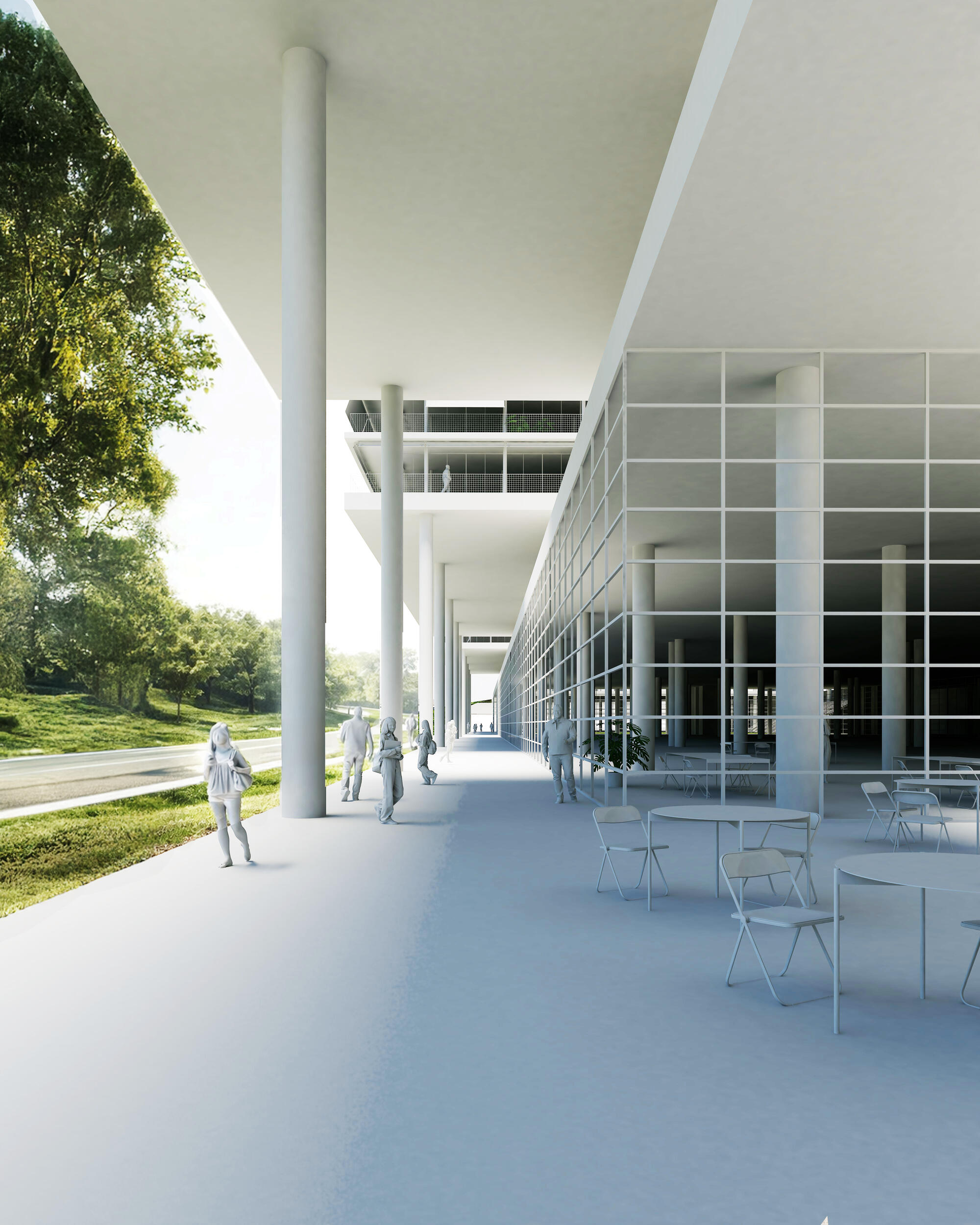
Set within a city already evolving, the project continues Kladno’s growth by linking new neighborhoods into a coherent whole. It completes a missing piece while opening clear directions for future expansion. In this way, it supports a city that grows step by step, connecting new development with its existing urban fabric. The site occupies a strategic position where Kladno’s varied urban conditions meet: industrial heritage landscapes, modern work environments, active production areas, diverse residential neighborhoods, and the historic city center. Rather than separating these identities, the project brings them into dialogue, forming a heterogeneous urban structure that reflects the city’s complexity. Living, working, leisure, and culture are interwoven to create a place of overlap rather than division. By connecting surrounding neighborhoods and typologies, the site becomes a new piece of city that strengthens continuity across Kladno. It acts as a mediator between past and future, industry and everyday life, offering spaces that support community, adaptability, and shared identity. In doing so, the project contributes not a singular district, but a connective urban landscape embedded within Kladno’s evolving network. Building on this role, the project introduces a new residential offer for Kladno, shaped by its strong regional connections. Proximity to Prague, the airport, and key mobility corridors positions the site as an attractive living environment for a new market of residents seeking urban life within a landscape setting. Housing is embedded within the wider urban mix, creating a connected, accessible, and future-oriented neighborhood that strengthens Kladno’s role within the metropolitan network.

Jury Evaluation

The jury appreciates the design by ADEPT and ohboi for its refined and experienced approach to landscape design, especially in working with the “soft” edge of the area and its connection to the residential structure. The design is legible, clear and appears to be a professionally managed solution. However, upon closer examination, the jury questions some of the key principles of the design. The main discussion was the role of the central space and the overall cohesion of the area, which is divided into several larger units. This division in places weakens the connection and continuity of the design. The urban structure is relatively dense and consistently organized, but at the same time it seems too orderly in places. Some elements remain incomplete, such as the main boulevard without a clear ending or a park, the scale of which raises questions. The jury considers the landscape design to be ambitious and well-designed, but at the same time relatively demanding and in places even overloaded. In the architectural design, the jury draws attention to problematic aspects, such as the orientation of some of the apartments or layout schemes with long internal communications. Overall, the jury perceives the design as confident and well-managed, but its weakness is the lower level of internal tension and the absence of a more pronounced central moment that would give the design a stronger identity.

Previous Next
4th Place
  • Author MVRDV + Ateliér ra15
  • Netherlands, Czech Republic
Annotation

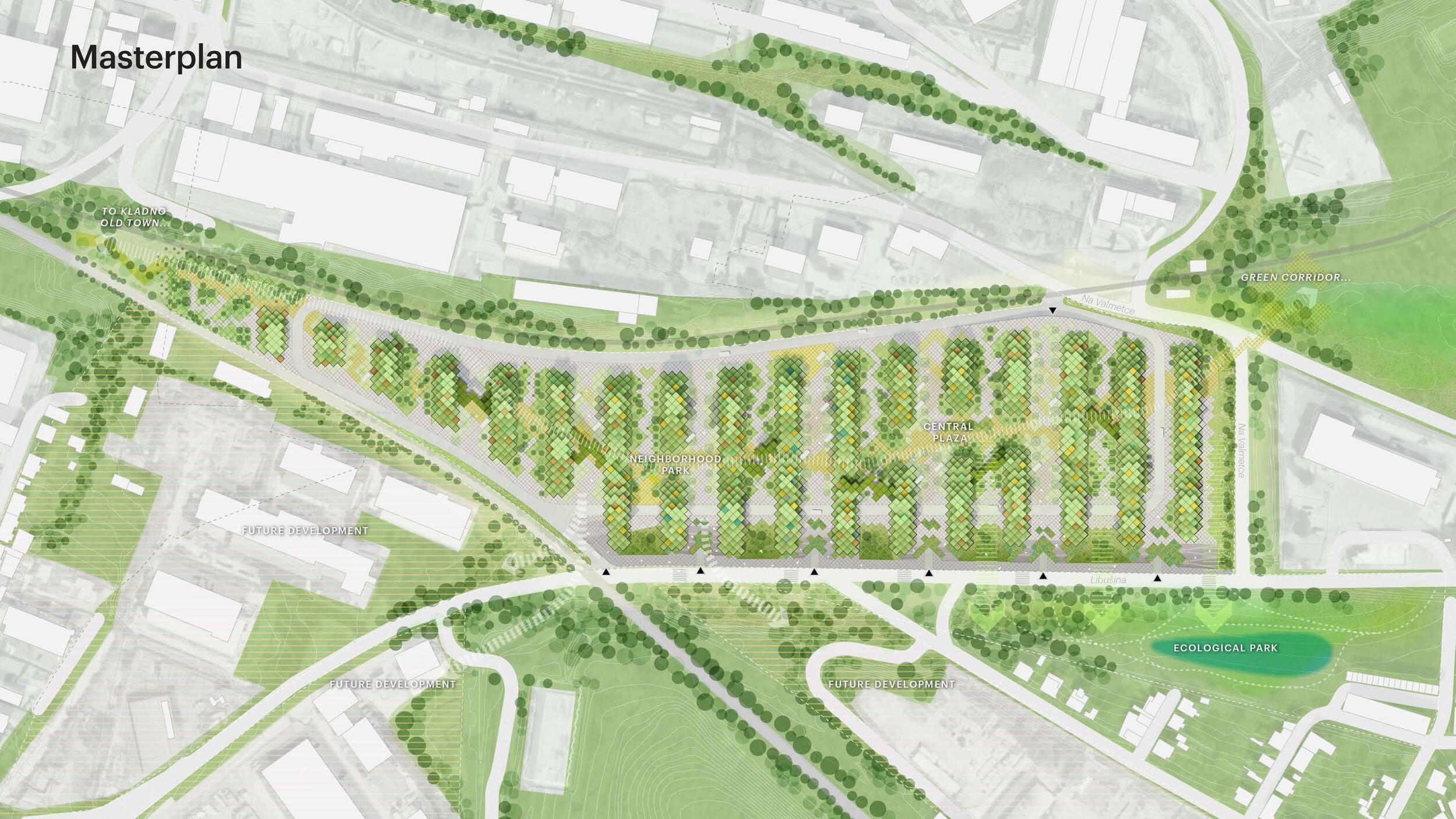
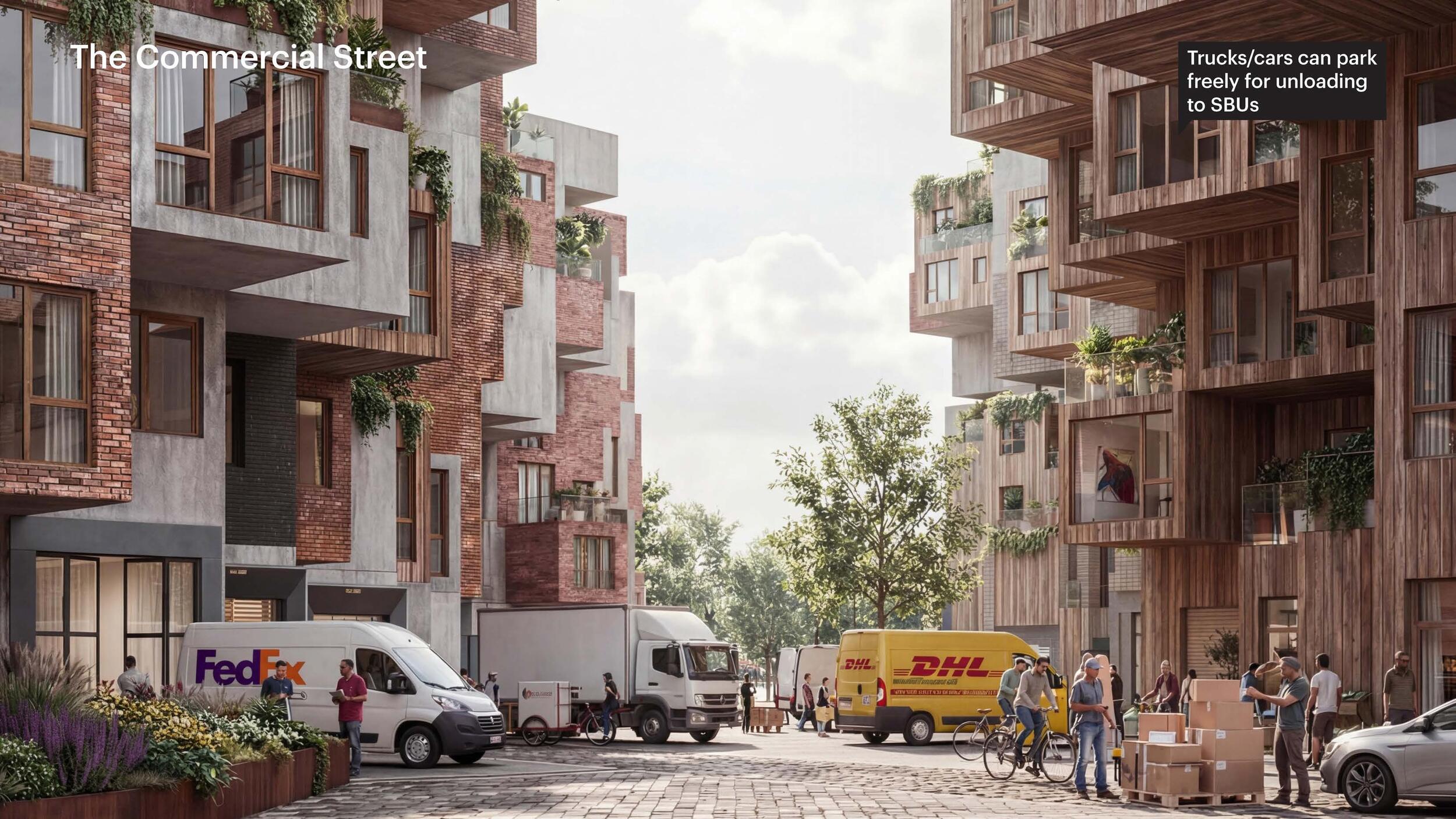
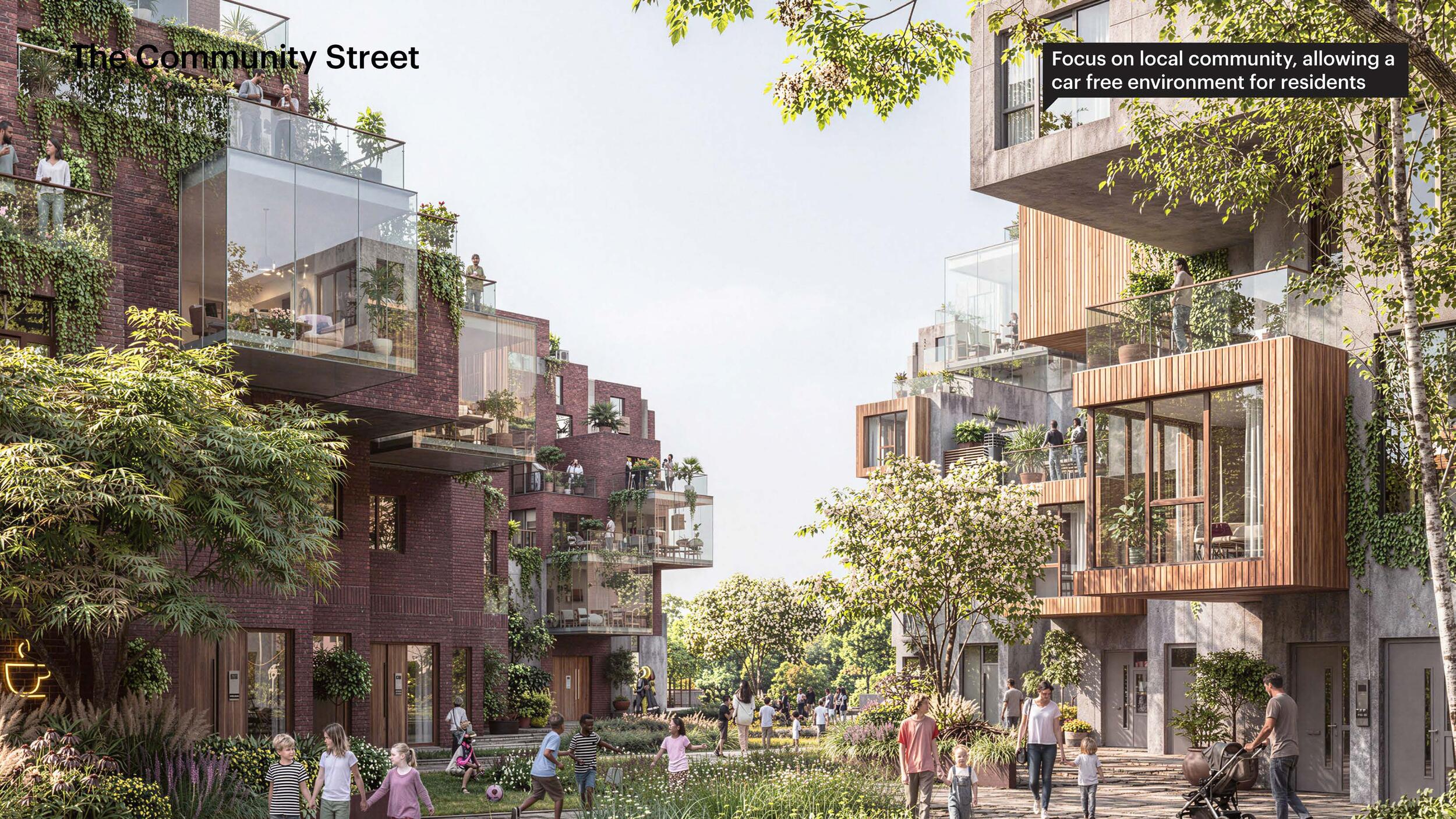
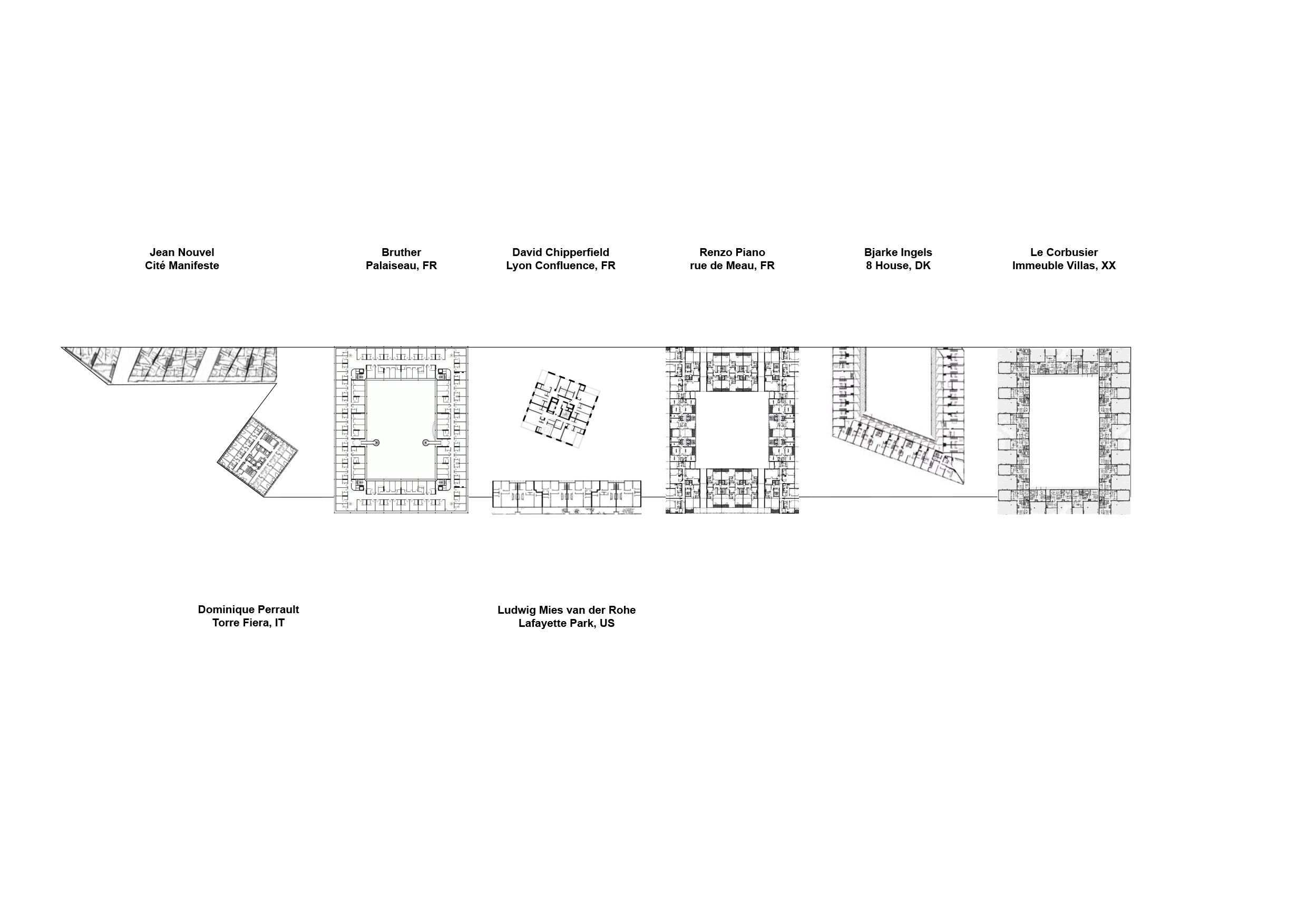
Living, Work and Nature Vision Kladno presents an exciting and forward-thinking plan for a new urban district designed to bring people, work, and nature together in a balanced and vibrant way. At its heart, the vision introduces a welcoming residential neighbourhood where people can feel at home, connected, and part of a thriving community. Alongside this, the district supports a dynamic business environment, creating opportunities for innovation, employment, and local economic growth. This blend of living and working spaces helps foster a lively atmosphere throughout the day, making the area both practical and inspiring. The plan also emphasizes the importance of civic amenities—places where people can gather, learn, and engage—ensuring that essential services and community spaces are easily accessible to all. Completing the vision is a strong commitment to biodiverse landscapes and thoughtfully designed public spaces. Green areas are not just decorative but play an active role in enhancing well-being, supporting local ecosystems, and creating inviting outdoor environments for everyone to enjoy. Together, these elements form a cohesive and future-ready district where urban life and nature coexist in harmony. Layered Experiences Building on this vision, the district is thoughtfully organized in a series of layered experiences, each contributing to a vibrant and livable environment. At street level, a dynamic business environment forms the foundation. Shops, workplaces, and active frontages bring energy to the public realm, creating lively streets and inviting public spaces that encourage movement, interaction, and everyday activity. Above this, a range of residential typologies are carefully arranged to suit different lifestyles and needs. Homes are designed with generous outdoor spaces—terraces, balconies, and loggias—that extend daily living into the open air and strengthen the connection between residents and their surroundings. Crowning these layers is a rich green landscape that brings nature into the heart of the development. This elevated layer includes private gardens and shared communal spaces, offering peaceful retreats as well as places for gathering, relaxation, and social connection. Kladno Hills Together, these layers come together to form a striking and memorable architectural expression. Rather than a uniform block, the stacked functions shape a surprising, undulating volume defined by gentle valleys and expressive peaks. This sculpted form gives the district a distinctive character on the skyline while also creating varied spatial experiences at every level. The “valleys” open up views, allow more light to reach the lower levels, and create intimate outdoor spaces, while the “peaks” offer elevated perspectives to the surroundings. Kladno Hills is not just a visual landmark, but a reflection of the project’s core idea: a layered, living environment where architecture, community, and nature flow together in a dynamic and harmonious way. The Blocks Kladno Hills is further shaped into a clear and legible urban structure, where the undulating volumes are carefully divided into 18-meter-wide blocks. Between these blocks, equally generous 18-meter-wide streets create a rhythmic and well-balanced layout across the district. This structure introduces a thoughtful variation in street character. Lively urban streets, lined with business units and civic amenities, provide clear addresses and active frontages. These streets are dynamic and energetic, encouraging movement, interaction, and a strong connection to daily urban life. Alternating with these are quieter, greener pedestrian streets that offer a more intimate atmosphere. These spaces are designed with residents in mind, providing safe and pleasant access to the homes while integrating planting, shade, and opportunities for informal gathering. Together, this alternating pattern of vibrant and calm streets enhances both functionality and quality of life, creating a district that is as dynamic as it is comfortable and welcoming. The Freedom Pixels The Czech Republic has a long tradition of using prefabricated façade panels, known as paneláks. While this system once enabled rapid and efficient construction, it gradually became associated with a negative identity—shaped by the legacy of communist-era politics, rigid regulations, and a lack of architectural variation. Kladno Hills seeks to reinterpret and revive this building method in a completely new light. Instead of uniformity, prefabrication is embraced as a tool for diversity, flexibility, and creativity. A diverse catalogue of standard-sized pixel elements forms the foundation of a flexible architectural system. Each unit is designed to adapt to specific functional, technical, and aesthetic requirements, allowing for a high degree of customization within a coherent framework. Through this adaptable catalogue, architecture becomes a dynamic composition of interchangeable parts—balancing standardization with variation, and technical performance with spatial and aesthetic richness. This approach transforms a once-standardized system into a platform for individuality and freedom of expression, contributing to a vibrant and recognizable identity for the district while maintaining the efficiency and precision of prefabricated construction.

Jury Evaluation

The jury appreciates the proposal by MVRDV and Atelier ra15 for its bold and methodologically strong approach, which emphasizes the themes of modularity and the involvement of AI in the design process. The jury considers the submitted solution to be more of a strategy or scheme than a specific architectural design. The jury points out the problematic relationship to the place – the proposal does not relate to the context of Kladno or the surrounding environment and appears detached from the reality of the area. The strong concept is also very rigid and conservative in its principle; if it were not fulfilled in its entirety, it would lose its persuasiveness, according to the jury. The modular “cube” structure generates a large number of facades, complex layouts and construction details, which would lead to demanding construction and maintenance. The jury considers the landscape solution to be expensive and difficult to maintain. Although the jury considers the principle to be interesting, the resulting form evokes more of a testing “game” approach; comparisons to Minecraft or a coral reef were suggested. Overall, the jury perceives the proposal as a bold and intellectually stimulating contribution that remains at the level of methodology and process without offering a sufficiently convincing architectural and urbanistic solution appropriate to the site.

Previous Next
5th Place
  • Author BRUTHER + atelier gram + Openfabric
  • Team BRUTHER: Stéphanie Bru, Alexandre Theriot, Alice Fenwick, Hugues Noyer, Charles Hortefeux, Karim Saleh, Adrien Brunel, Jihun Kim, Ryuhei Iwashita; ATELIER GRAM: Anne-Sereine Tremblay, Jan Kudlička, David Vaculík, Klára Lanžhotská, Martin Voldán, Barbora Kolářová; OPENFABRIC: Francesco Garofalo, Veronika Brabcová, Jacopo Gennari Feslikenian, Zhuwan Li
  • France, Czech Republic
Annotation

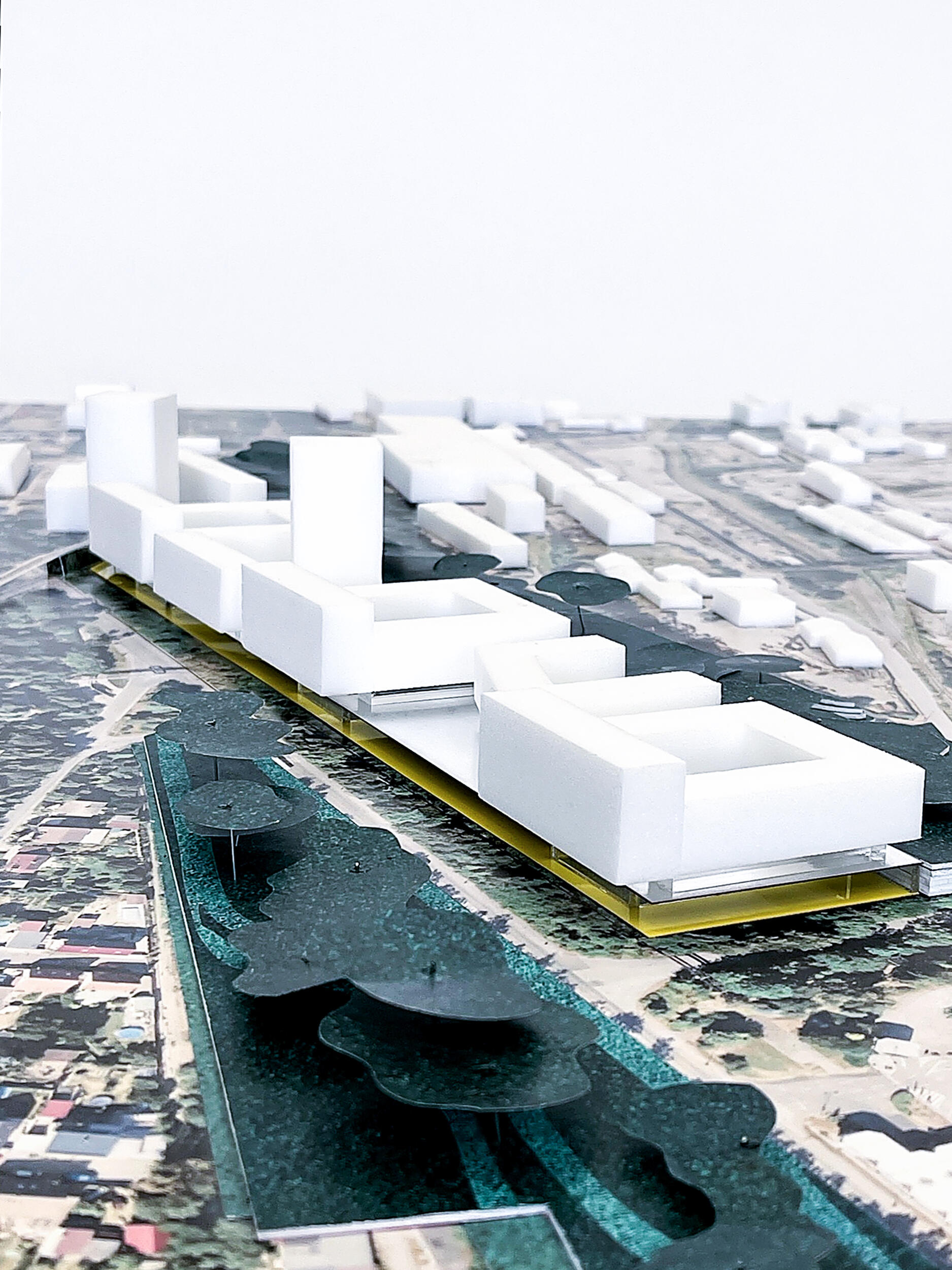
The future of Libušina Street is envisioned as a broad avenue that accommodates current traffic while offering safe and enjoyable spaces for pedestrians and cyclists. Its generous width—defined by 9-meter porticos and periodically expanded by public courtyards—encourages these activities. Together, the porticos and the building proposal mediate between the urban and human scales, defining a new identity for the street. The project is organized around a continuous productive base, directly connected to the ground and infrastructure. This base accommodates active programs (production, logistics, services), while the upper volumes house residential spaces. Layering functions allows different rhythms, uses, and levels of privacy to coexist, while maintaining strong urban and landscape continuity. Vegetation helps mediate between productive activities and residential areas. The project is based on a simple, regular, and robust structural system that provides long-term flexibility for housing, production, and evolving typologies. By separating structure, façades, and partitions, it ensures adaptability, programmatic reversibility, and resilience to social, economic, and technical changes.

Jury Evaluation

The jury appreciates the design by BRUTHER, atelier gram and Openfabric for its distinctive architectural quality and strong, self-confident approach. The project brings a distinctive moment, especially on the ground floor, and offers clearly legible work with architectural volumes and simple, clear spatial division. The jury considers the landscaping solution to be of very high quality, with an effective approach and the potential for long-term economic maintenance. The jury also points out the significant scale of the design, which exceeds the character of the area being designed and has a rather industrial impression. The jury perceives this aspect as a fundamental weakness, although it is aware that the issue of scale can change over time depending on the surrounding development. The design is conceived as a strong, non-conformist gesture, which, in the jury's opinion, would lose its persuasiveness and quality during gradual construction. This is also related to a certain uncompromising form and intervention in the terrain, which limits the possibilities of future adaptation. From an operational point of view, the jury draws attention to the problematic solution of the internal street, which can appear as a dark and potentially unpleasant space. The role of Libušina Street as the main link is also debatable. Overall, the jury considers the proposal to be a bold and architecturally strong contribution that brings a distinct authorial vision. However, its limitation is its disproportionate scale and dependence on implementation in one phase.

Previous Next